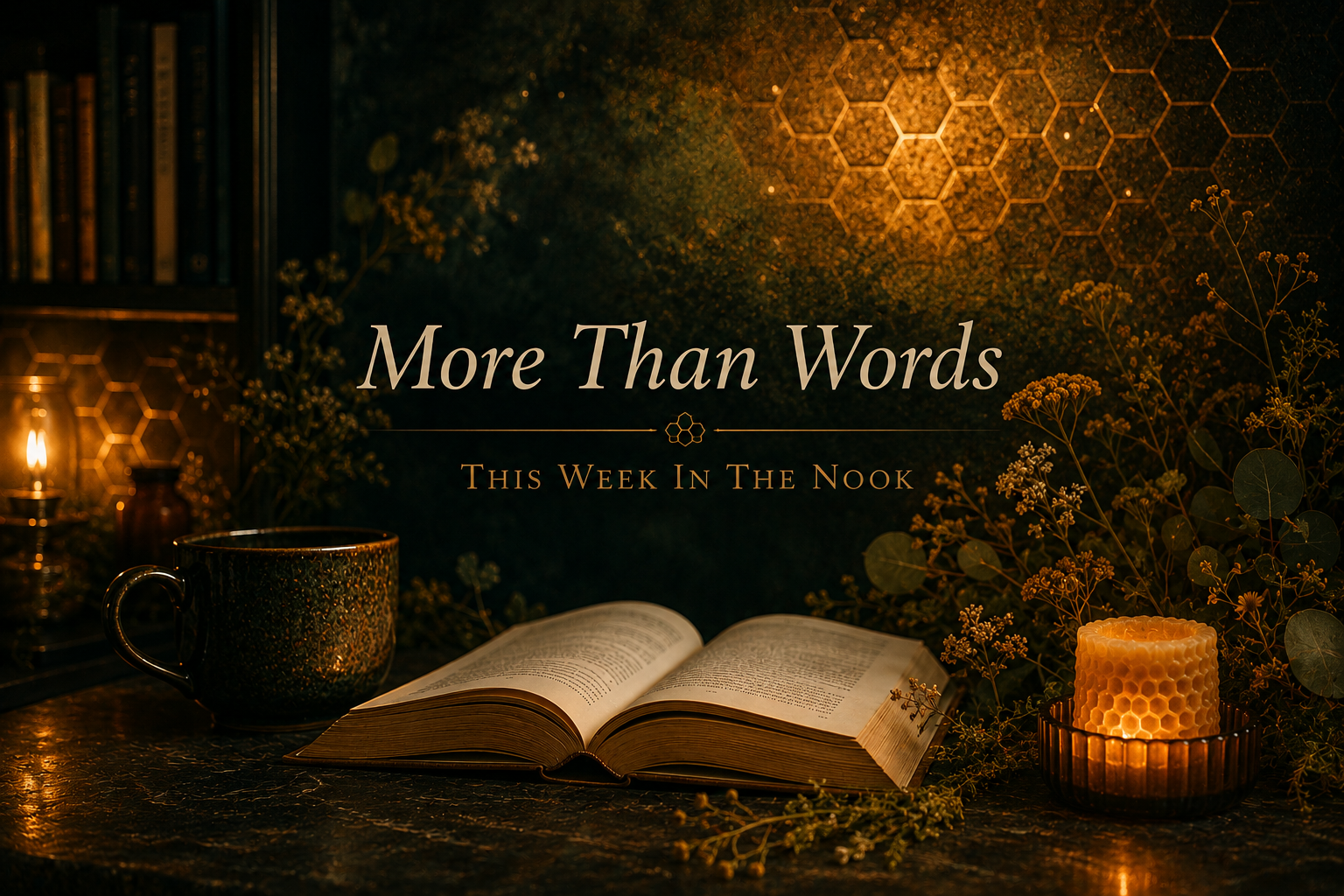
More Than Words

The Small Worlds Nature Holds Together
This week on The English Nook explored the language of nature — not only as vocabulary, but as memory, symbolism, and quiet interconnected life.
👉 When Nature Entered Language
Some of our oldest words were shaped by forests, rivers, seasons, and the living world around us.
👉 The Language of Bees, Hives, and Swarms
Bees have long influenced the language of work, order, community, and collective life.
👉 World Bee Day — The Small Creatures That Quietly Hold Entire Worlds Together
A reflection on bees, pollination, and the fragile systems that quietly sustain life itself.
—
From the archive:
👉 Descubriendo el Fascinante Mundo de los Insectos
Un recorrido por el mundo de los insectos y el vocabulario que usamos para describir algunas de las criaturas más pequeñas — y más importantes — de la naturaleza.
👉 Descubriendo la Diversidad del Reino Animal
Porque el lenguaje también nos ayuda a comprender la enorme diversidad de la vida animal que existe a nuestro alrededor.
👉 The Field Where the Hives Remained
An abandoned field, silent hives, and the strange feeling that nature remembers what humans forget.
👉 The Fairy Who Became a Flower
A story about transformation, fragility, and becoming part of the natural world itself.
—
Sometimes, language does not come from cities or books —
but from the quiet living systems that existed long before us.