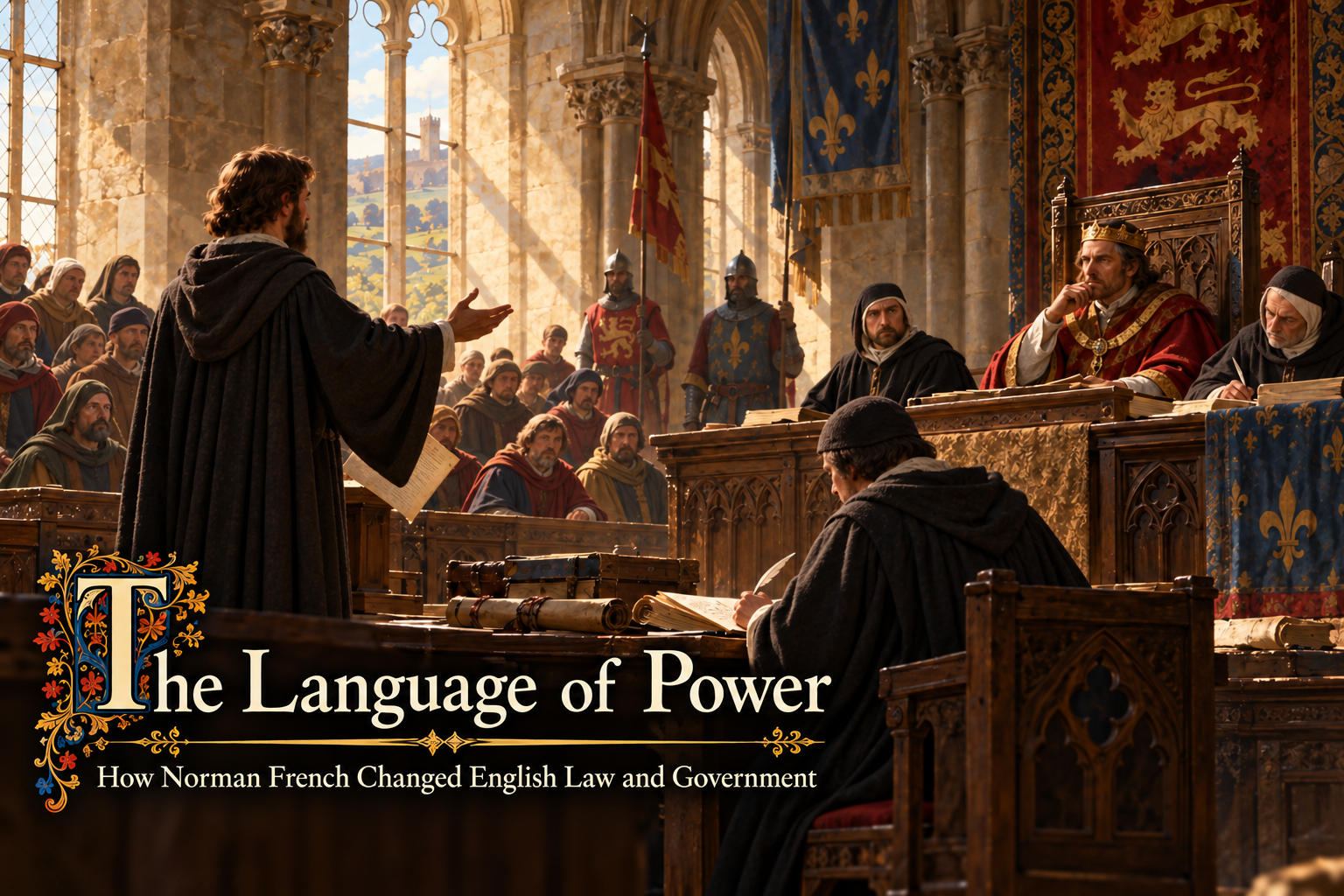

Love in Poetry
Why one of the oldest themes in language never disappears
Love has always been one of the central themes of poetry.
Across centuries and cultures, poets return to it again and again. Not because it is simple, but because it resists simple expression. Few experiences are as familiar—and at the same time, as difficult to describe with precision.
In everyday language, love is often reduced to clear statements. It is named, explained, and made direct. Poetry tends to move in the opposite direction. Instead of defining love, it approaches it through moments—small details that carry more weight than explicit declarations.
One reason for this is that love rarely remains stable.
It changes.
It intensifies.
It fades.
It returns in unexpected ways.
Poetry allows these shifts to exist without forcing them into a conclusion. A poem does not need to resolve what it presents. It can remain in uncertainty, in tension, or in silence—states that are deeply connected to the experience of love itself.
Another important aspect is indirect expression.
A poet does not always say “I love you.”
Instead, they show something else:
a gesture repeated,
a place remembered differently,
a moment that feels heavier than it should.
Through these details, love becomes something the reader recognizes rather than something that is simply stated.
Love has also taken many forms depending on the voice behind it.
In the sonnets of William Shakespeare, it often appears as admiration mixed with doubt—something powerful, but never entirely secure.
For Elizabeth Barrett Browning, love becomes something deeply personal and devoted, expressed with clarity and intensity.
In the work of Emily Dickinson, it is quieter, more internal—something felt deeply, but rarely expressed directly.
Each of them approaches the same theme,
but arrives somewhere different.
Love in poetry is also closely tied to distance.
Many poems are not about presence, but about absence—about what is no longer there, or what cannot be reached. In these cases, language becomes more careful, more deliberate. The feeling is not diminished.
It is concentrated.
At the same time, poetry allows contradiction.
Love can exist alongside doubt, silence, or even conflict. A poem does not need to choose one version of it. It can hold several at once, allowing complexity to remain without forcing clarity.
That may be why poetry continues to return to love.
Not because it explains it better,
but because it accepts that some things cannot be fully explained.
And instead of forcing definition,
it allows meaning to emerge—
slowly, and often quietly.
Reflection
Love remains one of the most powerful themes in poetry not because it is easy to write, but because it is not. Poetry does not resolve it. It holds it in place—allowing it to exist with all its uncertainty, its silence, and its weight.
Final Thought
Love, in poetry, is rarely something that can be captured in a single line.
It moves through suggestion, through memory, through what remains after the words themselves have ended.
Perhaps that is why it continues to return—
not as something to be defined,
but as something that can only be approached.
And in that approach,
we recognize it—
not because it is explained,
but because it feels familiar.
It was never fully spoken.
But it stayed—
like something that knew its place.
If you’ve read everything, please consider leaving a like, sharing, commenting, or all three!
Stay in the Nook: