
The Moment an Animal Becomes a Symbol
The Strange Meanings Language Gives to Living Things
Very few animals remain only animals once they enter language.
A fox rarely feels like just a fox.
An owl rarely feels like only a bird.
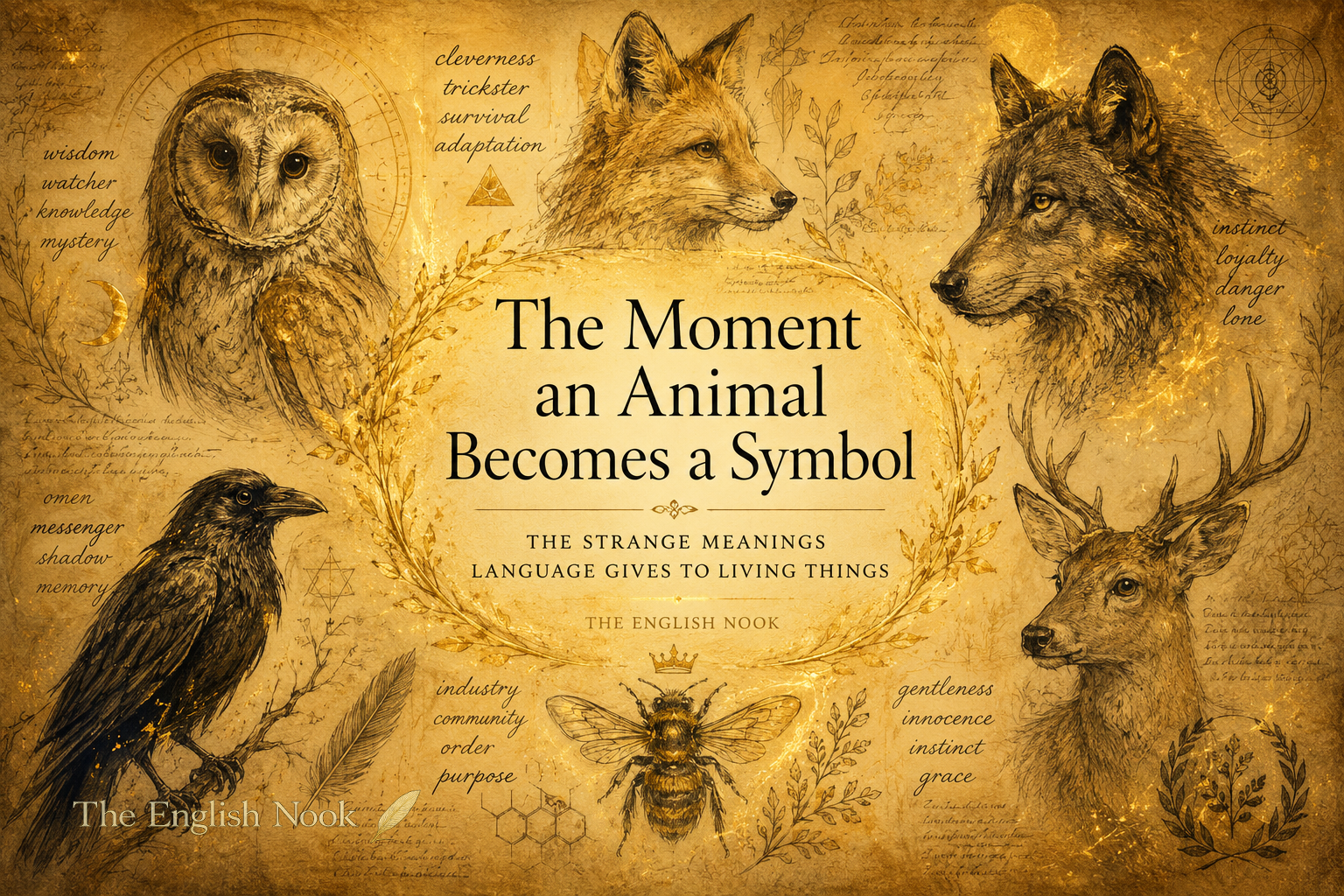
Even people who know nothing about mythology or literature still instinctively associate certain creatures with particular emotions or ideas. Wolves feel lonely. Deer feel gentle. Crows feel ominous. Bees feel purposeful.
Language quietly transforms animals into symbols long before we consciously notice it happening.
And once that transformation occurs, it becomes almost impossible to fully separate the creature from the meaning attached to it.
Perhaps this is because human beings have always searched for themselves inside the natural world.
Not scientifically.
Emotionally.
A storm can resemble anger.
A river can resemble memory.
And animals, more than almost anything else in nature, begin to resemble ways of being human.
The fox becomes cleverness.
The owl becomes wisdom.
The lion becomes pride or power.
The dove becomes peace.
The wolf becomes danger, solitude, hunger, or instinct depending on the story being told.
Even modern English remains full of these associations:
- eagle-eyed,
- social butterfly,
- lone wolf,
- snake in the grass,
- copycat,
- stubborn as a mule.
Many of these expressions survive for centuries because they no longer feel metaphorical. They feel natural.
And yet, none of these meanings truly belong to the animals themselves.
They belong to us.
To the strange human habit of turning living creatures into emotional mirrors.
This may be one reason animals remain so powerful in stories.
The moment an animal appears, readers instinctively begin searching for meaning beyond biology.
Not because stories force us to.
But because language has trained us to expect it.
A deer crossing a road at night feels different from a stray dog beneath a streetlight.
A raven feels different from a sparrow.
Even silence changes depending on which animal inhabits it.
And perhaps this reveals something important not only about language, but about perception itself.
Human beings rarely experience the world neutrally.
We turn landscapes into moods.
Weather into emotion.
Animals into symbols.
And language quietly preserves those transformations long after we forget where they began.
Sometimes the meanings we attach to animals tell us more about ourselves than about the creatures we are observing.
→ Continue wandering
→ Read a story
→ Explore English/Spanish sessions