
What 1066 Left Behind
Some weeks wander.
This one stayed with a single historical doorway.
After 1066, English did not disappear. Instead, it lived beside French and Latin, borrowed from them, changed through contact with them, and eventually returned to positions of authority carrying traces of that long multilingual history within itself.
Here is the week at a glance.
From the Week
✦ What Was Anglo-Norman? — The French Language of Medieval England
The French brought to England after the Norman Conquest became far more than the speech of kings and nobles. Anglo-Norman entered literature, households, administration, education, law, and everyday vocabulary — leaving traces that remain familiar in English today.
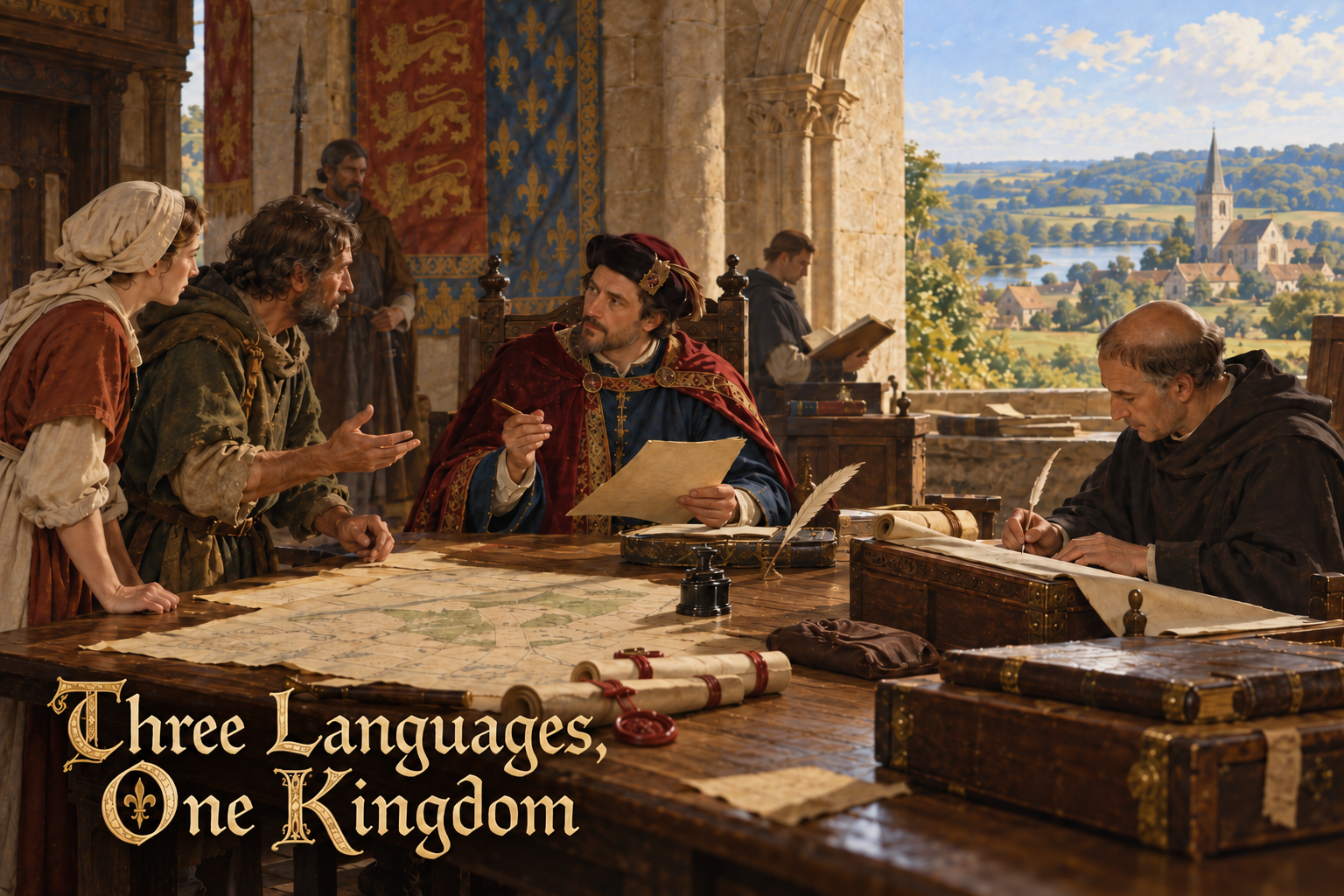
✦ Three Languages, One Kingdom — English, French and Latin After 1066
Medieval England did not simply replace English with French. English, French, and Latin worked beside one another, sometimes within the same process: spoken in one language, discussed in another, and preserved on parchment in a third.
✦ Why English Survived the Norman Conquest
Power changed hands far faster than everyday speech did. English survived because most people continued using it in homes and communities, passing it from one generation to the next even while French acquired prestige and Latin retained important written roles.
✦ More Than Words — English Was Never Alone
Midweek widened the view beyond 1066. French, Latin, and Norse — alongside conquest, trade, migration, and scholarship — all left something behind, reminding us that English can barely tell its own history without speaking some of that history aloud.
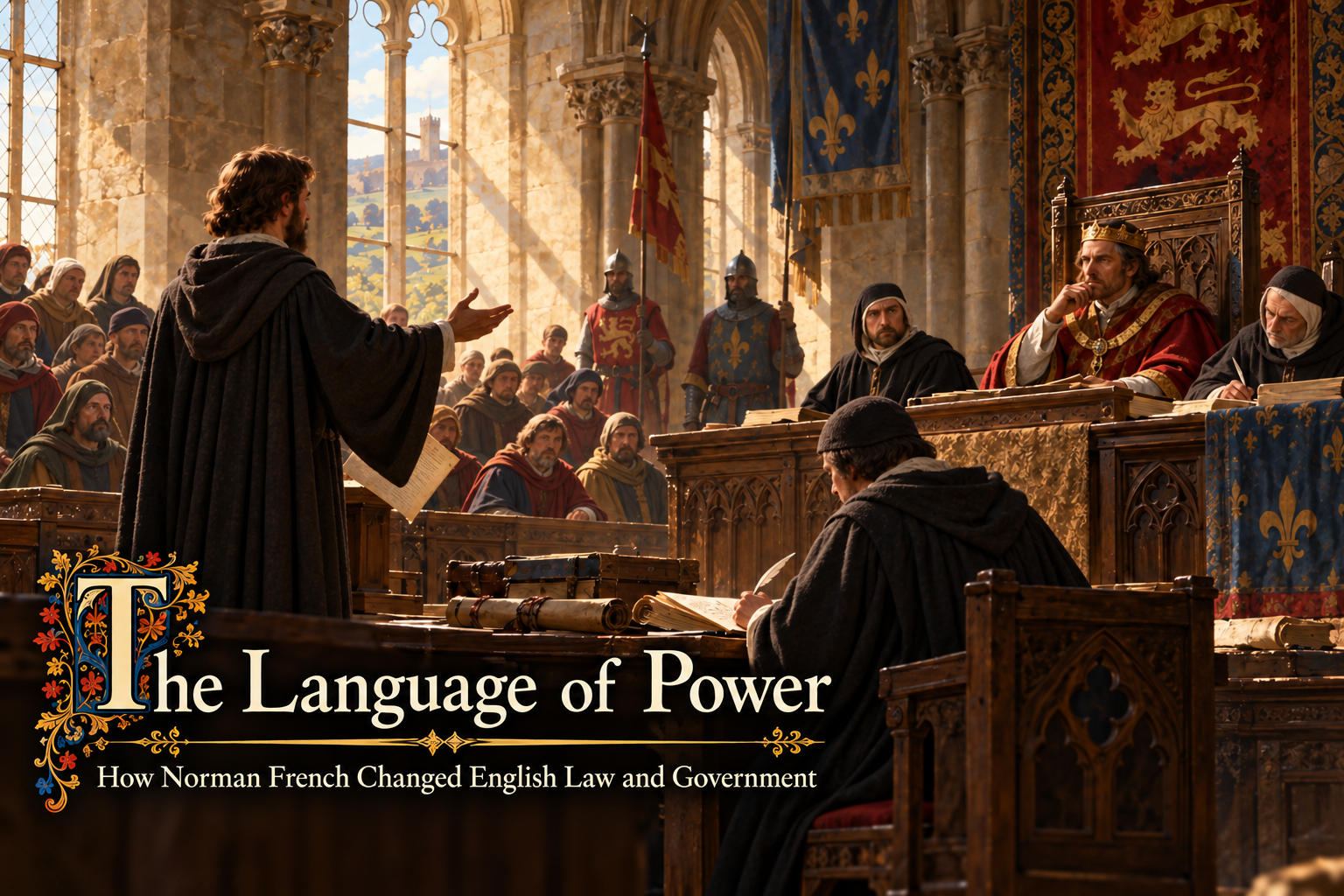
✦ The Language of Power
French became deeply embedded in the language of law and government. Words such as court, jury, attorney, and parliament survived because they became part of institutions whose work continued even after English regained greater authority.
✦ When English Returned to Power
Survival was only the first chapter. The royal proclamation of 1258, the Statute of Pleading of 1362, Parliament, petitions, literature, and Henry V’s correspondence reveal English gradually becoming once again a language in which people could address authority — and authority could answer.
This Week in History Nook
5 October — Denis Diderot — The Encyclopédie treated knowledge not as isolated facts, but as a network connecting science, craft, language, philosophy, and practical life.
6 October — Alfred, Lord Tennyson — Faith, grief, change, and uncertainty found a public voice in one of the defining poets of Victorian Britain.
7 October — Edgar Allan Poe — Fear became intellectual machinery as Poe joined psychological terror, precise construction, and analytical reasoning.
8 October — Frank Herbert — Dune turned ecology, scarcity, religion, politics, and charismatic power into parts of one intricately connected system.
9 October — Jill Ker Conway — Personal memory and historical understanding met in writing that showed how one life can illuminate a much larger world.
10 October — James Clavell — Historical fiction became a meeting place for cultures, loyalties, power, misunderstanding, and competing ways of seeing the world.
11 October — Elmore Leonard — Crime fiction found its rhythm in spare prose, sharp observation, and dialogue that made character audible almost before it was explained.
Words of the Week
Fever · Swoon · Dread · Descent · Haunting · Unease · Secrecy
October’s darker vocabulary gathered momentum: from the bodily heat of Fever and the sudden faint of Swoon, through Dread and Descent, into things that linger, disturb, and remain hidden — Haunting, Unease, and Secrecy.
This week began with a language that arrived through conquest.
It ended with English carrying that encounter inside itself.
French did not simply replace English. English did not simply defeat French. Latin did not quietly disappear. The languages overlapped, specialised, borrowed, translated, competed, and endured — together reshaping the linguistic life of medieval England.
Six connected paths. Seven voices from the past. Seven words moving deeper into October.
1066 changed who ruled England.
Its linguistic consequences lasted much longer.
And some of them are still there whenever we speak.
Another week has found its place on the Shelves.
See you next Sunday at The English Nook. 🐦⬛