
What Language Carries
Words rarely travel empty-handed.
This week, English carried borrowed histories, misleading similarities, old landscapes, medical warnings, professional ideas, childhood imagination, and the rhythms of accents across the world. Even the archive refused to stay neatly on its shelf.
Eight main pieces, seven History Nook entries, and seven Word Nook words. Here is the week at a glance.
Main Pieces of the Week
✦ Words English Borrowed and Never Returned
From Norse pronouns to Hindi-derived shampoo, loanwords showed how borrowing can reshape meaning, grammar, and the everyday choices available to English speakers.
✦ False Friends Across English and Spanish
Familiar-looking words crossed the language boundary and changed the sentence beneath them, revealing why shared forms can become translation traps rather than easy shortcuts.
✦ How Place Names Carry History
Oxford, York, river names, and acts of renaming turned the map into an archive of vanished landscapes, older languages, and changing power.
✦ Antibiotics, Bacteria and Resistance
A clear distinction between bacteria and viruses led into antibiotic resistance and the importance of using medical language carefully when discussing treatment.
✦ The Knowledge Worker: When Thinking Became a Profession
Peter Drucker’s idea of the knowledge worker gave us a sharper vocabulary for objectives, outcomes, accountability, and the value of thinking itself at work.
✦ More Than Words — The Shelf That Wouldn’t Behave
Six doors, one unruly Raven, a paper forest, a living map, singing trees, and a runaway pancake proved once again that the archive has very little interest in behaving like an orderly archive.
✦ The Voice We Make Our Own
A cardboard box became a ship and a question opened a world, following the way childhood curiosity and imagination transform borrowed words into a voice of our own.
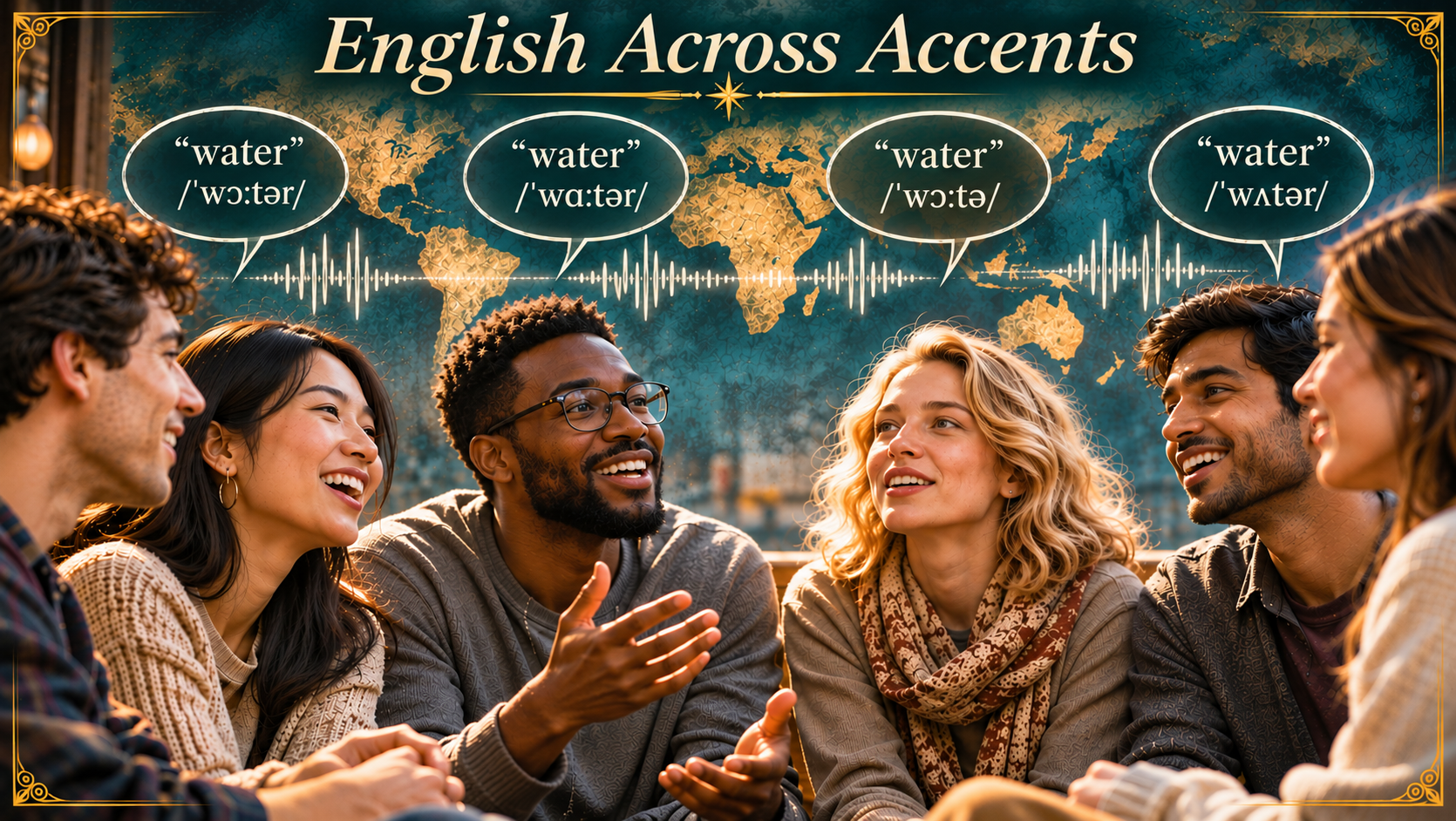
✦ English Across Accents
Pronunciation, word stress, and sentence rhythm moved across Britain, North America, India, Australia, and beyond, showing how many different sounds English can carry.
This Week in History Nook
16 November — Joan Lindsay — Memory, time, landscape, and mystery became inseparable in an Australian literary imagination.
17 November — John Earle — Microcosmographie compressed vanity, pretence, and human behaviour into brilliant miniature character sketches.
18 November — Louis Daguerre — Practical photography gained one of its early forms, and English gained the word daguerreotype.
19 November — Peter F. Drucker — Organisations, responsibility, and knowledge work acquired a language that still shapes professional English.
20 November — Edwin Hubble — Galaxies beyond the Milky Way helped enlarge the observable universe, while evidence pointed toward cosmic expansion.
21 November — Victor Chang — Heart transplantation became a shared clinical mission through advances in Australia and international cardiac care.
22 November — George Eliot — Translation, philosophy, and moral insight helped make understanding itself part of the work of the English novel.
Words of the Week
Foster · Foundling · Guardian · Belonging · Voice · Kindred · Alcove
The week moved through care, beginnings, protection, recognition, expression, kinship, and finally refuge. Foster began with nourishment and growth; Foundling carried the uncertainty of unknown beginnings; Guardian brought responsibility; Belonging and Voice asked what it means to be recognised and heard; Kindred widened kinship beyond inheritance; and Alcove ended in a small space made intimate by shelter.
A borrowed word can carry another language. A place name can carry a vanished landscape. A professional term can carry a new way of thinking. A child can take inherited words and make a voice that belongs to no one else.
And an accent can carry a whole history in the way a sentence rises, falls, or chooses where to place its stress.
Eight larger paths. Seven voices from the past. Seven words moving from care toward belonging and refuge.
Language does more than name the world. It carries pieces of the worlds that came before us — and gives us something to make our own.
Another week has found its place on the Shelves.
See you next Sunday at The English Nook. 🐦⬛