Must Everything Within Us Be Said?
For weeks, we have been looking at what happens when something within us becomes language.
A thought becomes a sentence. An experience becomes a story. An observation becomes a fable. Feeling finds rhythm, image, voice, form. Words are shaped, rearranged, translated, spoken aloud, written down and passed from one person to another.
Again and again, we have returned to the remarkable human impulse to give inner things an outer form.
But perhaps there is another question waiting behind all of this.
Must everything within us be said?
The Impulse to Give Things Form
Human beings have always made things out of what they carry inside them.
We tell stories about what frightened us. We turn mistakes into warnings, memories into narratives, desires into imagined worlds. A fable can give an animal the burden of a human weakness; a poem can place an emotion inside an image and allow the image to speak instead.
Language gives shape to what might otherwise remain indistinct.
There is something powerful in that act. Naming can clarify. Telling can preserve. Writing can take an experience that seemed private and discover that it is shared. Sometimes words allow us to understand what we felt only after we have tried to express it.
Yet the ability to express something does not create an obligation to do so.
Not every thought requires a sentence. Not every memory requires a story. Not every feeling needs an audience.
There are things we may understand perfectly well without ever giving them a name.
When Language Helps — and When It Changes the Thing
We often speak as though words simply carry meaning from inside us to the outside world.
They do more than that.
The moment an experience enters language, it begins to change.
We select one detail rather than another. We impose sequence. We choose a comparison. We decide where something begins and where it ends. Even the simplest account is already a form of arrangement.
That is not a failure of language. It is one of its powers.
Stories create shape. Fables concentrate experience until a pattern becomes visible. Poetry can compress what ordinary explanation would flatten. Writing allows us to return to something, reconsider it and sometimes discover meaning that was not available to us in the original moment.
But expression is never completely neutral.
To say something is also to make something of it.
Perhaps that is why certain experiences resist language. We reach for a word and find it too large, too small, too familiar or simply wrong. The thing we know inwardly seems more precise than the sentence available to us.
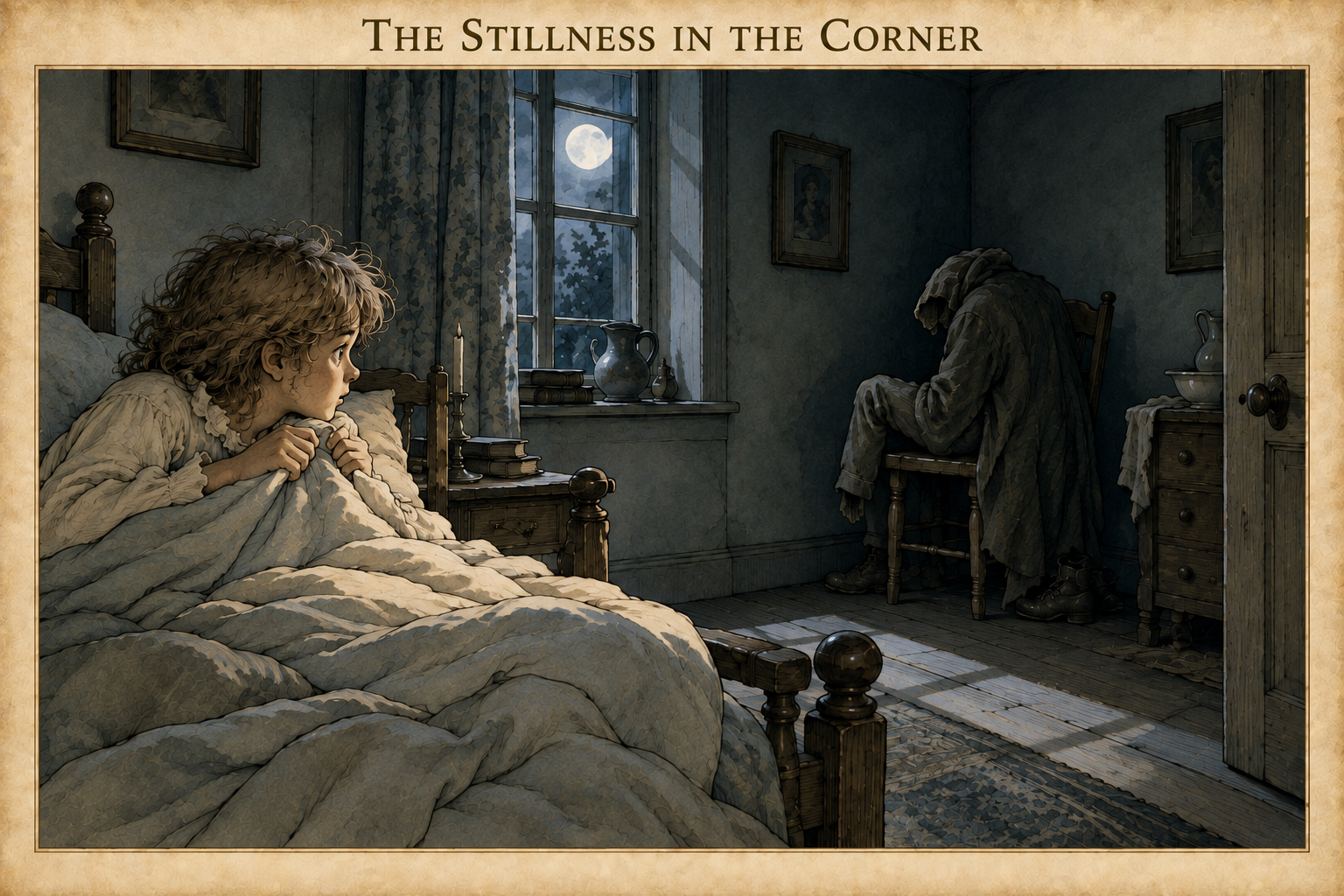
Sometimes the silence before the sentence is not emptiness.
It is accuracy.
The Right to Remain Unwritten
We live in a culture unusually interested in expression.
We are invited to share what we think, explain what we feel, tell our stories, define ourselves and turn experience into something communicable. Even silence can begin to appear suspicious, as though anything important must eventually be disclosed in order to be authentic.
But a private life is not an unfinished public one.
Something does not become more real simply because other people know about it.
A memory may belong only to the person who carries it. A feeling may need time before it can survive being named. An idea may be allowed to remain uncertain. Some experiences may never become stories because turning them into stories would change what they mean to us.
This is different from being silenced.
There is an enormous difference between having no voice and choosing not to use it, between being prevented from speaking and deciding that something will remain one’s own.
The freedom to speak matters precisely because it includes the freedom not to.
What Silence Can Hold
Silence is often treated as the absence of meaning.
Literature repeatedly proves otherwise.
A story depends as much on what it withholds as on what it explains. A fable leaves room between its little narrative and the lesson we take from it. A poem may depend upon an omission, a pause, an image that refuses to become an explanation.
Even ordinary conversation works this way. We understand hesitations, unfinished sentences, changes of subject and things deliberately left alone.
Meaning does not disappear when language stops.
Sometimes it gathers there.
Silence can protect, conceal, postpone, resist or simply preserve. It can leave an experience open rather than forcing it into a conclusion too soon.
And there are things that perhaps belong in that state: understood but not explained, felt but not displayed, remembered but not retold.
The Things We Choose to Say
None of this diminishes the importance of expression.
Quite the opposite.
If everything had to be said, saying would become almost meaningless.
A story matters partly because someone chose this story from all the experiences that might have remained untold. A writer chooses one image and abandons another. A poet chooses where the line ends. A fable takes a complicated human truth and decides that, for a moment, a fox or a crow will carry it.
Expression is made powerful by selection.
What we say gains shape from what we leave outside it.
Perhaps writing has never been a matter of emptying ourselves onto a page. Perhaps it is closer to opening a door and deciding what may cross the threshold.
Some things emerge as stories.
Some become arguments, poems, jokes, warnings, letters or little tales told through animals.
Some wait years before finding their words.
And some remain where they began.
Within us.
Not unfinished. Not forgotten.
Simply unsaid.
So after all these weeks spent considering what language can carry, shape, preserve and transform, perhaps the final question should remain a question.
Must everything within us be said?
But what we choose to say — and how we choose to say it — is part of what makes language ours.
Continue Exploring
→ Why Must the Inner World Be Heard?
Where this larger journey really began: with the private world of thought, feeling, memory and imagination before it finds a form outside us.
→ Where Stories Begin
Before characters and plots, there is attention: the moment something noticed begins to take shape as a story.
→ Why Do Fables Still Work?
A look at one of storytelling’s smallest forms — and at how animals, brevity and indirect truth allow us to recognise ourselves without being pointed at directly.
→ When Words Become Fugitives
What happens when something created in literature escapes its original story and becomes part of ordinary language?
→ Before Poetry Was Read, It Was Heard
A return to poetry before the page — when words lived first in breath, memory, rhythm and another human voice.