
Where Stories Begin
Before a story has characters, it has attention.
Something is noticed.
A door stands open where it was closed before. A familiar voice sounds different. Someone leaves and does not return at the expected hour. A bird arrives at the same window three mornings in a row. None of these things is yet a story. They are only moments—small disturbances in the ordinary movement of the world.
Then the mind begins to connect them.
Why was the door open?
What had changed in the voice?
Where had the person gone?
Why did the bird keep returning?
A story begins not merely when something happens, but when what happens begins to matter.
Before language gives it shape, experience is untidy. Life does not provide clear beginnings. It rarely pauses to introduce its characters, explain their motives, or warn us that an important event is about to occur. Days overlap. Causes remain uncertain. Conversations are interrupted. We understand some moments only years after they have passed.
Yet when we tell a story, we must begin somewhere.
That first choice is already an act of creation.
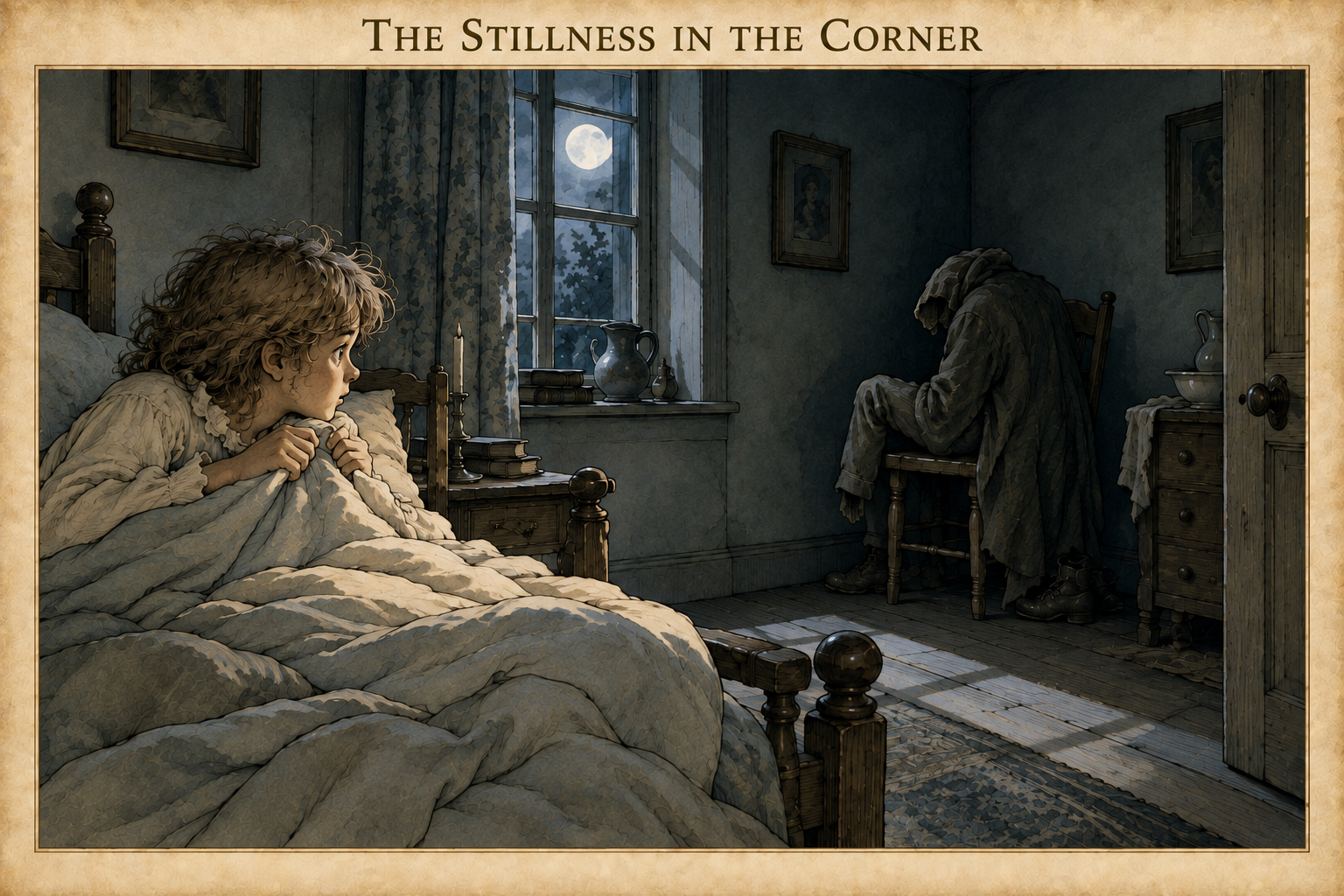
We might begin with the knock at the door rather than the long journey that brought the visitor there. We might begin with the disappearance and reveal the friendship later. We might begin at the end, with an empty chair, and allow the reader to discover who once sat in it.
The beginning is not always the first event.
It is the first event we choose to make meaningful.
Language allows us to perform this quiet transformation. It takes the unbroken movement of experience and gives it edges. It says: look here. Remember this. What came before matters because of what followed.
Even the simplest sentence begins arranging the world.
“The traveller arrived before nightfall.”
At once, someone exists. There has been a journey. Darkness is approaching. We do not yet know where the traveller came from, why the arrival matters, or what waits beyond nightfall—but the sentence has opened a space in which those questions can live.
A few words have created distance, time, movement, and expectation.
Nothing has been fully explained, yet something has begun.
This is one of language’s strangest powers. It does not need to build an entire world at once. It needs only to place the first stone.
A name may be enough.
A sound.
A warning.
A single object resting where it does not belong.
The reader begins to participate almost immediately. A dark road is imagined before it is described. A room acquires walls, shadows, and an unseen corner. A character’s silence becomes heavy with possibilities the writer may never state.
Stories are therefore not made by writers alone.
They are completed in the minds of those who receive them.
The teller chooses the words, but the listener gives them memory, fear, recognition, and expectation. One reader sees a narrow woodland path beneath winter branches. Another sees a road from childhood. One imagines the stranger as threatening. Another sees loneliness before danger.
The words may be shared, but the story is never entered in exactly the same way.
Long before stories were written, they depended upon this meeting between teller and listener. A voice shaped the events; other minds carried them away. Details changed. Certain moments sharpened while others faded. A warning became a legend. A memory became a fable. A real journey gathered impossible companions.
This change was not necessarily a failure of memory.
It was part of the life of the story.
Every telling makes choices. What should be repeated? What can be left unsaid? Which detail will make the listener lean closer? Which silence will allow fear to enter on its own?
Even when a story is fixed upon a page, it continues to change through reading. The words remain still, but the reader does not. We return older, more suspicious, more forgiving, or newly acquainted with loss. A story that once seemed adventurous may later appear cruel. A character we dismissed may become the one we understand best.
The page has not changed.
The place from which we read it has.
Perhaps this is why stories so often feel larger than their plots. They contain events, but they also contain the spaces between those events: what was feared, misunderstood, desired, or never spoken aloud.
Language gives those absences a presence.
A pause may reveal more than an explanation. A repeated phrase may carry grief. A description of weather may tell us what a character cannot. The unsaid becomes part of the telling.
A story is therefore shaped as much by exclusion as by inclusion.
To tell everything would not create a complete story. It would bury the story beneath information.
The storyteller must decide what the reader needs—and what the reader should be allowed to discover.
That decision is where craft begins.
Not in ornament. Not in complicated vocabulary. Not in the attempt to make every sentence impressive.
It begins in attention.
Which moment deserves to remain?
Which detail changes the meaning of everything around it?
Where should the door open?
And when should it close?
Some stories travel across generations. Others last only for the length of an evening. Some become tales, fables, chronicles, or worlds visited again and again. Some remain no more than a few sentences told between friends.
Their forms differ, but their first movement is the same.
Something is noticed.
Something is given shape.
Something that belonged to one person’s experience becomes a place another person can enter.
Perhaps that is where stories truly begin: not on the page, and not even in the event itself, but in the moment language makes experience shareable.
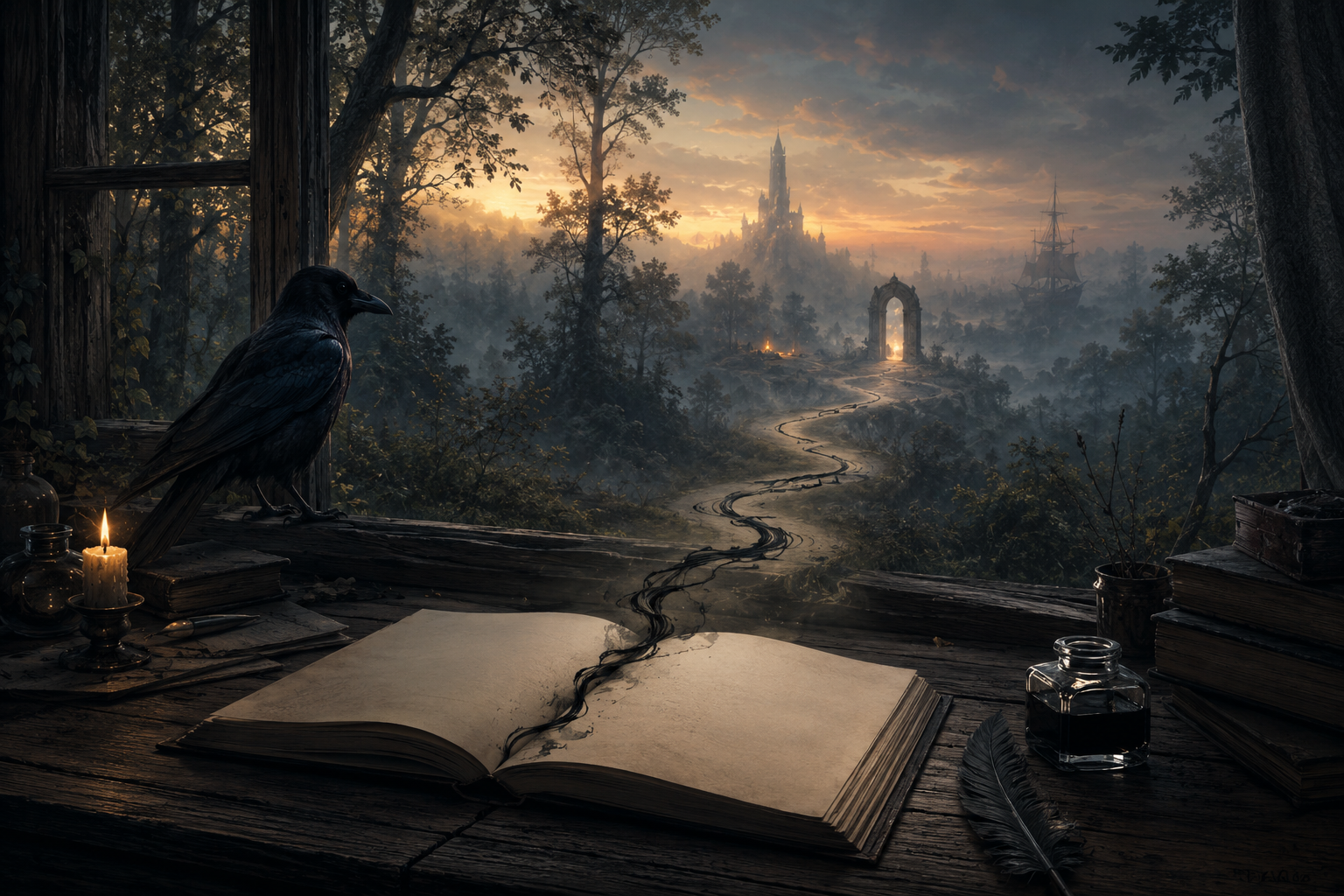
The ink touches the paper.
A sentence opens.
And somewhere that did not exist a moment ago begins to appear.
The Quiet Shelf
More stories are waiting.