
A Second Look
Some weeks change the subject every day. Others quietly ask the same question in different ways.
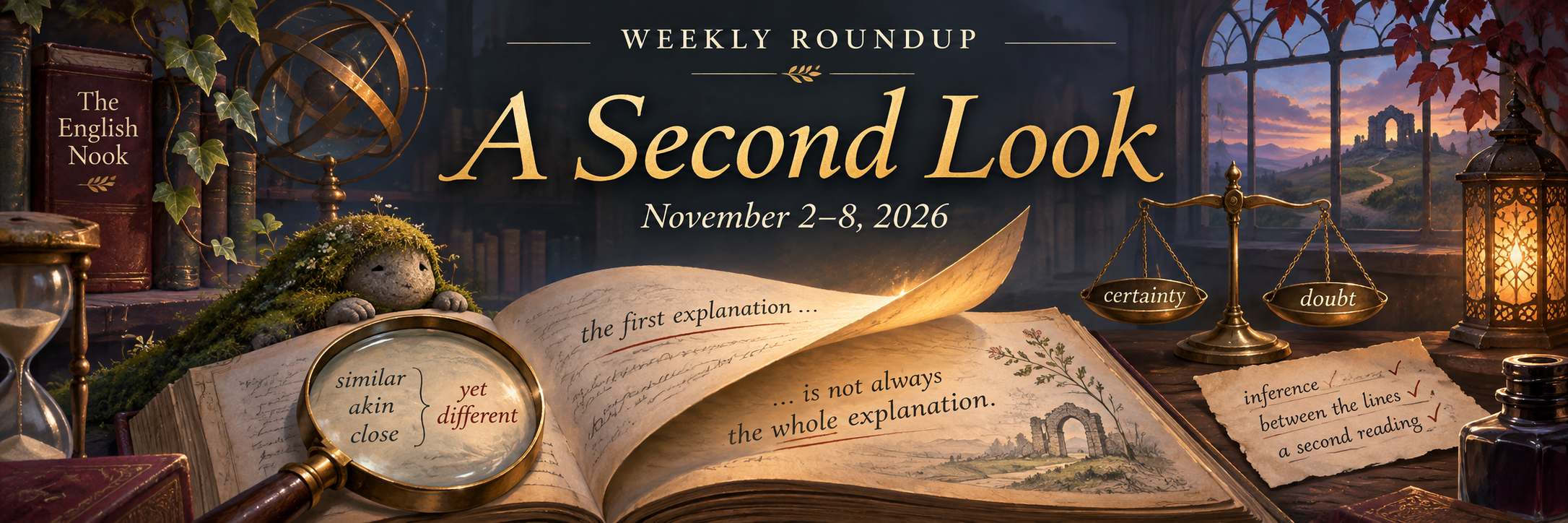
This week kept returning to one simple idea: the first explanation is not always the whole explanation. Words that look alike can behave differently. Confidence can outrun evidence. Old expressions can preserve vanished objects. Stories can change when we return to them. And sometimes the wisest reading leaves room for what we cannot know.
Here is the week at a glance.
From the Week
✦ Almost the Same — Why English Synonyms Are Never Quite Equal
Stubborn and determined can point toward similar behaviour while creating very different impressions. Connotation, intensity, register, and collocation showed why synonyms overlap without becoming interchangeable — and why choosing a word also means choosing an attitude.
✦ Expressing Certainty and Doubt in English
A missing office umbrella produced facts, deductions, possibilities, and one very confident theory. Must, may, might, could, probably, and other small choices helped separate what we know from what we merely think is likely.
✦ The Words We Leave Behind
We still hang up phones, dial numbers, and send carbon copies after the objects and gestures behind those expressions have faded. Ordinary English turned into a small museum of technologies, habits, and worlds that language refused to forget.
✦ More Than Words — The Portal Wanders
Five older doors reopened: Caxton’s printing workshop, a dream-delivered letter, the changing language of love, an imagined city of light, and poetry waiting to be heard again. The archive became less a storeroom than a place where old pieces can mean something new when we return to them.
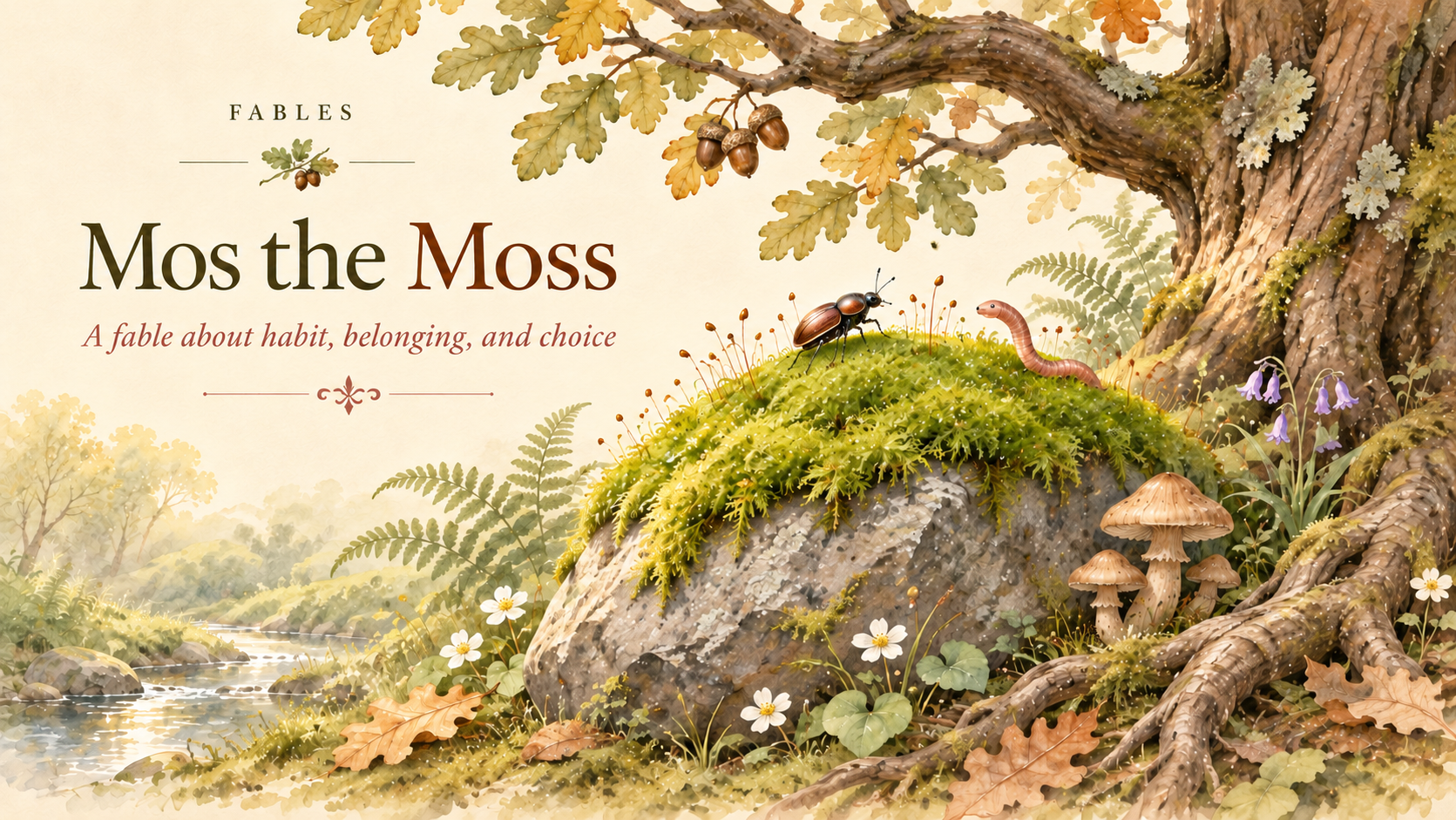
✦ Mos the Moss
Mos has lived on the same stone for so long that staying feels inevitable. When his surroundings shift, he begins to ask whether belonging is a choice or simply a habit repeated until it sounds like truth.
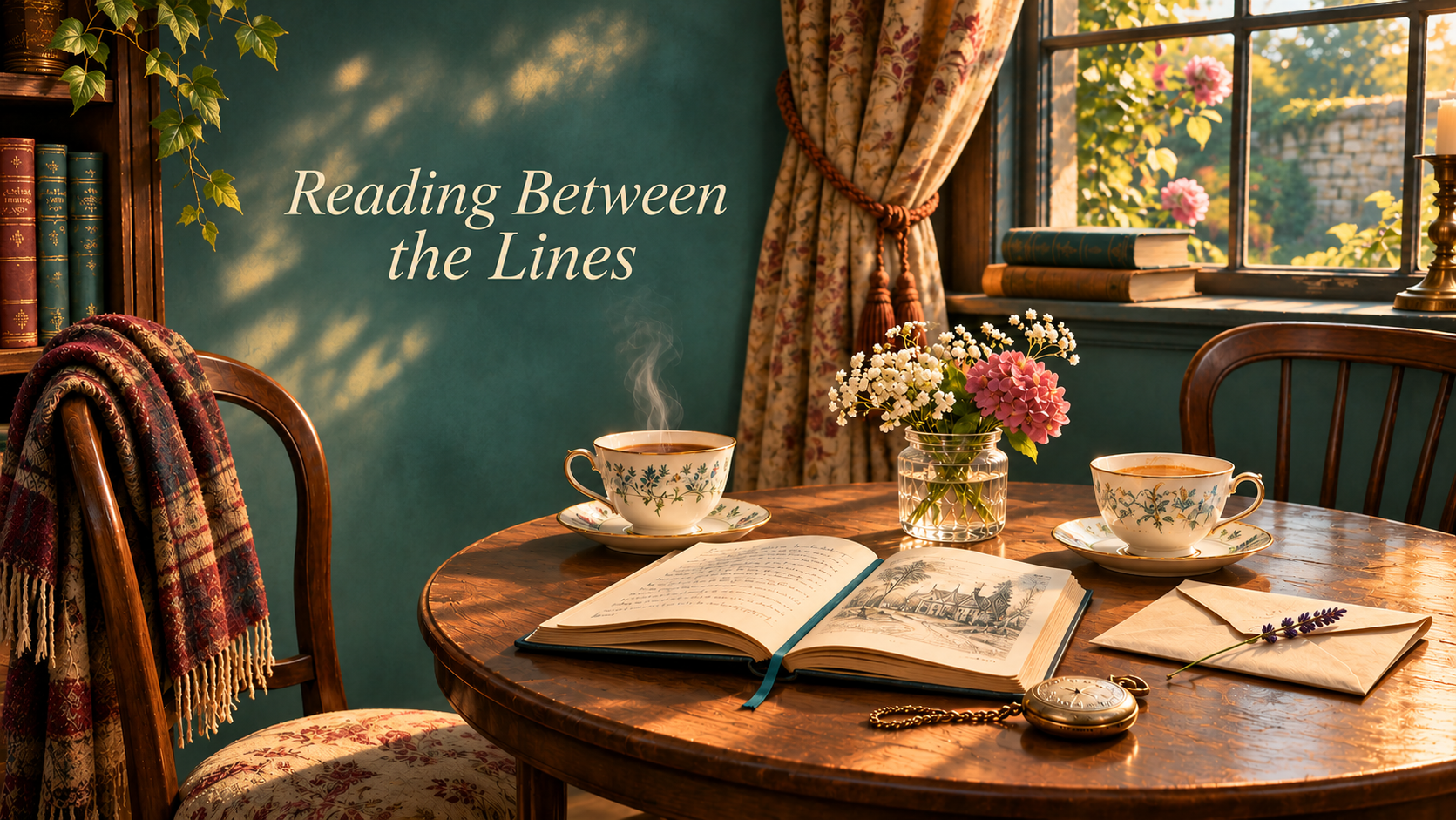
✦ Reading Between the Lines — Understanding Inference in English
Two cups of tea, one untouched, and a reader eager for an explanation. The Second Cup practised the difference between explicit fact, reasonable inference, and unsupported speculation — including the discipline of admitting when the text leaves a question open.
This Week in History Nook
2 November — James Thurber — Everyday anxieties and arguments became wonderfully unstable through an exact ear for absurdity and self-deception.
3 November — Daniel Rutherford — Experiments with air helped show that what seemed like one simple substance contained distinct gases.
4 November — Walter Cronkite — A measured public voice raised enduring questions about credibility, verification, and trust in news.
5 November — Vivien Leigh — Voice, gesture, fragility, and discipline made vulnerability itself capable of commanding stage and screen.
6 November — James Jones — War fiction moved beyond heroic language toward the fears, loyalties, and compromises of individual soldiers.
7 November — Marie Curie — Research into radioactivity gave science new language for the invisible and opened profound possibilities in medicine.
8 November — Edmond Halley — A comet once read as an omen became something that observation and calculation could predict.
Words of the Week
Requiem · Fealty · Homage · Liege · Demesne · Stewardship · Radiology
Word Nook travelled from remembrance into medieval allegiance and landholding, then toward responsibility and modern medicine. Requiem opened in rest and mourning; Fealty, Homage, Liege, and Demesne named precise relationships of loyalty, ceremony, hierarchy, and land; Stewardship shifted ownership toward care; and Radiology closed the week with the language of seeing what the eye cannot.
An umbrella taught us humility. Old expressions remembered vanished machines. The Portal reopened forgotten doors. Mos discovered that staying somewhere and choosing to stay are not quite the same thing.
And two cups of tea reminded us that not every silence is an invitation to invent an answer.
Six larger paths. Seven voices from the past. Seven words asking us to look a little more carefully.
Curiosity matters. So does imagination. But both become more useful when we give the evidence its proper place — and leave room for what we cannot yet know.
Another week has found its place on the Shelves.
See you next Sunday at The English Nook. 🐦⬛