The Mapmaker’s Blank
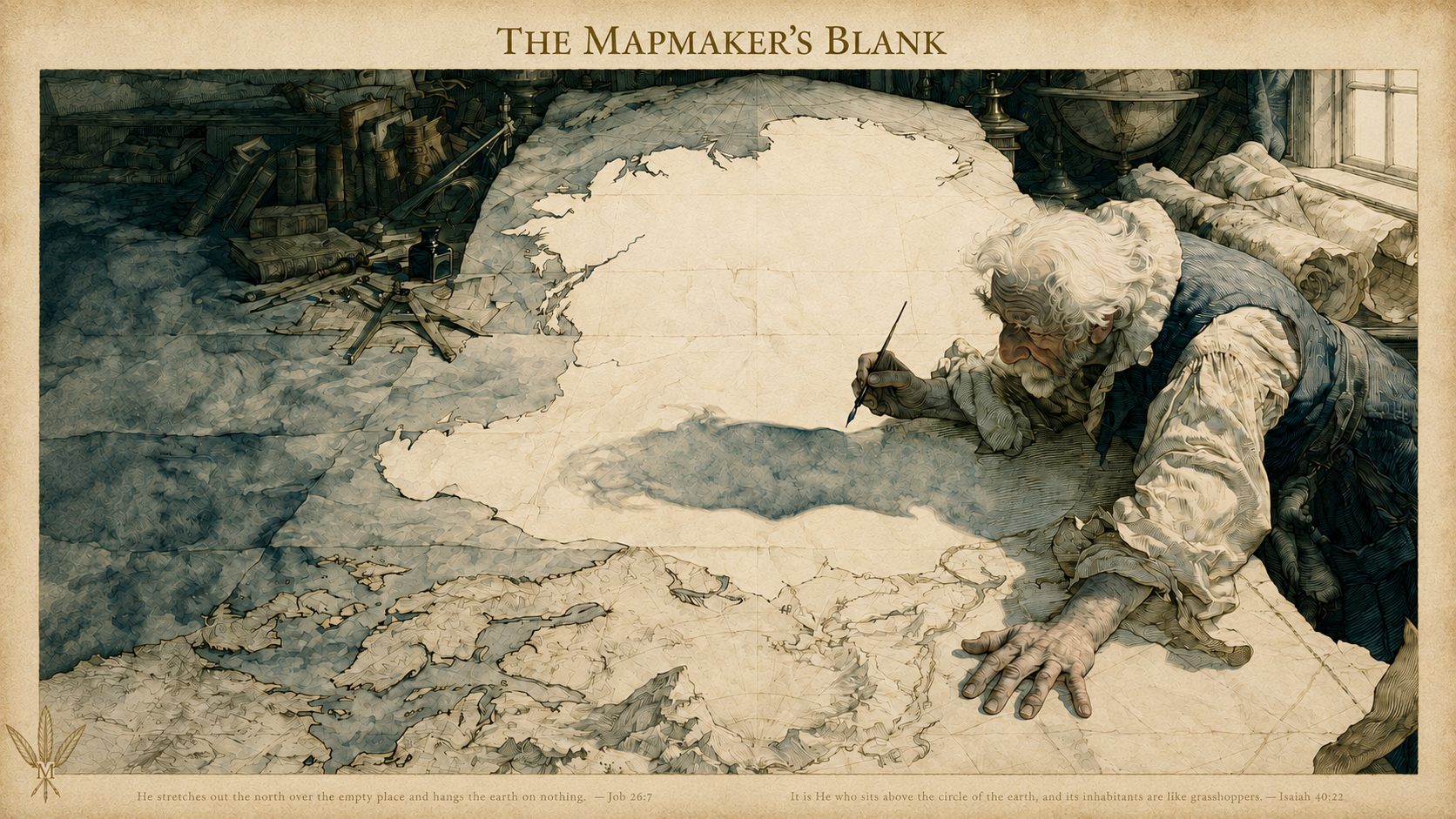
The mapmaker had charted every road he had walked, every river he had crossed, and every village whose name he could confirm.
Only one region remained blank.
It lay beyond the northern hills, where no traveller from his town had gone in living memory. Whenever people asked what occupied the empty space, he answered honestly:
“I do not know.”
At first, this satisfied them.
But as his maps became famous, uncertainty began to look like carelessness. Merchants questioned his skill. Officials asked why such an important document contained an unfinished corner.
So the mapmaker placed a small symbol inside the blank: a black circle surrounded by warning lines.
He did not write danger. He merely allowed people to assume it.
Soon, travellers avoided the northern road. Parents warned their children about the land beyond the hills. Other mapmakers copied the symbol, each making it larger and darker.
Many years later, a young woman ignored the warnings and crossed the hills.
She found no monsters, poisoned air, or bottomless ravines. She found fields, orchards, and a small settlement whose people had long wondered why no visitors ever came.
When she returned, she placed a basket of northern apples on the mapmaker’s table.
“What does your symbol mean?” she asked.
The old man looked at the black mark he had made so many years before.
“It meant that I did not know,” he said.
The traveller shook her head.
“No. That is what the blank meant.”
What we refuse to call unknown, we often teach others to fear.