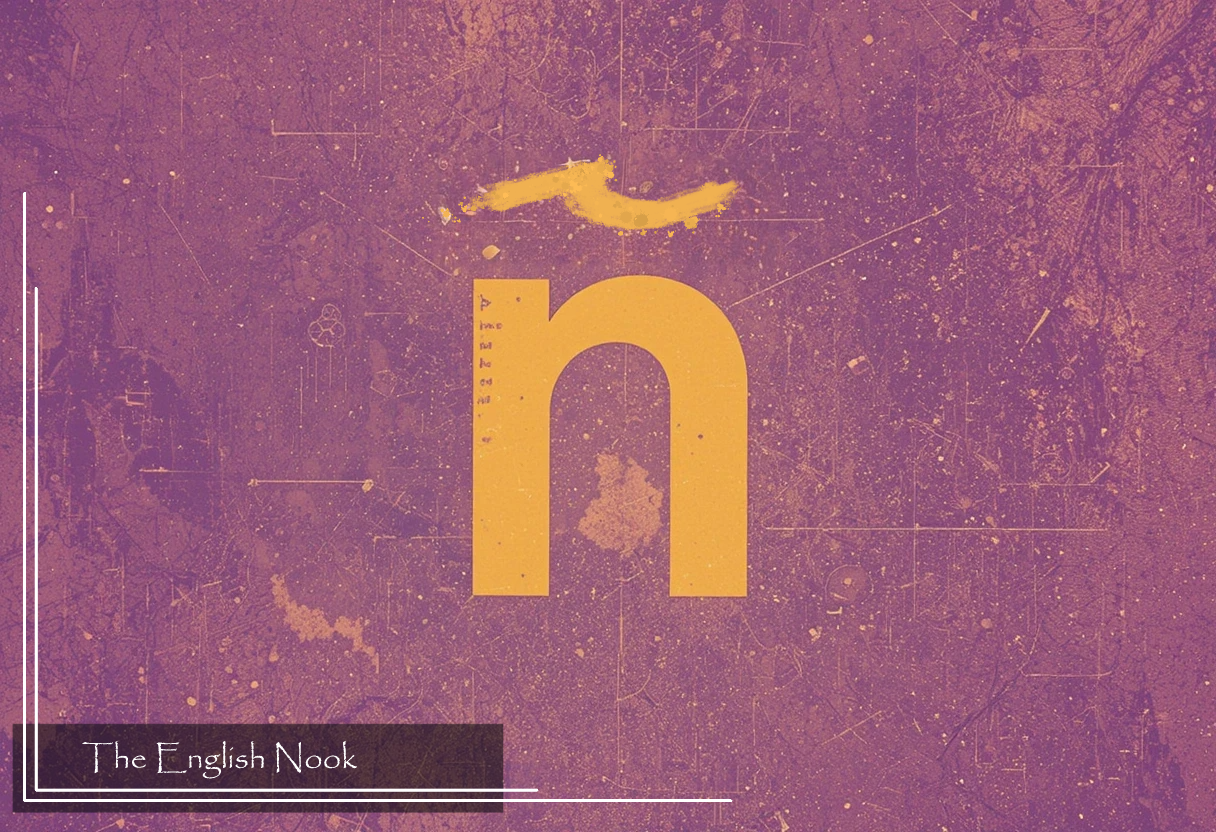

More Than Just a Letter
For anyone learning Spanish, the letter Ñ quickly stands out. It’s visually distinctive, sounds unique, and appears in many everyday words. But beyond its shape and sound, Ñ represents something deeper — a symbol of Spanish identity, culture, and linguistic precision. Understanding Ñ is not only essential for correct pronunciation and vocabulary, but it also offers a window into the history and heart of the Spanish language.
What Sound Does Ñ Make?
In phonetics, Ñ represents the palatal nasal sound /ɲ/. If that sounds technical, don’t worry — you’ve probably already heard it in words like:
- niño (child)
- año (year)
- señor (mister)
- mañana (morning or tomorrow)
It’s not the same as the English “n” (/n/) in “no” or “nine.” Instead, Ñ is pronounced with the middle of the tongue touching the roof of the mouth, similar to the “ny” sound in the English word “canyon.”
🎧 Think of “niño” as nee-nyo, not nee-no.
How to Pronounce Ñ: A Quick Guide
To pronounce Ñ correctly:
- Start with an n sound.
- Glide into a “y” sound as in “yes.”
- Combine them smoothly, almost like saying “ny.”
Try also practicing with:
- España (Spain)
- bañarse (to bathe oneself)
- compañero (partner or companion)
With practice, it becomes second nature — but it’s vital to pronounce it clearly, since confusing it with a regular “n” can cause misunderstandings.
Common Words with Ñ
Here are some high-frequency words every Spanish learner should know:
| Word | English Translation |
|---|---|
| año | year |
| niño | child (boy) |
| cañón | canyon / cannon |
| mañana | morning / tomorrow |
| señora | Mrs., lady |
| uña | fingernail |
| piñata | piñata |
| montaña | mountain |
Notice how common and essential this letter is in everyday speech!
Look-Alikes and Common Mistakes
One of the biggest pronunciation traps for learners is confusing Ñ with N. These mistakes are not only incorrect — they can be embarrassing or change the meaning entirely.
| Correct Word | Mistaken Version | Meaning of Mistake |
|---|---|---|
| año (year) | ano | anus |
| caña (cane) | cana | gray hair |
| señor | senor | [nonexistent word in Spanish] |
| piña (pineapple) | pina | [also incorrect or regional] |
So yes, pronouncing Ñ properly matters!
Where Else Does Ñ Appear?
While Ñ is most famously used in Spanish, it also appears in:
- Galician and Asturleonese (regional languages in Spain)
- Filipino, because of Spanish influence during colonial times
- Basque, Mapuche, and some indigenous languages in Latin America
However, it’s rarely found in other major world languages, making it a unique and proudly Spanish symbol.
A Fun Fact: Where Does Ñ Come From?
Historically, Ñ evolved from a double N (NN) in Latin. Scribes in medieval Spain began writing a small “n” over the first letter to save space and ink. Over time, this shorthand became standard and the tilde (~) was born.
Latin “annus” (year) → Old Spanish “anno” → Modern Spanish año
Today, Ñ is not just a modification — it’s a separate letter in the Spanish alphabet, officially positioned between N and O.
Cultural Identity and the Ñ
Ñ is more than a sound — it’s a powerful cultural marker. It appears in the word español, after all! The letter has become a symbol of Hispanic pride and has sparked debates over technology, global keyboards, and character encoding.
In the 1990s, for example, Spain pushed back against tech giants trying to exclude Ñ from standard keyboards. The resistance worked, and today, Ñ proudly retains its place — both on screens and in hearts.
It’s also used in logos, literature, and language campaigns. For many, Ñ is identity.
Why Ñ Matters in Your Learning Journey
Learning Spanish isn’t just about grammar and vocabulary — it’s about understanding what makes the language unique. The letter Ñ is a perfect example: it teaches you sound, spelling, history, and culture, all at once.
So next time you see or hear “niño” or “mañana,” remember that Ñ is more than a letter — it’s a bridge to deeper fluency and a reminder of how language carries tradition.
Ñ: The tiny letter with a giant cultural heartbeat.
If you’ve read everything, please consider leaving a like, sharing, commenting, or all three!
YOU WILL ALSO LIKE: