
When Stories Lead Us into the Dark
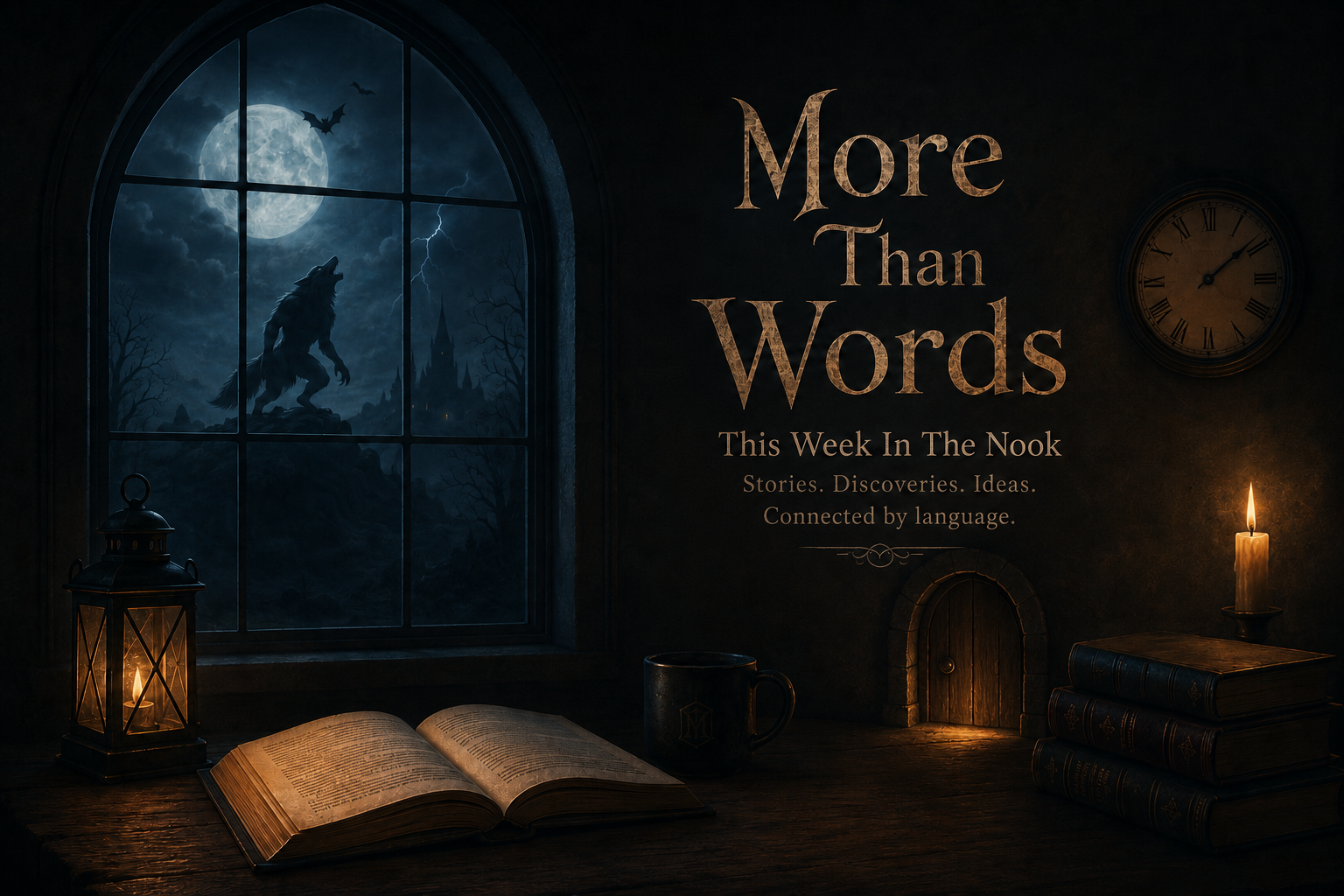
A small doorway into the stories that wait in the dark.
Not every story opens a window.
Some open a door beneath the bed. Some wait inside a clock. Some gather debts beneath a dark moon, weave forgotten lives into silver threads, or leave a ship hanging perfectly still beside something that should never have been found.
Dark stories do not always exist to frighten us away.
Often, they invite us closer.
They give shape to the things we sense but cannot explain: the room that feels wrong, the reflection that moves too soon, the shadow that seems almost alive, the memory that catches us like a web, the silence that waits longer than it should.
Today, we return to the story archive and follow eight paths into the dark—four in English, four in Spanish—each one carrying its own threshold, its own mystery, and its own quiet warning.
🐦⬛ Fetched from the Story Archive
The crows have not returned this time with essays, lessons, or histories.
They have brought stories.
Some are cosmic, some domestic, some mythic, some intimate. Some begin in a child’s bedroom, others in deep space, an attic, a village, a forest, or a world made of shadow. Yet each of them understands something essential about darkness: it is never empty.
It watches.
It remembers.
It waits.
Moons, Webs, and Impossible Stillness
▸ The Dark Moon’s Shine
A village lives under the burden of an ancient bargain, where moonlight does not comfort but reveals what has been hidden and what must finally be paid. Mythic, solemn, and quietly severe, this story follows darkness as inheritance.
▸ The Great Weaver
In a forest where forgotten moments are caught and preserved, memory becomes something almost alive. This tale moves through threads, silence, and unfinished lives, asking what remains of us when the world forgets.
▸ The Still One
Commander Ellis discovers an object in space that should not exist: an asteroid without orbit, drift, or rotation. What begins as a scientific anomaly becomes something stranger and far more patient—a story about stillness that is not absence, but waiting.
Doors, Doubles, and Watching Things
▸ The Door Beneath the Bed
Oliver finds a tiny door beneath his bed, leading not to another world, exactly, but to wrong versions of his own room. A skyless room. A mirrorless room. A childless room. Each return makes the familiar more dangerous.
▸ El ojo en el reloj
A clock stops at the same impossible minute, and something inside it begins to watch. Domestic and unsettling, this story turns time into a witness—and perhaps into something far worse.
▸ El reemplazo
Tomás finds notes that appear to come from earlier versions of himself. The deeper he looks, the more uncertain his identity becomes. This is a story of replacement, repetition, and the fear that the self may not be as stable as it seems.
Shadows, Eclipses, and Other Worlds
▸ Los hijos del eclipse
An eclipse marks the arrival of children connected to something older and stranger than ordinary life. Transformation, inheritance, and cosmic change move through this tale, where darkness is not the end of the world but the beginning of another shape.
▸ La vida secreta de las sombras
When Lía discovers that her shadow, Nilo, has a life of her own, she is drawn into Umbra: a hidden realm of living shadows, strict laws, forbidden places, and a dangerous weakening between worlds. Dark but full of wonder, this story shows that even shadows may have loyalties, secrets, and sacrifices.
🌾 Word Nook
Dark stories depend on the words that hold their atmosphere.
Continue into the Word Nook with Umbra, Penumbra, and Stygian—three words that lead us through shadow, partial darkness, eclipse, underworld imagery, and the deep regions where fear and imagination begin to meet.
📚 History Nook
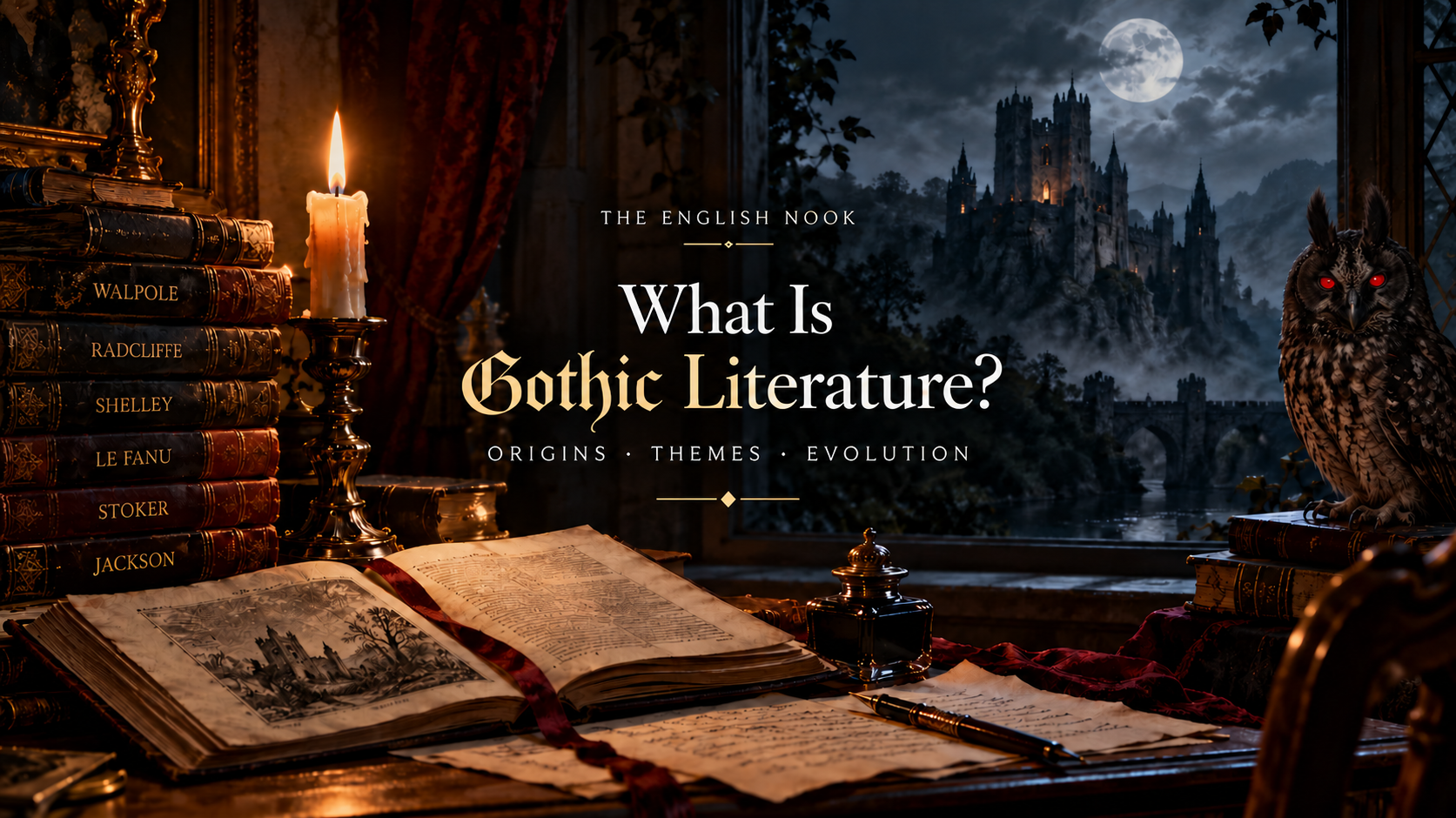
The darker paths of fiction also have a long literary history.
Continue exploring through the History Nook with:
▸ Ann Radcliffe — Pioneer of Gothic Fiction and Architect of English Literary Atmosphere
Radcliffe helped shape the atmosphere of Gothic fiction: ruined spaces, suspense, emotional intensity, and the sense that fear often grows strongest in what remains unseen.
▸ Birth of Mary Shelley, Author of Frankenstein — The Mother of Monsters
Shelley gave English one of its most enduring ways to speak about creation, ambition, monstrosity, and the fear of what human hands might bring to life.
▸ Publication of Dracula (1897) — Transforming English Through Gothic Horror and Vampire Language
Bram Stoker’s Dracula strengthened and popularised one of English Gothic fiction’s most enduring imaginative vocabularies: blood, night, secrecy, contagion, seduction, and the terrifying persistence of the undead.
Darkness in stories is rarely only darkness.
It may be memory. It may be debt. It may be grief, curiosity, transformation, or a hidden world pressing gently against our own. It may live under a bed, behind a clock face, inside a shadow, beyond the stars, or in the part of the mind that knows something is wrong before reason can explain why.
That is why we return to dark stories.
Not because they remove fear.
Because they give fear a shape.
And once something has a shape, we can finally look at it.
Until the next path opens,
keep close to the lantern.