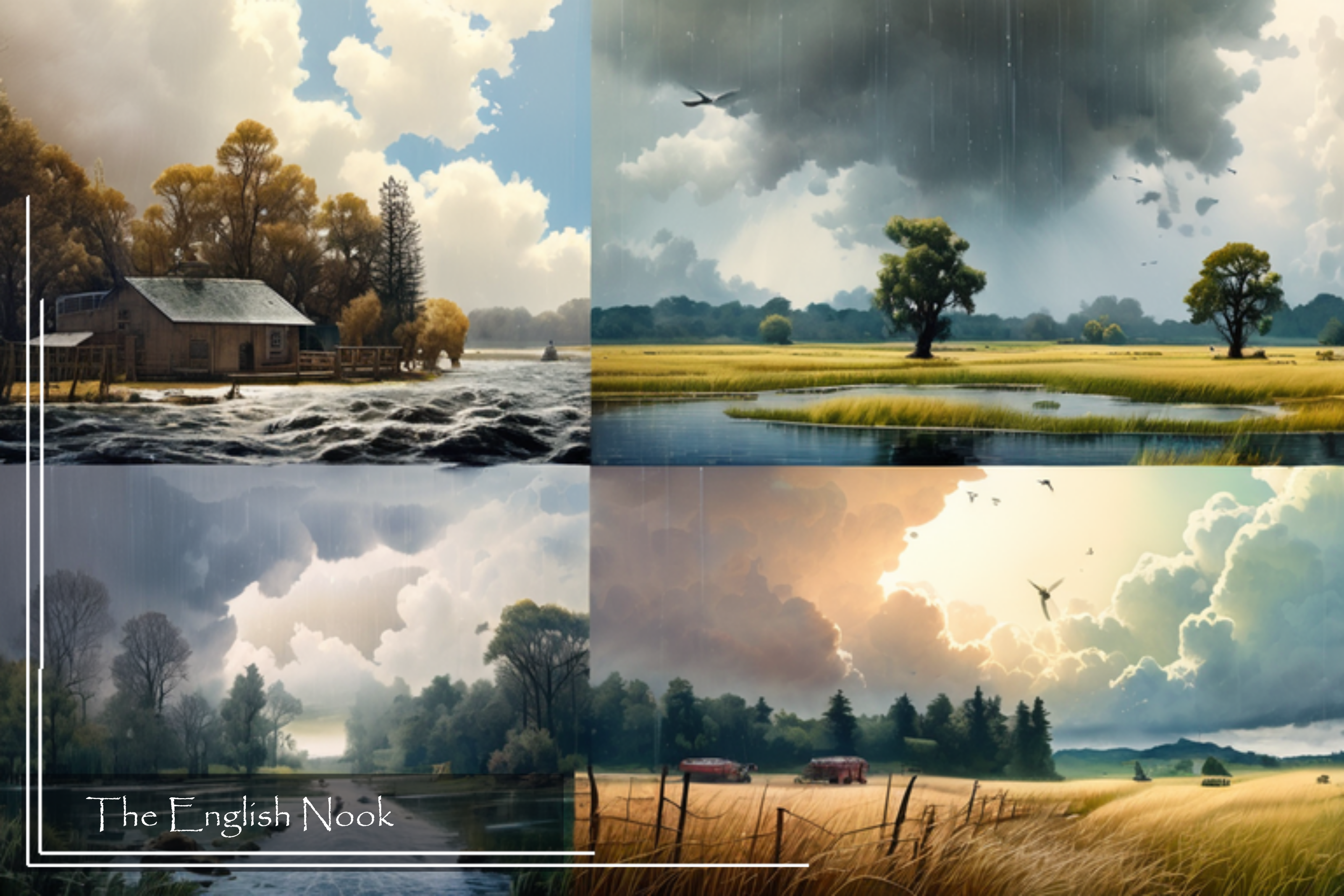
When it Rains, it Pours.
El clima es un tema de conversación común que nos conecta a todos, independientemente de la lengua que hablemos. Al abordar el vocabulario relacionado con el clima en inglés, nos sumergimos en un conjunto diverso de palabras y expresiones que nos permiten describir y entender las condiciones atmosféricas. A continuación, exploraremos algunas palabras clave y frases útiles para enriquecer nuestro repertorio de vocabulario climático.
Condiciones Generales del Tiempo:
- Weather (Tiempo): La palabra general para describir las condiciones atmosféricas en un momento dado. Por ejemplo, “The weather today is sunny.”
- Temperature (Temperatura): Indica cuán caliente o frío está el ambiente. “The temperature is 25 degrees Celsius.”
- Climate (Clima): A diferencia del tiempo, el clima se refiere a las condiciones atmosféricas promedio en un lugar durante un período más largo. “The climate in this region is tropical.”
Tipos de Clima:
- Sunny (Soleado): Cuando el sol brilla en el cielo. “It’s a sunny day at the beach.”
- Rainy (Lluvioso): Cuando está lloviendo. “I love staying indoors on rainy days.”
- Cloudy (Nublado): Cuando el cielo está cubierto de nubes. “The day started clear, but now it’s cloudy.”
- Windy (Ventoso): Cuando hay viento fuerte. “Be careful; it’s windy outside.”
- Snowy (Nevado): Cuando está nevando. “The children are playing in the snowy park.”
Fenómenos Atmosféricos:
- Rain (Lluvia): Gotas de agua que caen del cielo. “We canceled the picnic due to heavy rain.”
- Snow (Nieve): Cristales de hielo que caen y cubren el suelo. “The mountains are covered in snow.”
- Wind (Viento): El movimiento del aire. “The wind is blowing from the east.”
Descripciones Detalladas:
- Fog (Niebla): Nubes bajas que limitan la visibilidad. “Drive carefully; there’s dense fog.”
- Hail (Granizo): Pequeñas bolas de hielo que caen del cielo. “We had to pull over because the hail was so intense.”
- Thunderstorm (Tormenta eléctrica): Tormenta con truenos y relámpagos. “We stayed indoors during the thunderstorm.”
Expresiones Cotidianas:
- To Forecast (Pronosticar): Prever las condiciones atmosféricas. “The meteorologist will forecast the weather.”
- To Check the Weather (Verificar el Tiempo): Revisar las condiciones actuales. “I always check the weather before planning a trip.”
- To Bundle Up (Abrigarse): Vestirse con ropa cálida. “It’s cold outside; you should bundle up.”
- To Catch Some Rays (Tomar Rayos de Sol): Disfrutar del sol. “Let’s go to the beach and catch some rays.”
- To Be Under the Weather (Estar Indispuesto): Sentirse enfermo. “I can’t go to work today; I’m under the weather.”
- Clear Skies (Cielo Despejado): Sin nubes en el cielo. “Tomorrow is predicted to have clear skies.”
Algunas oraciones para practicar este vocabulario:
- Today the weather is sunny and warm, perfect for a stroll in the park.
- The temperature reached 30 degrees Celsius, making the day feel stifling.
- The climate in this region is tropical, with high temperatures throughout the year.
- During summer, the days are mostly sunny and hot.
- I love staying indoors on rainy and cozy days like today!
- Clouds cover the sky, making the day seem gloomy and dark.
- Be careful outside, the wind is blowing strongly and it can be dangerous.
- Children have fun playing in the snowy park, building snowmen.
- We decided to cancel the picnic due to the heavy rain falling.
- The mountains are covered in snow, creating a beautiful winter landscape.
- The cool wind blows gently, bringing with it refreshing air.
- Drive with caution; dense fog limits visibility on the road.
- We had to stop because hail was falling from the sky forcefully.
- We took shelter at home during the thunderstorm, listening to the thunder rumble.
- Tomorrow clear skies are forecasted, perfect for an outdoor excursion.
Al incorporar estas palabras y expresiones en nuestro vocabulario, mejoramos nuestra capacidad para describir y comprender las condiciones climáticas en inglés. Este conocimiento no solo facilita la comunicación diaria, sino que también enriquece nuestras conversaciones, permitiéndonos compartir experiencias y planificar actividades de manera más efectiva.
TAMBIÉN TE INTERESARÁ: