Where Questions Lead
Some questions arrive as sparks. Others refuse to leave.
This week, curiosity moved through language, fable, practice, inherited knowledge, observation, and finally evidence itself. Sometimes the answer mattered. Sometimes what happened while looking for it mattered more.
Here is the week at a glance.
From the Week
✦ Is Curiosity a Force or an Impulse?
The week began with curiosity itself. Is it the sudden spark that makes the familiar questionable, the force that keeps us searching afterwards, or something closer to attention — the moment we realise that what seemed ordinary contains more than we first assumed?
✦ El zorro y los oyentes distraídos
A fox discovers that young listeners can hear without listening and look without observing. One carefully staged surprise turns an ordinary lesson into something considerably harder to ignore: attention matters before the world gives us a reason to regret its absence.
✦ The Red Panda and the Height
A young red panda climbs towards what he thinks is fruit and finds only a dry seedpod. Yet branch by branch, the search has already rewarded him with balance, judgment, confidence, and new views of the forest. The answer may be small; what the search teaches us need not be.
✦ More Than Words — What Curiosity Leaves Behind
Midweek looked beyond the answer itself. Through older stories, learning, Word Nook, and History Nook, curiosity became something that leaves traces behind: a sharper eye, a practised skill, a changed view of home, useful mistakes, and sometimes better judgment about which door should be opened at all.
✦ The Shepherd of Sleeping Keys
Nine keys. No doors. An old shepherdess performs a ritual she cannot explain, and a boy learns it before he understands it. The little paradox at its centre asks whether knowledge must always begin with explanation — or whether sometimes the hands learn first.
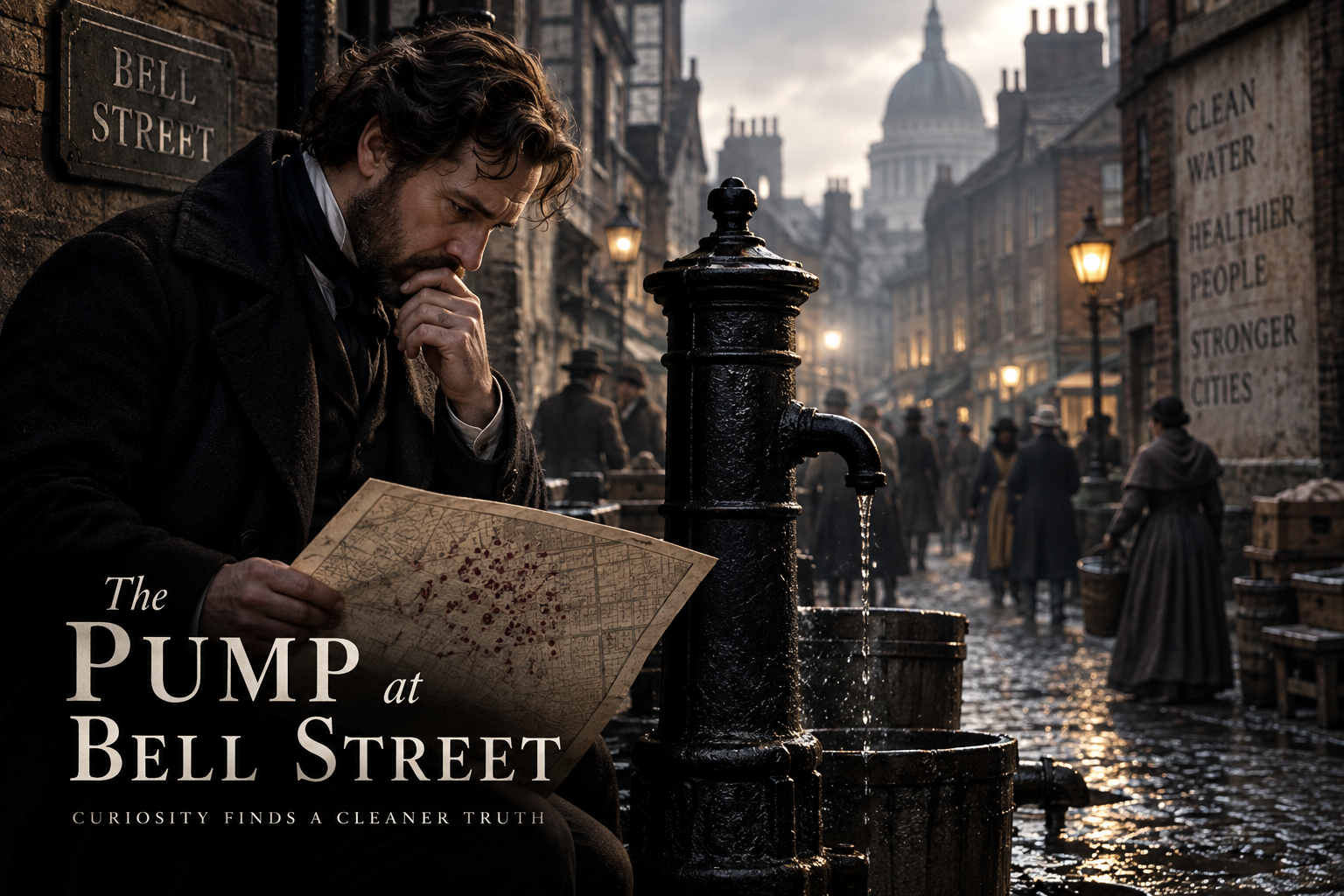
✦ The Pump at Bell Street
Bell Street has an explanation for its sickness: bad air. Dr. Jon Snoew is less certain. By mapping deaths, noticing the houses that remain untouched, and following one stubborn exception, curiosity becomes disciplined observation — until the most useful question is no longer why did these people become ill?, but why did those people not?
This Week in History Nook
7 September — Eiji Yoshikawa — Japanese history became lived narrative as warriors, roads, rivalries, discipline, and memory moved through stories readers could enter rather than merely observe.
8 September — Siegfried Sassoon — A decorated soldier turned poetry and public protest against the polished language of glory, insisting that courage without truth could become another kind of obedience.
9 September — Adelaide Crapsey — Crapsey made brevity intense, compressing image, perception, and feeling into the small architecture of the cinquain.
10 September — Mary Wollstonecraft — Rights, education, reason, and independence confronted a basic contradiction: women could hardly be called naturally weak after being deliberately trained for dependence.
11 September — Pierre de Ronsard — Renaissance ambition helped French imagine itself as a language capable of carrying major poetry: love, mortality, classical form, and public authority with new confidence.
12 September — Stanisław Lem — Science fiction became a laboratory for intelligence, failed contact, technology, satire, and the uncomfortable limits of what human beings are capable of understanding.
13 September — Sherwood Anderson — Ordinary small-town lives opened inward as Anderson found loneliness, desire, frustration, tenderness, and whole hidden worlds beneath plain speech and familiar streets.
Words of the Week
Friendship · Innocence · Comfort · Home · Rambling · Enchantment · Ailment
Seven words travelled from connection, trust, reassurance, and belonging into wandering and enchantment — before Ailment quietly opened a different path: the language we use when something has begun to be wrong, even before we know exactly what it is.
The week began by asking what curiosity actually is.
Then a fox asked his listeners to pay attention. A red panda climbed because he wanted to know. The archive followed what remained after the answer arrived. A boy learned something nobody could explain. And on Bell Street, one doctor kept looking because the accepted explanation did not quite fit.
The questions changed. The movement did not.
Meanwhile, History Nook travelled from Yoshikawa’s living past to Lem’s unknowable future and Anderson’s hidden interiors, while Word Nook moved from Friendship and Home through Rambling and Enchantment — before Ailment opened the door to a new vocabulary altogether.
Six larger paths. Seven voices from the past. Seven words to carry forward.
Another week has found its place on the Shelves.
See you next Sunday at The English Nook. 🐦⬛