Part 1
Discovering Old English:
A Gateway to Linguistic and Cultural Heritage
Old English, or Anglo-Saxon, was spoken in England and southern Scotland from the 5th to the 11th century. As the foundation of modern English, it offers a unique glimpse into the lives, beliefs, and creativity of our linguistic ancestors. From everyday words to poetic expressions, Old English is a treasure trove of history and culture. This is the first set of 30 remarkable Old English words, grouped into themes like nature, creatures, emotions, and the world around us. By exploring these words, you’ll not only connect with the origins of many modern terms but also uncover the deep cultural and spiritual values that shaped early English life.
Nature and the World
- Æþeling – Prince or nobleman
Old English: “Se æþeling wæs gearu tō fōn þone cynedōm.”
Modern English: “The prince was ready to take the throne.” - Bryce – Break or breach
Old English: “Þā wēallas hæfdon ān bryce æfter þām storme.”
Modern English: “The walls had a breach after the storm.” - Cyning – King
Old English: “Se cyning rīcsode mid wīsdōme and miht.”
Modern English: “The king ruled with wisdom and might.” - Dæg – Day
Old English: “On sunbeorhtan dæge hīe gaderodon tō þǣre symbel.”
Modern English: “On a bright day, they gathered for the feast.” - Eorþe – Earth
Old English: “Se yrþling geēode þā eorþan mid hēan.”
Modern English: “The farmer tilled the earth with care.” - Heofon – Heaven
Old English: “Hīe locedon on þone heofon mid ārweorþnesse.”
Modern English: “They gazed at the heaven with awe.” - Lēaf – Leaf
Old English: “Ān lēaf feol of þǣm æsc.”
Modern English: “A single leaf fell from the ash tree.” - Mōna – Moon
Old English: “Se mōna scīn ofer þone weg on niht.”
Modern English: “The moon lit the path at night.” - Sčēad – Shadow
Old English: “Sčēad feol ofer þā dene.”
Modern English: “A shadow fell over the valley.” - Sōl – Sun
Old English: “Þā sōl ārās ofer þone wæstmere.”
Modern English: “The sun rose over the horizon.”
Notes:
- Æþeling (Prince or nobleman)
Note: The letter “þ” (thorn) represents the “th” sound, which was common in Old English but is now replaced by the “th” digraph in modern English. - Cyning (King)
Note: The “y” in “cyning” is pronounced like the modern “i” in “sit,” which is different from the modern “y” sound in “king.” - Heofon (Heaven)
Clarification: “Heofon” directly corresponds to the modern “heaven,” but its original meaning referred more to the sky or the expanse above the Earth, rather than the spiritual concept of heaven as we understand it today. - Sōl (Sun)
Note: “Sōl” is the direct precursor of “sun,” showing how the word evolved but retained its strong connection to celestial bodies. Its pronunciation shifted significantly over time.
Creatures
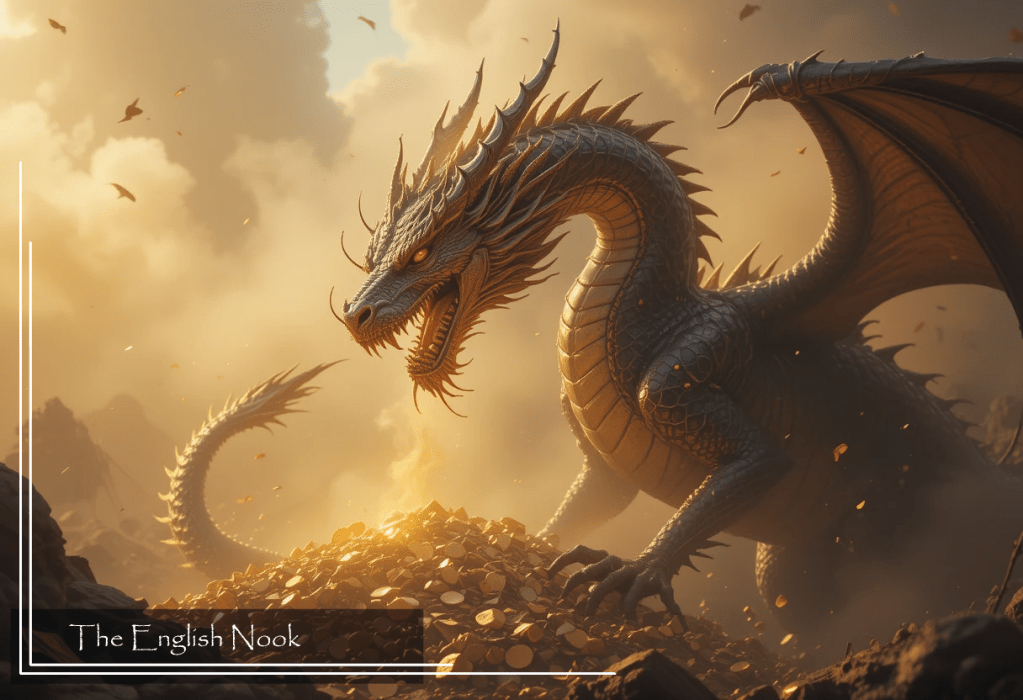
- Draca – Dragon
Old English: “Saga spræc be þǣm dracan þe gold geheald.”
Modern English: “The tale spoke of a dragon guarding gold.” - Fugol – Bird
Old English: “Ān fugol sang swētelīce on ǣrne mergen.”
Modern English: “A bird sang sweetly in the early morning.” - Hræfn – Raven
Old English: “Se hræfn sæt ofer þǣm stēapum tūne.”
Modern English: “The raven perched above the tall tower.” - Wulf – Wolf
Old English: “Se wulf ūtlaga ylde on þǣre niht.”
Modern English: “The lone wolf howled in the night.” - Eoh – Horse
Old English: “Se eoh gelǣdde him ofer þā wēsten.”
Modern English: “The horse carried him across the wilderness.” - Fīsc – Fish
Old English: “Se fiscere gefēng ānne fīsc on þǣm mere.”
Modern English: “The fisherman caught a fish in the lake.” - Deor – Wild animal
Old English: “Þā wuda wǣron full mid deor.”
Modern English: “The woods were full of wild animals.” - Swīn – Pig
Old English: “Þæt swīn rīnde on þǣm tūne.”
Modern English: “The pig rooted in the yard.” - Hrēod – Reed
Old English: “Hrēod wægdon be þǣm wætere.”
Modern English: “The reeds swayed by the water.” - Hund – Dog
Old English: “Se hund bewēg þā hūs mid his getrēownesse.”
Modern English: “The dog guarded the house with loyalty.”
Notes:
- Draca (Dragon)
Clarification: While “draca” is the Old English word for dragon, it was not the fire-breathing monster we think of today. It was more commonly used to refer to a serpent or large, mythical creature in early texts. - Fugol (Bird)
Note: “Fugol” is the ancestor of modern “fowl,” reflecting how the term for “bird” evolved to cover more specific categories of birds, such as domestic fowl. - Hræfn (Raven)
Clarification: Ravens were considered omens of both good and bad in Old English culture. They held significant symbolic value in the Anglo-Saxon world, often representing mystery and prophecy. - Wulf (Wolf
Note: The word “wulf” is deeply tied to early Anglo-Saxon mythology, where wolves were both feared and revered for their connection to nature and the wild.
Emotions and States
- Blīþe – Happy
Old English: “Hē wæs blīþe on his heortan æfter þǣm sigore.”
Modern English: “He was happy in his heart after the victory.” - Ānīgen – Solitary
Old English: “Se munuc leofode ānīgen on þǣre wēstene.”
Modern English: “The monk lived solitary in the wilderness.” - Geōmor – Sad
Old English: “Se cempan wæs geōmor æfter his gefēran forspīllan.”
Modern English: “The warrior was sad after the death of his comrade.” - Lufu – Love
Old English: “Lufu betwēonum þām twǣm wæs strang and unfægn.”
Modern English: “The love between the two was strong and steadfast.” - Sorg – Sorrow
Old English: “Sorg befēng þā wīf æfter þæs cyninges hryre.”
Modern English: “Sorrow consumed the woman after the king’s fall.” - Wyrd – Fate
Old English: “Wyrd ungewiss lǣdde hīe tō þǣm strange ġewinne.”
Modern English: “Uncertain fate led them to the fierce battle.” - Þēostre – Darkness
Old English: “Þēostre wæs ofer eall þæt land mid þǣre nihtcyminge.”Modern English: “Darkness was over all the land with the coming of night.” - Hāl – Whole, healthy
Old English: “Se lǣċe dyde hīe hāl æfter þǣre miclan wunde.”
Modern English: “The healer made him whole after the great wound.” - Forht – Afraid
Old English: “Hē wæs forht þonne hē hȳrde þæs þrēan stefne.”
Modern English: “He was afraid when he heard the voice of the threat.” - Mōd – Mind or courage
Old English: “His mōd wæs strang on þǣm fyre and swīþe unafandod.”
Modern English: “His mind was strong in the fire and greatly unshaken.”
Notes:
- Blīþe (Happy)
Clarification: The word “blīþe” reflects a more profound sense of contentment or joy, often linked to a sense of peace and well-being, rather than the fleeting happiness of modern usage. - Lufu (Love)
Note: In Old English, “lufu” carried a broader meaning, not limited to romantic love but encompassing affection, loyalty, and even love for one’s community or kin. - Sorg (Sorrow)
Clarification: “Sorg” is the root of the modern word “sorrow,” but it had a more profound, existential meaning in Old English, often tied to loss, grief, or a deep emotional wound. - Wyrd (Fate)
Note: “Wyrd” is where we get the modern word “weird,” but its original meaning was related to fate or destiny, particularly the unchangeable nature of one’s path. It was an important concept in Anglo-Saxon culture, often intertwined with the idea of fate controlling human lives.
Why Old English Matters Today
By exploring Old English, we unlock the roots of many words and concepts that define our modern language. For instance, “wyrd” evolved into “weird,” and “fugol” into “fowl,” showing the poetic transformations of language over centuries. Studying these words also offers a connection to the cultural and spiritual values of the time, like the emphasis on fate (wyrd), honor (ār), and the natural world (eorþe).
Let these 30 words inspire you to delve deeper into the past, enrich your vocabulary, and appreciate the beauty of linguistic evolution. Though this is just the beginning, it’s a taste of what’s to come. Part 2 of this list will soon unveil the remaining gems to complete the full 100. For now, let these words spark your curiosity and imagination. If you’d like to explore their uses or poetic significance further, let’s continue this journey together! Stay tuned for the next installment, and let’s celebrate the art of language, one word at a time.
You can check Part 2 here!
You can check Part 3 here!
Discover Old English: Where history whispers through words!
If you’ve read everything, please consider leaving a like, sharing, commenting, or all three!
YOU WILL ALSO LIKE:


 The English Nook
Leave a comment