
Edgar Allan Poe
The Raven
Once upon a midnight dreary, while I pondered, weak and weary,
Over many a quaint and curious volume of forgotten lore—
While I nodded, nearly napping, suddenly there came a tapping,
As of someone gently rapping, rapping at my chamber door.
“‘Tis some visitor,” I muttered, “tapping at my chamber door—**
Only this and nothing more.”
Ah, distinctly I remember it was in the bleak December;
And each separate dying ember wrought its ghost upon the floor.
From my books surcease of sorrow—sorrow for the lost Lenore—
For the rare and radiant maiden whom the angels name Lenore—
Nameless here for evermore.
And the silken, sad, uncertain rustling of each purple curtain
Thrilled me—filled me with fantastic terrors never felt before;
So that now, to still the beating of my heart, I stood repeating
“‘Tis some visitor entreating entrance at my chamber door—
Some late visitor entreating entrance at my chamber door;—
This it is and nothing more.”
Presently my soul grew stronger; hesitating then no longer,
“Sir,” said I, “or Madam, truly your forgiveness I implore;
But the fact is I was napping, and so gently you came rapping,
And so faintly you came tapping, tapping at my chamber door,
That I scarce was sure I heard you”—here I opened wide the door;—
Darkness there and nothing more.
Deep into that darkness peering, long I stood there wondering, fearing,
Doubting, dreaming dreams no mortal ever dared to dream before;
But the silence was unbroken, and the stillness gave no token,
And the only words there spoken were the whispered words, “Lenore?”
This I whispered, and an echo murmured back the word, “Lenore!”—
Merely this and nothing more.
Back into the chamber turning, all my soul within me burning,
Soon again I heard a tapping somewhat louder than before.
“Surely,” said I, “surely that is something at my window lattice;**
Let me see, then, what thereat is, and this mystery explore—
Let my heart be still a moment and this mystery explore;—
‘Tis the wind and nothing more!”
Open here I flung the shutter, when, with many a flirt and flutter,
In there stepped a stately Raven of the saintly days of yore;
Not the least obeisance made he; not a minute stopped or stayed he;
But, with mien of lord or lady, perched above my chamber door—
Perched upon a bust of Pallas just above my chamber door—
Perched, and sat, and nothing more.
Then this ebony bird beguiling my sad fancy into smiling,
By the grave and stern decorum of the countenance it wore,
“Though thy crest be shorn and shaven, thou,” I said, “art sure no craven,
Ghastly grim and ancient Raven wandering from the Nightly shore—
Tell me what thy lordly name is on the Night’s Plutonian shore!”
Quoth the Raven “Nevermore.”
Much I marvelled this ungainly fowl to hear discourse so plainly,
Though its answer little meaning—little relevancy bore;
For we cannot help agreeing that no sublunary being
Ever yet was blessed with seeing bird above his chamber door—
Bird or beast upon the sculptured bust above his chamber door,
With such name as “Nevermore.”
But the Raven, sitting lonely on the placid bust, spoke only
That one word, as if his soul in that one word he did outpour.
Nothing farther then he uttered—not a feather then he fluttered—
Till I scarcely more than muttered “Other friends have flown before—
On the morrow he will leave me, as my Hopes have flown before.”
Then the bird said “Nevermore.”
Startled at the stillness broken by reply so aptly spoken,
“Doubtless,” said I, “what it utters is its only stock and store,
Caught from some unhappy master whom unmerciful Disaster
Followed fast and followed faster till his songs one burden bore—
Till the dirges of his Hope that melancholy burden bore
Of ‘Never—nevermore.’”
But the Raven still beguiling all my sad soul into smiling,
Straight I wheeled a cushioned seat in front of bird, and bust and door;
Then, upon the velvet sinking, I betook myself to linking
Fancy unto fancy, thinking what this ominous bird of yore—
What this grim, ungainly, ghastly, gaunt, and ominous bird of yore
Meant in croaking “Nevermore.”
This I sat engaged in guessing, but no syllable expressing
To the fowl whose fiery eyes now burned into my bosom’s core;
This and more I sat divining, with my head at ease reclining
On the cushion’s breast that a lamp-light gloated o’er,
But whose velvet-violet lining with the lamplight gloated o’er,
She shall press, ah, nevermore!
Then, methought, the air grew denser, perfumed from an unseen censer
Swung by Seraphim whose foot-falls tinkled on the tufted floor.
Wretch, I cried, thy God hath lent thee—by these angels he hath sent thee
Respite—respite and nepenthe from thy memories of Lenore!
Quaff, oh quaff this kind nepenthe and forget this lost Lenore!”
Quoth the Raven “Nevermore.”
Prophet!” said I, “thing of evil!—prophet still, if bird or devil!
By that Heaven that bends above us—by that God we both adore—
Tell this soul with sorrow laden if, within the distant Aidenn,
It shall clasp a sainted maiden whom the angels name Lenore—
Clasp a rare and radiant maiden whom the angels name Lenore.”
Quoth the Raven “Nevermore.”
Be that word our sign of parting, bird or fiend!” I shrieked, upstarting—
Get thee back into the tempest and the Night’s Plutonian shore!
Leave no black plume as a token of that lie thy soul hath spoken!
Leave my loneliness unbroken!—quit the bust above my door!
Take thy beak from out my heart, and take thy form from off my door!”
Quoth the Raven “Nevermore.”
And the Raven, never flitting, still is sitting, still is sitting
On the pallid bust of Pallas just above my chamber door;
And his eyes have all the seeming of a demon’s that is dreaming,
And the lamp-light o’er him streaming throws his shadow on the floor;
And my soul from out that shadow that lies floating on the floor
Shall be lifted—nevermore!
Eldorado
Gaily bedight,
A gallant knight,
In sunshine and in shadow,
Had journeyed long,
Singing a song,
In search of Eldorado.
But he grew old,
This knight so bold,
And o’er his heart a shadow
Fell, as he found
No spot of ground
That looked like Eldorado.
And as his strength
Failed him at length,
He met a pilgrim shadow—
“Shadow,” said he,
“Where can it be—
This land of Eldorado?”
“Over the mountains
Of the moon,
Down the Valley of the Shadow,
Ride, boldly ride,”
The shade replied,
“If you seek for Eldorado!”

Emily Dickinson
Hope is the thing with feathers
Hope is the thing with feathers
That perches in the soul,
And sings the tune without the words,
And never stops at all,
And sweetest in the gale is heard;
And sore must be the storm
That could abash the little bird
That kept so many warm.
I’ve heard it in the chillest land,
And on the strangest sea;
Yet, never, in extremity,
It asked a crumb of me.
I Felt a Funeral in My Brain
I felt a Funeral in my Brain,
And Mourners to and fro
Kept treading—treading—till it seemed
That Sense was breaking through—
And when they all were seated,
A Service, like a Drum—
Kept beating—beating—till I thought
My Mind was going numb—
And then I heard them lift a Box
And creak across my Soul
With those same Boots of Lead, again,
Then Space began to toll,
As all the Heavens were a Bell,
And Being, but an Ear,
And I, and Silence, some strange Race
Wrecked, solitary, here—
And then a Plank in Reason, broke,
And I dropped down, and down—
And hit a World, at every plunge,
And Finished knowing—then—

William Blake
The Tyger
Tyger Tyger, burning bright,
In the forests of the night:
What immortal hand or eye,
Could frame thy fearful symmetry?
In what distant deeps or skies.
Burnt the fire of thine eyes?
On what wings dare he aspire?
What the hand, dare seize the fire?
And what shoulder, and what art,
Could twist the sinews of thy heart?
And when thy heart began to beat,
What dread hand? what dread feet?
What the hammer? what the chain,
In what furnace was thy brain?
What the anvil? what dread grasp,
Dare its deadly terrors clasp!
When the stars threw down their spears
And water’d heaven with their tears:
Did he smile his work to see?
Did he who made the Lamb make thee?
Tyger Tyger burning bright,
In the forests of the night:
What immortal hand or eye,
Dare frame thy fearful symmetry?
The Lamb
Little Lamb, who made thee?
Dost thou know who made thee,
Gave thee life, and bid thee feed,
By the stream and o’er the mead;
Gave thee clothing of delight,
Softest clothing, woolly, bright;
Gave thee such a tender voice,
Making all the vales rejoice!
Little Lamb, who made thee?
Dost thou know who made thee?
Little Lamb, I’ll tell thee,
Little Lamb, I’ll tell thee!
He is called by thy name,
For he calls himself a Lamb;
He is meek, and he is mild,
He became a little child.
I a child, and thou a lamb,
We are called by his name.
Little Lamb, God bless thee!
Little Lamb, God bless thee!
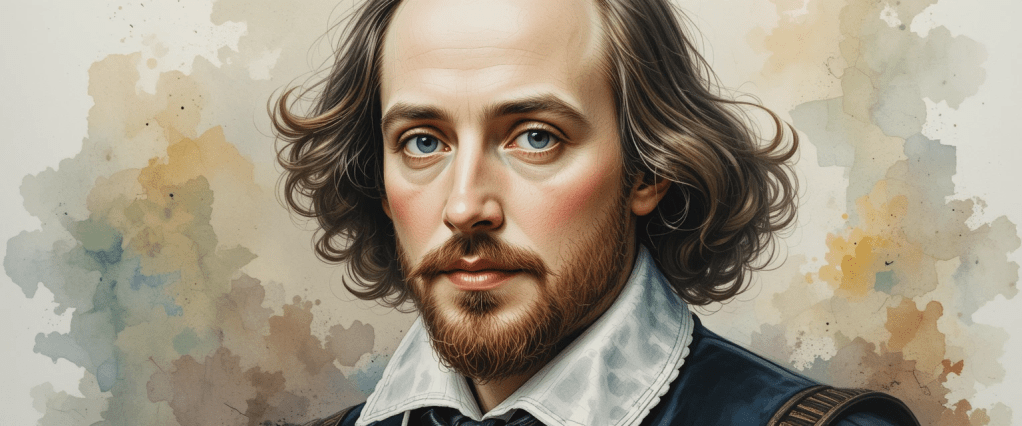
William Shakespeare
Sonnet 18: “Shall I compare thee to a summer’s day?”
Shall I compare thee to a summer’s day?
Thou art more lovely and more temperate:
Rough winds do shake the darling buds of May,
And summer’s lease hath all too short a date:
Sometime too hot the eye of heaven shines,
And often is his gold complexion dimm’d;
And every fair from fair sometime declines,
By chance or nature’s changing course untrimm’d;
But thy eternal summer shall not fade
Nor lose possession of that fair thou owest;
Nor shall Death brag thou wanderest in his shade,
When in eternal lines to time thou growest:
So long as men can breathe or eyes can see,
So long lives my love, and so long lives she.

Percy Bysshe Shelley
Ozymandias
I met a traveler from an antique land
Who said: Two vast and trunkless legs of stone
Stand in the desert. Near them on the sand,
Half sunk, a shattered visage lies, whose frown
And wrinkled lip and sneer of cold command
Tell that its sculptor well those passions read
Which yet survive, stamped on these lifeless things,
The hand that mocked them and the heart that fed.
And on the pedestal these words appear:
My name is Ozymandias, king of kings:
Look on my works, ye mighty, and despair!
Nothing beside remains. Round the decay
Of that colossal wreck, boundless and bare
The lone and level sands stretch far away.

John Milton
On His Blindness
(Shorter excerpt from Milton’s works, as Paradise Lost is far too long to be presented in full here.)
When I consider how my light is spent,
Ere half my days, in this dark world and wide,
And that one talent which is death to hide
Lodged with me useless, though my soul more bent
To serve therewith my Maker, and present
My true account, lest he, returning, chide,
Doth God exact day-labor, light denied,
I fondly ask. But Patience, to prevent
That murmur, soon replies: ‘God doth not need
Either man’s work or his own gifts. Who best
Bear his mild yoke, they serve him best. His state
Is kingly. Thousands at his bidding speed
**And post o’er land and ocean without rest:
They also serve who only stand and wait.’
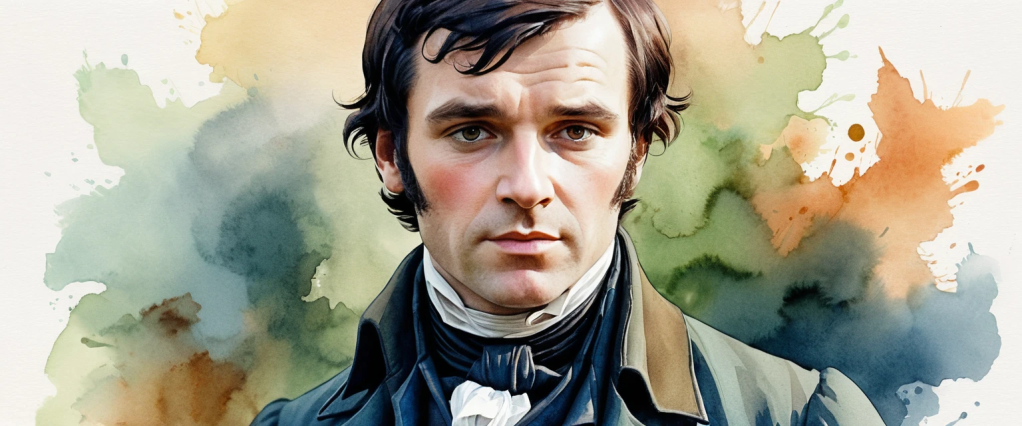
Robert Burns
Auld Lang Syne
(The most famous of Burns’ songs)
Should auld acquaintance be forgot,
And never brought to mind?
Should auld acquaintance be forgot,
And days of auld lang syne?
For auld lang syne, my dear,
For auld lang syne,
We’ll tak’ a cup o’ kindness yet,
For auld lang syne.
A Red, Red Rose
O my Luve’s like a red, red rose
That’s newly sprung in June;
O my Luve’s like the melody
That’s sweetly played in tune.
As fair art thou, my bonnie lass,
So deep in luve am I;
And I will luve thee still, my dear,
Till a’ the seas gang dry.
Till a’ the seas gang dry, my dear,
And the rocks melt wi’ the sun;
I will love thee still, my dear,
While the sands o’ life shall run.
And fare thee well, my only Luve,
And fare thee well a while!
And I will come again, my Luve,
Though it were ten thousand mile.
 The English Nook