The Second Rhythm
The cat arrived without announcement.
No one saw it enter the garden. One morning it was simply there—resting along the low stone wall that separated the house from the narrow alley behind it. Its body curved like a question that had already decided not to be answered.
At first, we thought it belonged to someone else. A neighbor, perhaps, or one of the houses further down the street where the roofs leaned closer together and the air carried the faint smell of cooking oil. But no one came looking. No voice called for it in the evenings. No bowl appeared at any doorstep.
It stayed.
My wife noticed it before I did. She mentioned it casually, as if pointing out a cloud that had taken an interesting shape.
“There’s a cat in the garden,” she said.
I nodded, though I had not yet seen it.
Later, when I went outside, it was still there. Not watching me exactly, but not unaware either. Its eyes held the kind of attention that does not insist on itself. I stood for a moment, unsure whether to acknowledge it. Then I went back inside.
That evening, the house felt slightly altered. Not changed, but adjusted—like a room after a window has been opened for a few minutes. Nothing is different, yet everything has shifted by a small, precise degree.
The next day, it moved closer.
It no longer stayed on the wall but ventured onto the grass, stepping lightly, as though the ground might not be permanent. My wife placed a small dish of water near the edge of the garden. She did not say anything about it. I did not ask.
The cat drank when it thought we were not looking.
Days passed. The rhythm of our lives remained intact—morning coffee, the quiet work of the afternoon, the soft layering of evening—but now there was a second rhythm, quieter and less defined. It existed at the edges: a movement near the bushes, a shadow crossing the path, the faint sound of something landing where nothing should land.
The cat did not belong to us.
We never said this aloud, but it was understood. It came and went as it pleased. Some days it did not appear at all, and we would notice its absence only in retrospect, like realizing a familiar sound has stopped. On other days, it lingered, sitting near the door, or stretching itself in a patch of sunlight that seemed reserved for it.
One afternoon, I found it inside the house.
The door had been left slightly open. The cat had entered without hesitation, as if the idea had always been waiting. It stood in the hallway, looking neither lost nor curious. Simply present.
I did not move.
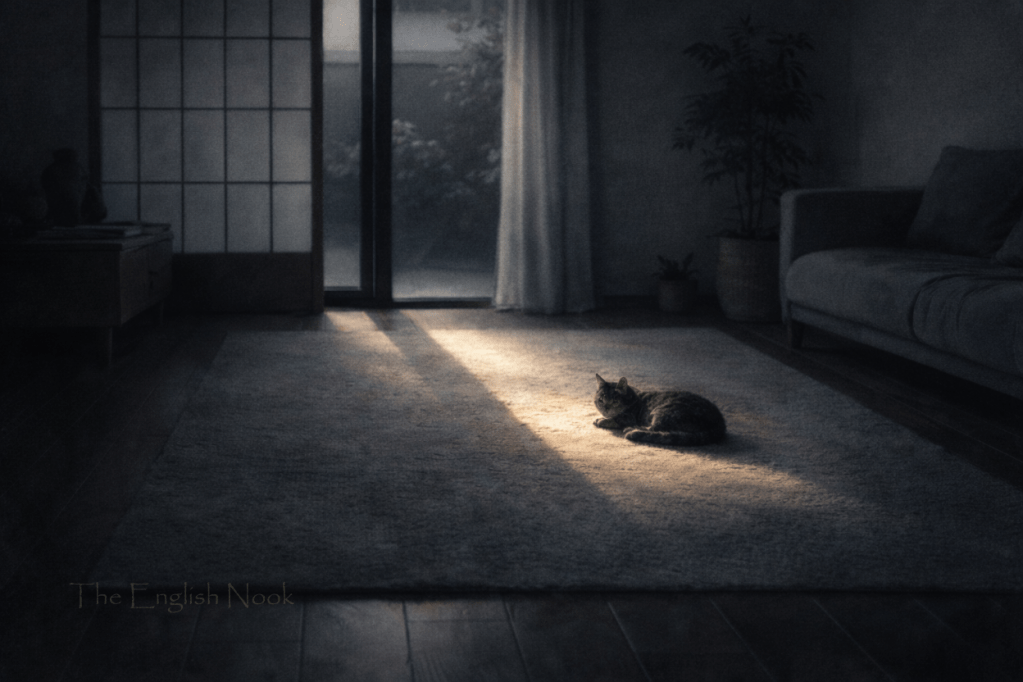
For a moment, we regarded each other. Then it walked past me, unhurried, its tail brushing lightly against the air, and settled in the living room. It chose a place on the rug where the light fell in a narrow, steady line.
I closed the door.
After that, it came inside more often. Not every day, and never with any sign of decision. It did not ask, and we did not invite. The boundary between outside and inside became less certain, though it remained in place.
My wife began to speak to it.
Not in the way one speaks to a pet, but in fragments. Small observations, unfinished thoughts. She would pause near the window and say something, not expecting a reply. The cat would listen—or perhaps it did not listen at all. Still, the words seemed to find a place.
In the evenings, we sometimes sat together without speaking. The cat would be there, or not. Its presence was not something to be counted.
One night, it did not come back.
We waited, though we did not say we were waiting. The dish of water remained by the garden’s edge. The door was left slightly open, as it had been before.
Days passed again, but the second rhythm was gone.
The garden returned to itself. The wall was just a wall. The grass held only the shapes it always had. The house, too, settled into its original proportions.
And yet, something remained.
Not the cat itself, but the space it had occupied—not physically, but in the quiet arrangement of our days. A small openness, as if something could still arrive without warning.
Sometimes, in the late afternoon, when the light falls at the same angle it once chose, I find myself looking toward the garden.
There is nothing there.
Still, I look.
Not because I expect it to return, but because, for a time, it was there—and that feels, in some quiet way, like something that continues.
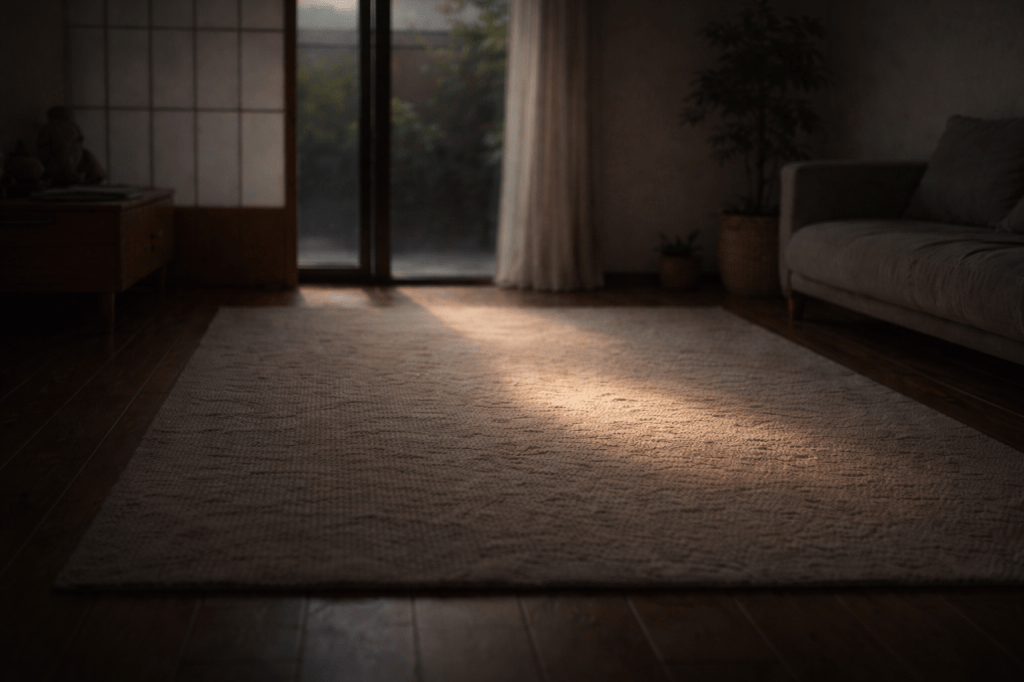
Some presences don’t stay—they change the space by leaving.
Thank you for reading “The Second Rhythm”! This is a story in a series created for avid readers and English learners who want to enjoy captivating tales while practicing their language skills. Stay tuned for more stories and language tips to enhance your journey!
Explore more short stories in English and Spanish by visiting the section:
Short Stories / Cuentos Cortos
When the world feels dull, your mind restless, or your heart heavy, let a story be your escape. Just one page, one sentence, one word—and suddenly, you’re somewhere new, where imagination breathes life into the ordinary and turns the simplest moments into magic.
Liked it? Smash that like button! 🐈





 The English Nook
Leave a comment