

Segundo Paso: Cómo Hablar de Tu Rutina en Español
Así empieza tu día en otro idioma
Every language becomes real when you start talking about your life.
After introducing yourself, the next step is simple but powerful: describing your daily routine.
What you do in the morning.
How your day begins.
Where you go.
What you usually do.
These are the kinds of things we talk about every day — and learning how to express them in Spanish helps you move from basic sentences to real communication.
Talking about your routine is not just grammar.
It is the beginning of describing your life.
A Simple Structure to Talk About Your Routine
When you describe your routine in Spanish, you usually talk about:
- When you wake up
- What you do in the morning
- Your work or studies
- What you do in the afternoon
- What you do in the evening
- Your habits (always, usually, sometimes, never)
For example:
Me despierto a las siete de la mañana. Me levanto y tomo café. Después, voy al trabajo. Trabajo hasta las cinco de la tarde. Por la noche, ceno con mi familia y veo una serie.
This is simple, but it is complete, natural, and very useful.
Useful Phrases
Time Expressions
- Por la mañana → in the morning
- Por la tarde → in the afternoon
- Por la noche → in the evening / at night
- A las… → at (time)
Examples:
Me despierto a las siete.
Trabajo por la mañana.
Estudio por la noche.
Daily Actions
- Me despierto → I wake up
- Me levanto → I get up
- Desayuno → I have breakfast
- Trabajo → I work
- Estudio → I study
- Almuerzo → I have lunch
- Ceno → I have dinner
- Me acuesto → I go to bed
Example:
Me levanto, desayuno y voy al trabajo.
Frequency
- Siempre → always
- Normalmente → usually
- A veces → sometimes
- Nunca → never
Examples:
Normalmente trabajo por la mañana.
A veces veo televisión.
Nunca me levanto tarde.
Example Routines
Example 1 — Basic
Me despierto a las seis de la mañana. Me levanto y desayuno. Después, voy al trabajo. Trabajo todo el día. Por la noche, ceno y descanso.
Example 2 — Student
Me despierto a las siete. Voy a la universidad por la mañana. Estudio por la tarde. Por la noche, hago tareas y veo videos.
Example 3 — Professional
Me levanto temprano y reviso mis correos. Trabajo en la oficina durante el día. Por la tarde, hago ejercicio. Por la noche, ceno y leo.
A Small Cultural Note
In many Spanish-speaking countries, daily routines may include a larger lunch (almuerzo) and a lighter dinner (cena). In some places, there is also a break in the afternoon.
People often use expressions like:
Todos los días…
Cada mañana…
These help make routines sound more natural and complete.
Para Terminar
Talking about your routine is one of the first ways you begin to describe your life in another language.
It may seem simple, but it allows you to connect ideas, talk about habits, and share what your days look like.
And once you can talk about your day, you are no longer just learning words —
you are starting to live in the language.
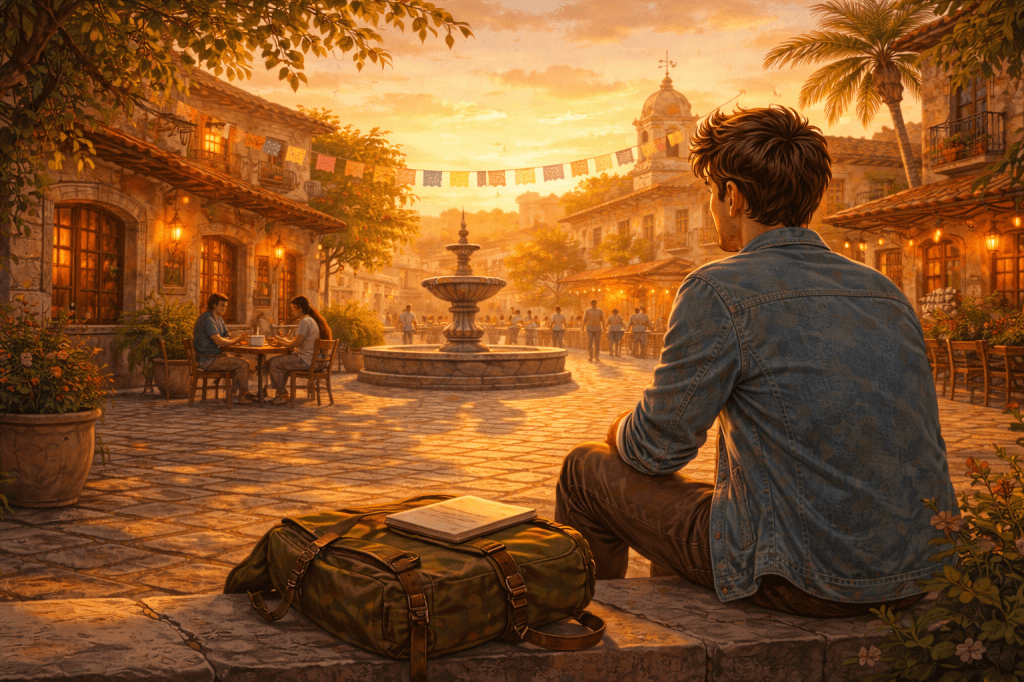
A language becomes real the moment you can describe your day in it.
If you’ve read everything, please consider leaving a like, sharing, commenting, or all three!





 The English Nook
Leave a comment