Why Easter Is About Morning
Light, language, and the oldest metaphor in English
Some celebrations are loud. Others begin in silence.
Some begin at midnight. This one begins at dawn.
Easter is a morning story.
Not only because some celebrations happen at sunrise, but because the idea behind Easter — culturally, linguistically, and symbolically — is deeply connected to light, the east, and the beginning of a new cycle.
East, Ēastre, and the Rising Light
The English word Easter comes from Old English Ēastre. The name is often connected to a spring goddess, Ēastre, associated with renewal and the return of light after winter. But the word is also related to east, the direction where the sun rises.
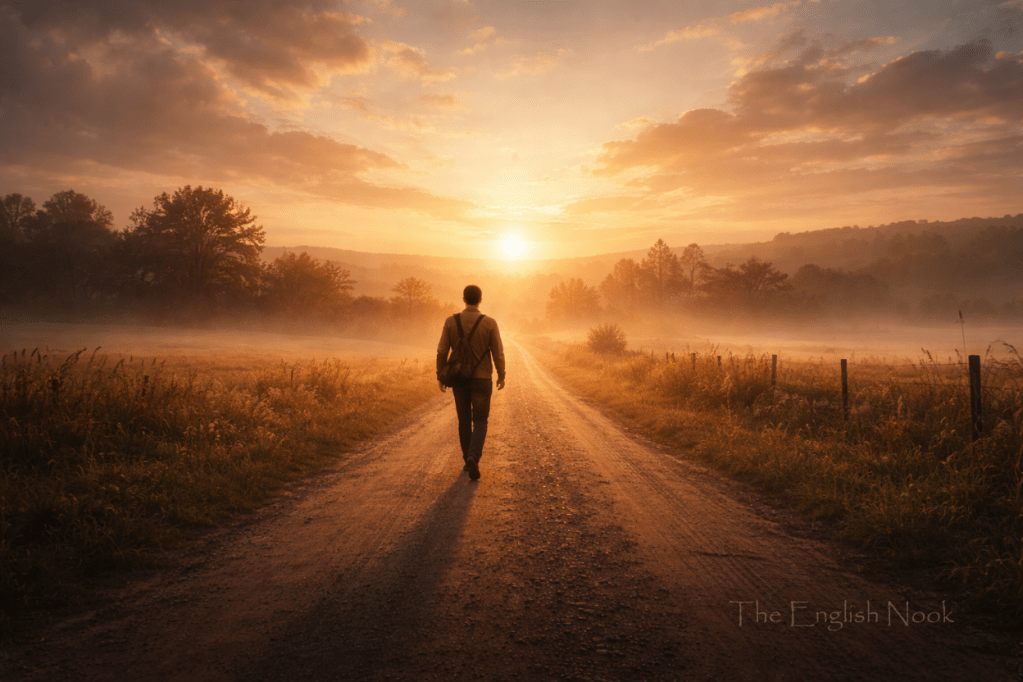
For people in the past, the east was not just a direction. It was the place where light returned every morning, where darkness ended, and where a new day began. Many churches were even built facing east for this reason: the direction of sunrise was the direction of hope, renewal, and beginning again.
So the word Easter carries two old ideas at the same time: spring and sunrise — the return of life and the return of light.
Language sometimes preserves old beliefs long after people forget them. Words become small museums of history.
Light in the Language
English is full of expressions where light means more than light.
We say:
- to see the light
- a new dawn
- light at the end of the tunnel
- to shed light on something
- the darkest hour is just before dawn
- enlightenment
In all these expressions, light does not mean the sun or a lamp. It means understanding, clarity, hope, or truth.
And dawn — the moment when light first appears — often represents the moment when something finally makes sense.
Why Morning Matters
In many stories, the most important moment does not happen in the middle of the day. It happens in the morning.
Night is the time of confusion, fear, doubt, and wandering. Morning is the time of direction. In the morning, people decide, understand, forgive, return, or begin again.
Morning is not just the start of a day.
Morning is the moment when things become visible.
This is why so many important cultural and religious celebrations end at sunrise, and why so many stories end with the first light of day. It is a quiet way of saying that something has changed — that the long night meant something, and that now, finally, we can see.
The Morning Idea
Have you ever noticed that important days often begin very early?
Not just with alarms and busy schedules, but with quiet mornings, with cold air, with streets that are still empty. Some of the most important moments in life do not begin in noise, but in silence and soft light.
Perhaps this is why Easter is a morning story.
Not because the night was not important, but because the morning is when we finally understand where we are, what we must do, or who we have become.
In language, as in life, many things begin in the dark —
but we only understand them when the light arrives.
Night is where we ask questions.
Morning is where we understand the answers.
Some stories are written in light.
—
Because sometimes, the only thing we need
is enough light to see where to go.
If you’ve read everything, please consider leaving a like, sharing, commenting, or all three!
 The English Nook
Leave a comment