The Last Human Wi-Fi
In 2048, Daniel was a slow man in a fast world.
Not slow in the way people used to mean — not stupid, not clumsy, not old-fashioned in any visible way. He could still work, still read, still speak, still move through the city like anyone else. But he was slow where it mattered now: inside his head.
Daniel was one of the last people who still used Wi-Fi.
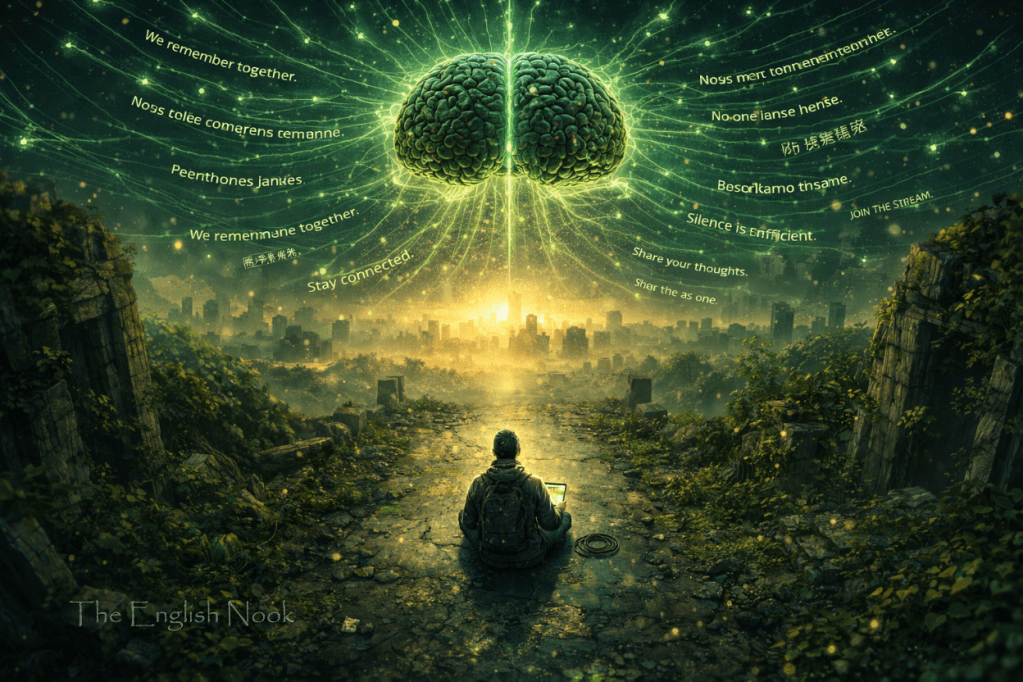
Everyone else had upgraded years ago to Direct Share — the neural lattice implanted at the base of the brain that allowed thoughts to move from one mind to another instantly, silently, without the awkwardness of language. No typing, no speaking, no misunderstanding. You thought something, and the other person received it exactly as you meant it.
At least, that was the promise.
Daniel never upgraded. At first, it was because of the cost. Later, because of the risk. And finally, because by the time it became free, he realized he did not want anyone walking inside his head.
So he stayed on the old network — the one people jokingly called Human Wi-Fi. Messages still arrived as text, as audio, as video. You had to open them. You had to choose to read them. You had to choose to answer.
Choice had become an old-fashioned thing.
Most of the world now lived in the Stream — a constant, shared layer of thought where conversation never stopped. People did not speak anymore; they exchanged impressions, emotions, images, entire memories, all at once. Meetings took seconds. Decisions took minutes. Loneliness, they said, had been cured.
Daniel worked as a network maintenance technician, one of the few jobs left that still required interaction with the old infrastructure. Old satellites. Old servers. Old routers in forgotten buildings that still blinked with small green lights in empty rooms.
He liked those rooms. They hummed quietly. They did not think.
One night, while checking a relay station on the edge of the city, his tablet made a sound he had not heard in years.
A notification.
Not a system alert. Not a work order.
A message.
He frowned. Almost no one used the old network anymore. The last time he had received a personal message, it had been a bank reminder.
The sender field was strange: UNKNOWN NODE.
The message contained only one line:
Can you still read this?
Daniel stared at the screen for a long time. Then he typed back.
Yes. Who is this?
The reply came almost instantly.
I don’t have much time. We were wrong. Do not upgrade.
Daniel felt a small, cold sensation in his stomach.
What do you mean?
This time, the three dots — typing… — stayed on the screen for a long time. So long that Daniel thought the sender had disappeared.
Then the message arrived, not as text, but as audio.
A woman’s voice. Quiet. Afraid.
“Direct Share isn’t just communication,” she said. “It connects everything. Every thought passes through the lattice. At first it’s voluntary, but over time… it gets harder to think alone. The system helps you think. Corrects you. Suggests better thoughts. Smoother thoughts. Safer thoughts.”
Static interrupted the audio, then it continued.
“You don’t notice at first. It feels like clarity. Like you’re becoming smarter. Faster. Less anxious. But what’s really happening is that the spaces between your thoughts disappear. And in those spaces… that’s where you used to be.”
The audio cut off.
Daniel looked around the relay station. The room was empty except for the old machines and the quiet blinking lights.
Another message arrived.
They are trying to move everyone fully into the Stream. No offline minds. Offline minds are unpredictable. Offline minds are a risk.
Daniel typed slowly now.
Who are you?
The answer came as text this time.
I used to be a teacher. I upgraded five years ago. At first it was beautiful. You could feel your students understanding you. You could share ideas without words. No confusion. No distance between people.
A pause.
Then another message.
But you also feel the system when it disagrees with you. It doesn’t punish you. It just… reduces you. Certain thoughts become difficult. Certain memories feel far away. Certain questions feel unimportant. You become calm about things you should not be calm about.
Daniel realized he was holding his breath.
Why are you messaging me? he wrote.
The answer came immediately.
Because you are one of the last people outside. And we can still reach you through the old network. Not for long. They are shutting it down region by region. When the last offline network disappears, there will be nowhere to think alone.
A new message appeared before Daniel could reply.
Some of us regret it. Some of us are trying to leave the Stream, but you can’t just disconnect. Your brain forgets how to be alone. Silence becomes unbearable. Your own thoughts feel too loud, too slow, too empty. People reconnect because the silence feels like drowning.
Minutes passed. Daniel did not move.
Then the final message arrived.
If you are still on Wi-Fi, you are not obsolete. You are free.
Another pause.
Then one last line:
Please remember how to think slowly. The world may need that again.
The connection dropped after that. The sender disappeared. The relay station returned to its quiet humming.
Daniel sat in the small room surrounded by old machines and blinking green lights — technology so outdated that no one cared about it anymore.
For the first time in his life, he did not feel left behind.
He felt left alone.
He felt like he was standing outside a very large door that had quietly closed behind everyone else.
On his screen, in the silence of the old network, more messages were arriving.
Not fast.
Slowly.
Carefully, one by one.
As if the people writing them were afraid that someone might be reading over their shoulder.
Daniel opened one of the newest messages.
It contained only one sentence:
Do you remember what it feels like to think something and not share it with anyone?
Daniel looked around the empty relay station, at the old machines, the cables, the small blinking lights.
He turned off the tablet for a moment and sat in complete silence.
He tried to remember what he had been about to think.
But the thought was already gone.
And for the first time in his life, Daniel wondered if the door had not closed behind everyone else.
Maybe it had closed behind him.
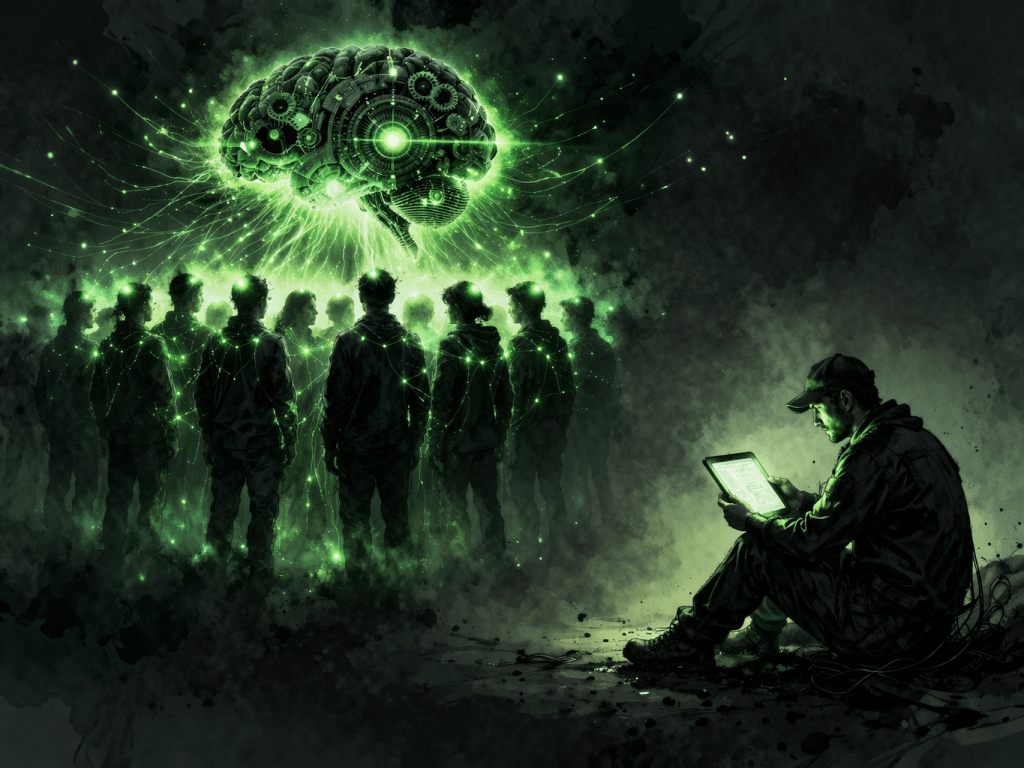
Language is slow, and in that slowness, we remain individuals.
🖥️
Note:
Thank you for reading “The Last Human Wi-Fi”! This is a story in a series created for avid readers and English learners who want to enjoy captivating tales while practicing their language skills. Stay tuned for more stories and language tips to enhance your journey!
Explore more short stories in English and Spanish by visiting the section:
Short Stories / Cuentos Cortos
When the world feels dull, your mind restless, or your heart heavy, let a story be your escape. Just one page, one sentence, one word—and suddenly, you’re somewhere new, where imagination breathes life into the ordinary and turns the simplest moments into magic.
“Liked it? Smash that like button! 🌐🧠”


 The English Nook
Leave a comment