🌍 The Language Beneath Our Feet 🏔️
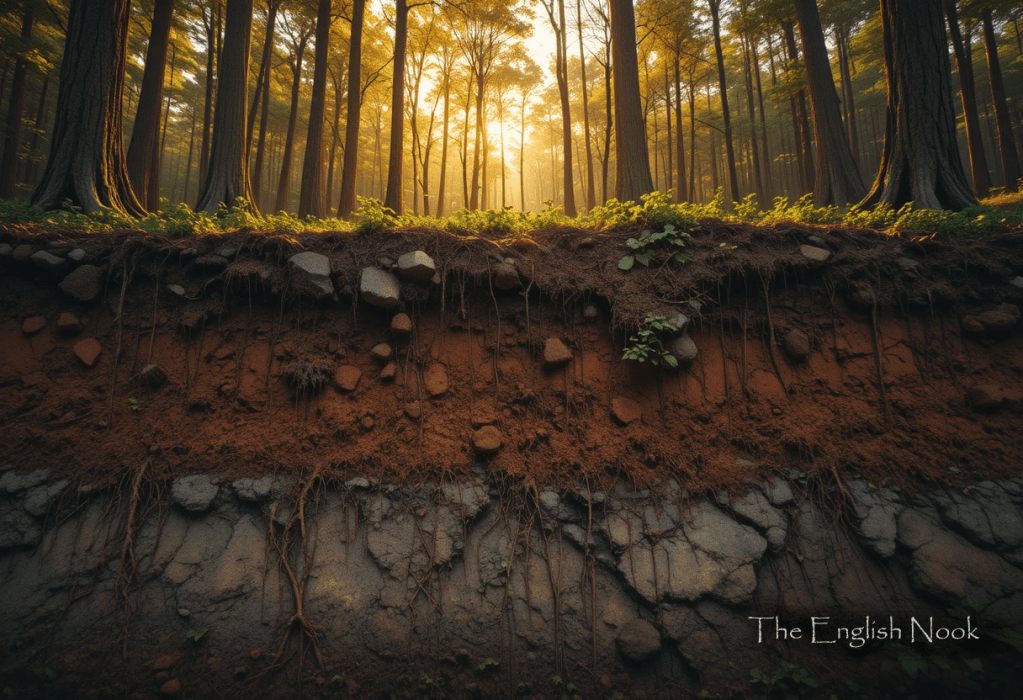
La tierra representa estabilidad, origen y resistencia. Es el suelo bajo nuestros pies, pero también es sinónimo de naturaleza, territorio, recursos y pertenencia. En inglés, el vocabulario relacionado con la tierra aparece constantemente en contextos como geografía, agricultura, medioambiente, catástrofes naturales, e incluso en metáforas sobre vida, identidad y crecimiento personal.
Aprender estas palabras no solo te permite describir montañas, suelos o paisajes, sino también hablar de temas modernos como cambio climático, erosión, desastres naturales, y conservación ambiental. Además, muchas se usan en sentido figurado, lo que las vuelve perfectas para writing y speaking B2–C1.
Time to get grounded!
🧠 20 términos esenciales relacionados con la tierra
- Earth — tierra / planeta
/ɜːrθ/
the world, the ground, or soil- EN: Earth is our only home.
- ES: La Tierra es nuestro único hogar.
- Soil — suelo / tierra fértil
/sɔɪl/
top layer of earth where plants grow- EN: This soil is rich in nutrients.
- ES: Este suelo es rico en nutrientes.
- Ground — suelo / terreno
/ɡraʊnd/
solid surface of the earth- EN: The ground was wet after the storm.
- ES: El suelo estaba mojado después de la tormenta.
- Land — tierra / territorio
/lænd/
area of ground, often owned or defined- EN: Farmers depend on the land.
- ES: Los agricultores dependen de la tierra.
- Rock — roca
/rɒk/
hard solid mineral material- EN: The path was covered in rocks.
- ES: El camino estaba cubierto de rocas.
- Stone — piedra
/stəʊn/
small piece of rock- EN: He threw a stone into the river.
- ES: Lanzó una piedra al río.
- Sand — arena
/sænd/
tiny grains of rock- EN: The sand burned under the sun.
- ES: La arena quemaba bajo el sol.
- Dust — polvo
/dʌst/
fine dry particles- EN: Dust covered the old books.
- ES: El polvo cubría los libros viejos.
- Mud — barro / lodo
/mʌd/
wet soil- EN: The car got stuck in the mud.
- ES: El auto quedó atascado en el barro.
- Clay — arcilla
/kleɪ/
soft soil used in pottery- EN: Clay is used to make bricks.
- ES: La arcilla se usa para hacer ladrillos.
- Hill — colina
/hɪl/
small raised area of land- EN: We climbed the hill at sunset.
- ES: Subimos la colina al atardecer.
- Mountain — montaña
/ˈmaʊntən/
very high landform- EN: The mountain was covered in snow.
- ES: La montaña estaba cubierta de nieve.
- Valley — valle
/ˈvæli/
low area between hills/mountains- EN: A river runs through the valley.
- ES: Un río atraviesa el valle.
- Forest — bosque
/ˈfɒrɪst/
large area full of trees- EN: The forest was silent and dark.
- ES: El bosque estaba silencioso y oscuro.
- Roots — raíces
/ruːts/
parts of plants underground- EN: The roots hold the tree firmly.
- ES: Las raíces sostienen el árbol firmemente.
- Erosion — erosión
/ɪˈrəʊʒən/
gradual wearing away of land- EN: Erosion damaged the coastline.
- ES: La erosión dañó la costa.
- Landslide — derrumbe / deslizamiento de tierra
/ˈlændslaɪd/
earth and rock sliding down- EN: The rain triggered a landslide.
- ES: La lluvia provocó un deslizamiento de tierra.
- Quake / Earthquake — terremoto
/kweɪk/ , /ˈɜːrθkweɪk/
violent shaking of the ground- EN: The earthquake damaged several buildings.
- ES: El terremoto dañó varios edificios.
- Crack — grieta
/kræk/
thin break in the surface- EN: A crack appeared in the wall.
- ES: Apareció una grieta en la pared.
- Fertile — fértil
/ˈfɜːrtaɪl/
good for growing plants- EN: The region has fertile land.
- ES: La región tiene tierras fértiles.
Where the Ground Broke
The valley was quiet, surrounded by mountains and forests, until the quake struck without warning. The ground cracked open, rocks rolled downhill, and dust filled the air. In minutes, a landslide buried part of the road in mud and stone. When the shaking stopped, the land looked the same—but everyone knew it wasn’t.
Donde la tierra se quebró
El valle estaba tranquilo, rodeado de montañas y bosques, hasta que el terremoto golpeó sin advertencia. El suelo se abrió con grietas, las rocas rodaron cuesta abajo y el polvo llenó el aire. En minutos, un deslizamiento de tierra enterró parte del camino bajo barro y piedra. Cuando el temblor se detuvo, el paisaje parecía el mismo, pero todos sabían que ya no lo era.
🎯 Conclusión
El vocabulario relacionado con la tierra es perfecto para hablar de naturaleza, geografía y fenómenos extremos, pero también funciona muy bien en un sentido simbólico: estabilidad, raíces, identidad y cambio. Al dominar estas palabras, tu inglés gana fuerza descriptiva y profundidad, ideal tanto para contextos académicos como creativos.
Donde hay tierra, hay lenguaje que describe, resiste y transforma. 🏞️
Si has leído todo, por favor considera dejar un “me gusta”, compartir, comentar, ¡o hacer las tres cosas!
¿Necesitas ayuda con tu aprendizaje de inglés? Ve a la sección de contacto y envíame un mensaje; ¡te responderé lo antes posible para ayudarte!
TAMBIÉN TE INTERESARÁ:



 The English Nook
Leave a comment