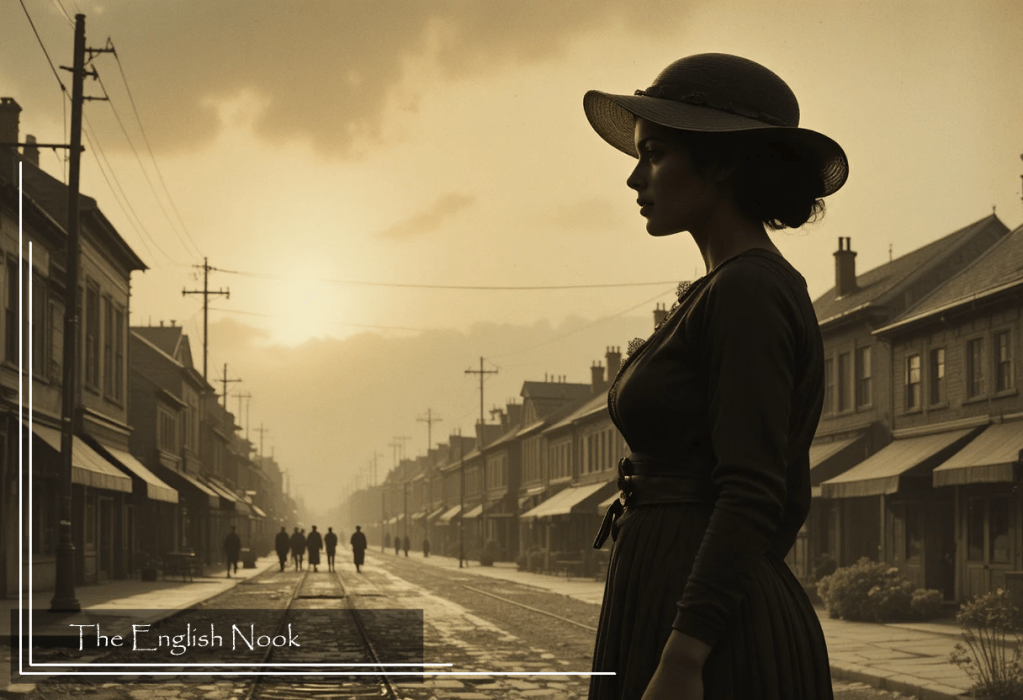
The Town That Couldn’t Remember Her Face
No one remembered her face, and this bothered the town more than it should have.
They remembered that she had one—everyone agreed on that much—but beyond it, nothing held. The baker swore she was tall and sharp-eyed, with dust-colored hair pulled tight like a promise. The sheriff insisted she was short, broad-shouldered, scarred, the kind of woman who looked like she’d already survived whatever you were afraid of. A child said she was young and smiled like someone who hadn’t learned better yet. An old woman said she was old, and never smiled at all.
Arguments broke out over it. Loud ones. Petty ones. As if getting her right would finally explain what had happened.
But no one could.
She arrived on a quiet afternoon, the way changes often do—without announcement, without music. No gunshots, no dramatic entrance. Just a stranger walking into town like she belonged there, like the ground had been expecting her.
She didn’t introduce herself.
She didn’t ask permission.
She didn’t threaten anyone, which disappointed those who wanted a villain. And she didn’t offer salvation, which confused those who wanted a hero. She did something far worse, and far rarer.
She paid attention.
She noticed the way the butcher flinched every time the mayor spoke. The way the schoolteacher had stopped correcting mistakes, as if hope were an unnecessary expense. The way people lowered their voices when they talked about what they deserved, and raised them only when speaking of what they feared.
She stayed a few days. Maybe longer. Time did strange things around her. No one could say exactly when she left, only that she had been there, and then she wasn’t.
What she did while she stayed was… small.
She asked questions no one had asked aloud.
She stood still when others expected her to run.
She laughed—some said softly, some said sharply—at things the town had been taught were inevitable.
She didn’t fight the sheriff.
She didn’t overthrow the mayor.
She didn’t burn anything down.
She watched.
And people, under that watching, began to do reckless things.
The butcher spoke back.
The schoolteacher corrected a mistake.
A woman who hadn’t left her house in years stepped onto her porch and stayed there, daring the sky to comment.
Nothing dramatic happened that night. No miracle. No punishment. The world did not end.
Which, quietly, felt like permission.
When trouble finally came—as trouble always does—it came expecting fear. It found something else instead.
People stood differently. Not braver in the loud, heroic sense, but braver in the way of those who had remembered they were allowed to choose. They asked questions. They hesitated before obeying. They looked at one another, as if checking whether they were alone, and realized they weren’t.
The outlaw was already gone by then.
They noticed her absence the way you notice a door left open—not immediately, but eventually, when the air feels different.
The sheriff tried to file a report. He couldn’t describe her.
The mayor tried to blame her. He couldn’t explain how.
The preacher tried to warn against her influence. He couldn’t name her sin.
All they could say—over and over—was that she had been there.
Travelers came later, drawn by rumors. They asked about her, hungry for details, for a face to imagine. The town offered them contradictions and shrugs.
“She looked like—”
“No, she didn’t.”
“You’re remembering it wrong.”
“Or maybe you are.”
Eventually, the arguments faded. They stopped trying to fix her into a shape. They stopped needing to.
The town changed, slowly enough that it didn’t feel like a revolution, and quickly enough that it couldn’t be undone. People learned something dangerous and liberating:
That courage was not contagious because of who carried it.
That authority weakened when it wasn’t fed attention.
That sometimes all it took was one person acting as if fear were optional.
Some nights, when the wind moved just right through the streets, someone would swear they saw her again. A figure at the edge of town. A presence without a face.
No one chased her.
No one called out.
They had learned better.
After all, they didn’t need to recognize her anymore.
She had already done the only thing she ever meant to do:
She reminded them that they could recognize themselves.
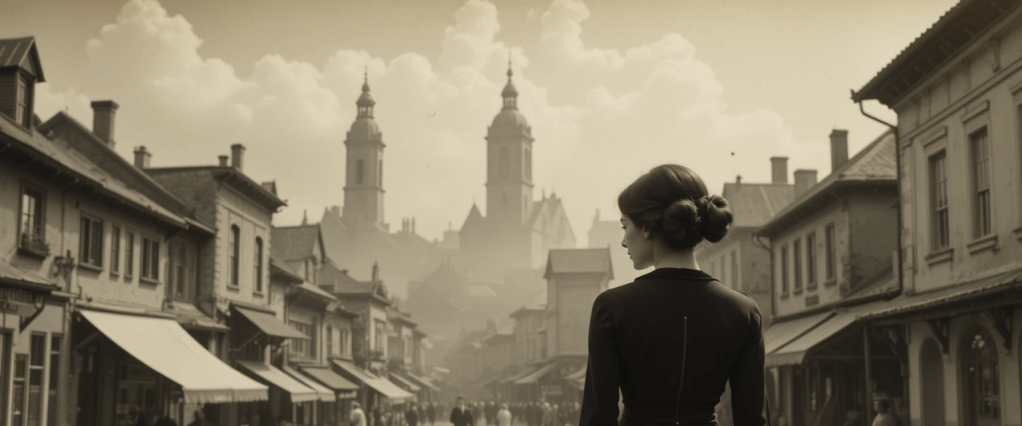
She didn’t change the town—she reminded it how.
Note:
Thank you for reading “The Town That Couldn’t Remember Her Face”! This is a story in a series created for avid readers and English learners who want to enjoy captivating tales while practicing their language skills. Stay tuned for more stories and language tips to enhance your journey!
Explore more short stories in English and Spanish by visiting the section:
Short Stories / Cuentos Cortos
When the world feels dull, your mind restless, or your heart heavy, let a story be your escape. Just one page, one sentence, one word—and suddenly, you’re somewhere new, where imagination breathes life into the ordinary and turns the simplest moments into magic.
“Liked it? Smash that like button! 💥❤️”

 The English Nook
Leave a comment