
A Year Where Words Reflected Change
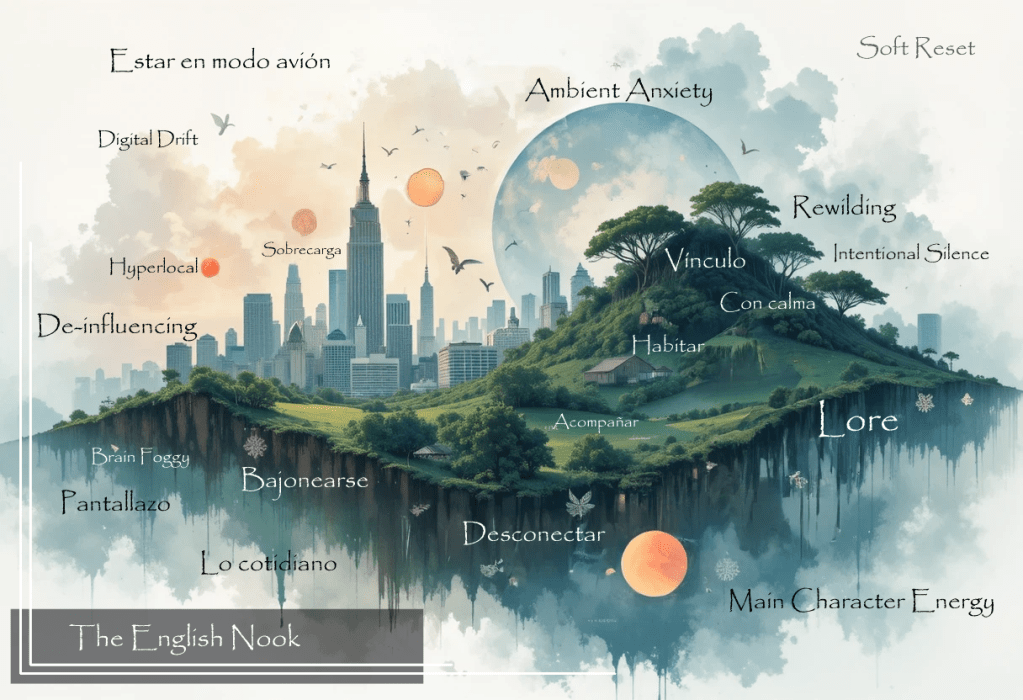
Language never stands still—and 2025 made that clearer than ever. As technology accelerated, social habits shifted, and global conversations evolved, our vocabulary followed suit. Last year, words didn’t just describe reality; they helped us process it. From emotional awareness and digital fatigue to renewed curiosity and slow living, the language of 2025 captured how people around the world navigated complexity, connection, and creativity.
In both English and Spanish, we saw older words resurface with new meanings, playful slang take hold online, and hybrid expressions continue to blur linguistic borders. Let’s explore some of the most unusual, meaningful, or simply delightful words and phrases that shaped 2025.
English Highlights
1. “Digital Drift” (/ˈdɪdʒɪtəl drɪft/)
The gradual loss of focus caused by constant digital interruptions.
Example:
“I didn’t notice it at first, but the digital drift was killing my concentration.”
Context / Usage:
Often used in conversations about productivity, attention span, and screen fatigue. Semi-formal and increasingly common in media articles.
2. “Soft Reset” (/sɒft rɪˈsɛt/)
A gentle personal restart without drastic life changes.
Example:
“I’m not quitting everything—just doing a soft reset this year.”
Usage Note:
Popular in wellness and self-growth spaces as an alternative to extreme New Year’s resolutions.
3. “Ambient Anxiety” (/ˈæmbiənt æŋˈzaɪəti/)
A constant, low-level feeling of unease without a clear cause.
Example:
“There’s nothing wrong exactly, just this ambient anxiety.”
Context:
Widely used in essays, podcasts, and social commentary to describe modern emotional states.
4. “Lore” (/lɔːr/)
A humorous way to refer to someone’s personal backstory or life history.
Example:
“You need to know his lore before judging him.”
Cultural Note:
Internet slang that became mainstream in 2025, especially on social media and memes.
5. “De-influencing” (/diː ˈɪnfluənsɪŋ/)
The act of discouraging unnecessary consumption rather than promoting products.
Example:
“This video is de-influencing you from buying that skincare set.”
Context:
A reaction to influencer culture and overconsumption, common on TikTok and YouTube.
6. “Brain Foggy” (/breɪn ˈfɒɡi/)
Informal adjective describing mental tiredness or lack of clarity.
Example:
“I’m feeling very brain foggy today.”
Register:
Casual, conversational English; often used in spoken language and online posts.
7. “Hyperlocal” (/ˌhaɪpərˈloʊkəl/)
Focused on very small, specific communities or areas.
Example:
“People are trusting hyperlocal news more than national outlets.”
Usage Note:
Common in discussions about media, community life, and digital platforms.
8. “Intentional Silence” (/ɪnˈtɛnʃənəl ˈsaɪləns/)
The conscious choice to pause communication or disconnect.
Example:
“I took a weekend of intentional silence.”
Context:
Used in mindfulness, mental health, and boundary-setting conversations.
9. “Main Character Energy” (/meɪn ˈkærɪktər ˈɛnərdʒi/)
Confidence rooted in self-worth rather than ego.
Example:
“She walked in with full main character energy.”
Cultural Note:
Playful internet expression celebrating self-respect and personal agency.
10. “Rewilding” (metaphorical use)
Returning to more natural, instinctive, human ways of living.
Example:
“I’m rewilding my routine—less apps, more real life.”
Usage Note:
Borrowed from environmental language and applied metaphorically to lifestyle choices.
Spanish Highlights
1. “Desconectar” (/deskoŋekˈtaɾ/)
To mentally or emotionally unplug.
Example:
“Necesito desconectarme de verdad, no solo apagar el celular.”
Context:
Widely used in everyday Spanish with a strong emotional and lifestyle meaning.
2. “Sobrecarga” (/soβɾeˈkaɾɣa/)
A state of emotional, mental, or sensory overload.
Example:
“Siento una sobrecarga constante.”
Usage Note:
Expanded from technical contexts to personal and emotional discourse.
3. “Acompañar” (/akompaˈɲaɾ/)
To be emotionally present without fixing or advising.
Example:
“No necesito consejos, solo que me acompañes.”
Cultural Note:
Reflects a relational, empathetic approach common in Spanish-speaking cultures.
4. “Bajonearse” (/baxoˈneaɾse/)
To suddenly feel discouraged or emotionally low.
Example:
“Me bajoneé sin razón.”
Register:
Informal, very common in spoken Spanish, especially in Latin America.
5. “Lo cotidiano” (/lo kotiðiˈano/)
Daily life viewed as meaningful rather than monotonous.
Example:
“Estoy aprendiendo a disfrutar lo cotidiano.”
Context:
Often used in reflective writing, podcasts, and slow-living conversations.
6. “Pantallazo” (/pantaˈʝaso/)
A screenshot or a moment of digital saturation.
Example:
“Demasiados pantallazos hoy.”
Usage Note:
Shows how digital life reshapes everyday vocabulary.
7. “Estar en modo avión” (/esˈtaɾ en ˈmoðo aˈβjon/)
To be mentally or emotionally unavailable.
Example:
“Hoy estoy en modo avión.”
Context:
A metaphorical extension of technology language into emotional states.
8. “Vínculo” (/ˈbiŋkulo/)
A deep, intentional emotional connection.
Example:
“No es solo amistad, es un vínculo.”
Register:
Neutral to formal; common in emotional, psychological, and relational contexts.
9. “Habitar” (/aβiˈtaɾ/)
To fully live or sit with an experience or emotion.
Example:
“Estoy habitando este momento.”
Usage Note:
Poetic and reflective; frequently used in essays and mindful speech.
10. “Con calma” (/koŋ ˈkalma/)
A philosophy of slowing down and prioritizing balance.
Example:
“Todo, pero con calma.”
Cultural Note:
Embodies a growing cultural pushback against urgency and burnout.
Shared Innovations and Linguistic Crossovers
Spanglish Evolutions:
Resetear, mutear, and ghostear became fully normalized in casual Spanish speech.
Emotional Hybrids:
Expressions like ansiedad light, vibes raras, and drama innecesario blended emotional nuance across languages.
Digital Verbs:
Scrollear, archivar historias, and pausar la conversación reflect platform-driven language expansion.
Cultural Borrowing:
English embraced sobremesa and tranquilo, while Spanish adopted boundaries and mindset.
A Year Where Language Slowed Down
If 2024 was loud, 2025 was reflective. The words we used revealed a collective desire to understand ourselves better, consume less, connect more deeply, and live with intention. Language softened, slowed, and became more emotionally precise.
Whether you were doing a soft reset, feeling ambient anxiety, or choosing to vivir con calma, the vocabulary of 2025 gave us the tools to name our experiences.
What words defined your year?
Share them below and let’s keep this linguistic journey moving forward.
Words don’t just describe time — they capture it. And 2025 left its mark.
If you made it this far, consider liking, sharing, commenting—or all three.
May this year bring clearer thoughts, kinder words, and conversations that truly matter. Here’s to learning, listening, and connecting—across languages and cultures. Happy New Year. ✨
YOU WILL ALSO LIKE READING:






 The English Nook
Leave a comment