The Hero of Bus Stop 37
Harold Finn was the kind of man who apologised to automatic doors. Not because he was eccentric, but because he genuinely believed everything deserved respect. He even thanked the kettle each morning for “its hard work,” and spoke kindly to the office printer, which often repaid him by actually functioning.
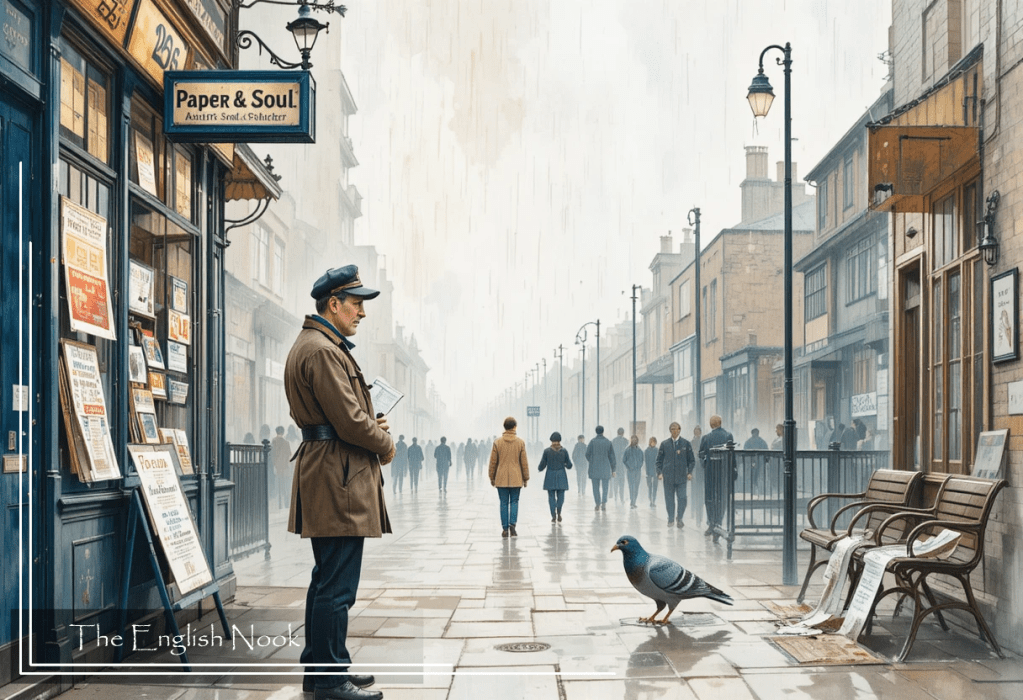
He worked at a small stationery shop called Paper & Soul, where the most dramatic event in recent memory had been a pen explosion in aisle three. Harold was the type who noticed when someone’s shoelace was untied, who held the door for people three metres too far away, and who blushed when thanked.
But one rainy Tuesday morning, while waiting for Bus 37, something shifted in Harold. Maybe it was the weather, maybe it was the tragic sight of a soaked pigeon trying to take shelter under a takeaway menu. Whatever it was, Harold looked up at the gray sky and decided—without the faintest trace of irony—that he would become a hero.
“The world needs saving,” he murmured, clutching his soggy sandwich like Excalibur. “And I’ve got thirty-seven years of punctuality to offer.”
He had no plan, of course. Heroism wasn’t something you could Google (“Step 1: Buy cape. Step 2: Find villain.”). So Harold began small.
That very afternoon, he saw an old lady hesitating by the crosswalk. Perfect. Hero material. He rushed to her side, offered his arm, and led her across with gallant determination—only to discover, halfway through, that she hadn’t wanted to cross at all. She lived on the other side. Still, she thanked him, and Harold chalked it up as “a moral victory.”
The next day, he heard frantic meowing near the park. A rescue mission! He climbed a tree with remarkable enthusiasm and came down triumphantly with what he believed was a cat. It was, in fact, a rather furious raccoon. He was scratched, mildly traumatized, and given a tetanus shot. But still—heroic.
By Wednesday, word had spread. The shop’s customers whispered, “That’s him—the nice man who tried to stop a robbery!”
They were referring to Tuesday morning’s “incident,” when Harold tackled a man running out of a store, only to discover it was an actor filming a commercial for sports shoes. The crew applauded. The director said he had “great energy.” Harold was thrilled.
Children began following him to Bus Stop 37, calling out, “Hero Harold!” He didn’t stop them. Fame, it turned out, felt rather nice—like a warm cardigan of moral approval. He’d even begun practising poses in the mirror.
Then came Friday.
It started like any other day: drizzle, cold coffee, and the faint smell of wet umbrellas. Harold stood at his usual spot by Bus Stop 37, waiting, when a scream sliced through the morning air. Down the hill, a city bus had lost its brakes. It thundered toward the intersection, straight for a fruit stand—and an elderly man frozen in shock beside it.
For once, Harold didn’t think. He dropped his sandwich, sprinted into the street, and began waving his arms wildly, shouting, “STOP! BRAKES! TURN!” He looked utterly ridiculous—like an overcaffeinated scarecrow—but somehow, it worked. The driver swerved, clipping only a few apples before colliding safely with a lamppost.
No one was hurt. Except the lamppost.
The world went quiet. Then came applause, screams, phone cameras. Someone shouted, “You saved him!”
Harold looked around, panting, soaked in rain and adrenaline.
“I think…” he said between breaths, “I’m late for work.”
He became famous overnight. Newspapers called him “The Humble Hero.” The mayor invited him to City Hall. He was given medals, interviews, and even a lifetime bus pass (which, ironically, he rarely used afterward).
Yet on Monday morning, Harold was right back behind the counter at Paper & Soul, arranging highlighters. A customer, holding a newspaper with his face on it, asked,
“You’re that hero, aren’t you?”
Harold smiled modestly.
“Just a man who caught the right bus at the wrong time.”
And that was that. He never sought attention again. He didn’t start a foundation, or wear capes, or deliver motivational talks. He simply returned to being Harold—helping, listening, apologising to inanimate objects.
But something in the town had changed. At Bus Stop 37, people started greeting each other. They held umbrellas for strangers. Teenagers picked up litter. Someone even fixed the broken bench. Nobody said it out loud, but everyone felt it: if a quiet man with an umbrella and a bad sandwich could be a hero, maybe anyone could.
And Harold? He still thanked the kettle, still smiled at the rain, and still apologised to automatic doors—because heroes, real heroes, never stop being humble.
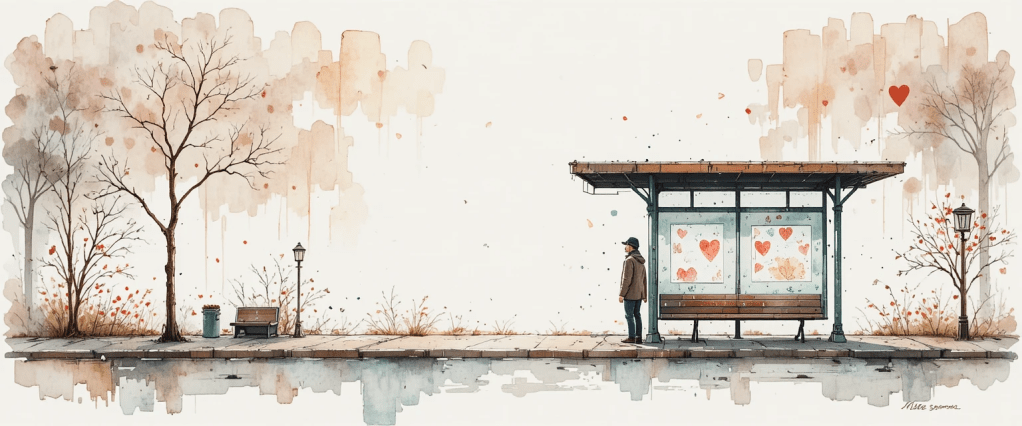
Sometimes, the bravest hearts wait at the quietest bus stops.
Note:
Thank you for reading “The Hero of Bus Stop 37”! This is a story in a series created for avid readers and English learners who want to enjoy captivating tales while practicing their language skills. Stay tuned for more stories and language tips to enhance your journey!
Explore more short stories in English and Spanish by visiting the section:
Short Stories / Cuentos Cortos
When the world feels dull, your mind restless, or your heart heavy, let a story be your escape. Just one page, one sentence, one word—and suddenly, you’re somewhere new, where imagination breathes life into the ordinary and turns the simplest moments into magic.
“Liked it? Smash that like button! 💥❤️”




 The English Nook
Leave a comment