
Reflexive Verbs vs. Non-Reflexive Verbs
One of the key distinctions learners need to make is when to use a verb in its reflexive form and when it is simply transitive or non-reflexive. Some verbs can be used both reflexively and non-reflexively, but the meaning changes depending on how they are used.
- Lavar vs. Lavarse:
- Lavar: Yo lavo el coche /ʝo ˈla.βo el ˈkotʃe/ (I wash the car).
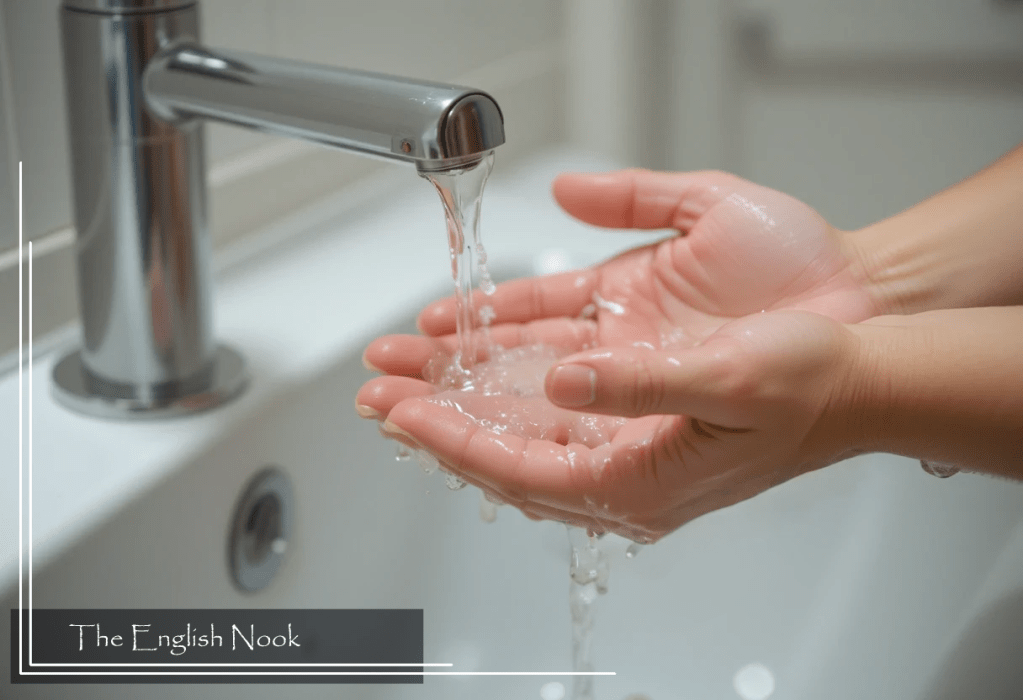
- Lavarse: Yo me lavo las manos /ʝo me ˈla.βo las ˈma.nos/ (I wash my hands).
- Acostar vs. Acostarse:
- Acostar: Yo acuesto a mi hijo /ʝo aˈkwes.to a mi ˈi.xo/ (I put my son to bed).
- Acostarse: Yo me acuesto temprano /ʝo me aˈkwes.to temˈpɾa.no/ (I go to bed early).
Common Reflexive Verbs and Their Conjugation
Many everyday actions in Spanish are expressed using reflexive verbs. Below are some of the most common ones:
- Levantarse /leβanˈtaɾse/ – to get up
- Bañarse /baˈɲaɾse/ – to bathe oneself
- Sentarse /senˈtaɾse/ – to sit down
- Peinarse /pejˈnaɾse/ – to comb one’s hair
- Despertarse /despeɾˈtaɾse/ – to wake up
- Dormirse /doɾˈmiɾse/ – to fall asleep
Example of Conjugation: Despertarse (present tense):
| Pronoun | Conjugation | IPA | Translation |
|---|---|---|---|
| Yo | Me despierto | /me desˈpjerto/ | I wake up |
| Tú | Te despiertas | /te desˈpjertas/ | You wake up (informal) |
| Él/Ella/Usted | Se despierta | /se desˈpjerta/ | He/She/You wake up |
| Nosotros | Nos despertamos | /nos despeɾˈtamos/ | We wake up |
| Vosotros | Os despertáis | /os despeɾˈtais/ | You all wake up (informal) |
| Ellos/Ellas/Uds. | Se despiertan | /se desˈpjertan/ | They/You all wake up |
The Passive Reflexive
In addition to being used for reflexive actions, the pronoun “se” is also commonly used in passive or impersonal constructions, especially when the agent of the action is not mentioned or is irrelevant. This is called the passive reflexive.
- Se vende la casa /se ˈβen.de la ˈka.sa/ (The house is being sold).
- Se habla español aquí /se ˈaβla espaˈɲol aˈki/ (Spanish is spoken here).
In these cases, “se” acts as a passive marker, and the verb agrees with the subject in number (e.g., se venden casas – houses are sold).
Reflexive Pronouns in Compound Tenses
In compound tenses, such as the present perfect or future perfect, the reflexive pronoun still precedes the auxiliary verb haber. Here’s an example with the present perfect:
- Me he lavado las manos /me e laˈβa.ðo las ˈma.nos/ (I have washed my hands).
- Nos hemos despertado tarde /nos ˈe.mos des.peɾˈta.do ˈtaɾ.ðe/ (We have woken up late).
In these sentences, notice that the reflexive pronoun goes before the auxiliary verb he (have).
Reflexive Pronouns with Modal Verbs
When reflexive verbs follow modal verbs like querer (to want), poder (to be able), or tener que (to have to), the reflexive pronoun can either be placed before the conjugated modal verb or attached to the infinitive.
- Me quiero levantar temprano /me ˈkje.ɾo le.βanˈtaɾ temˈpɾa.no/ (I want to get up early).
- Quiero levantarme temprano /ˈkje.ɾo le.βanˈtaɾ.me temˈpɾa.no/ (I want to get up early).
Both structures are correct, though attaching the pronoun to the infinitive (levantarme) is often preferred in spoken Spanish.
Regional Variations in Reflexive Pronoun Usage
Spanish is spoken in many countries, and while the general rules for reflexive pronouns are consistent across regions, there are some variations. For instance, in Spain, the pronoun “os” is used for informal plural you (vosotros), while in Latin America, this form is replaced by “se” with ustedes for both formal and informal situations.
- Spain: ¿Os vais a levantar pronto? (Are you all going to get up soon?).
- Latin America: ¿Se van a levantar pronto? (Are you all going to get up soon?).
Reflexive Pronouns in Idiomatic Expressions
Reflexive pronouns are also used in many idiomatic expressions, which can make them tricky for learners to grasp initially. These idiomatic uses often don’t have a direct translation into English but are important for fluency:
- Darse cuenta /ˈdaɾ.se ˈkwen.ta/ – to realize.
- Me di cuenta de que estaba equivocado (I realized I was wrong).
- Irse /ˈiɾ.se/ – to leave.
- Me voy (I’m leaving).
These idioms often involve reflexive verbs but don’t always literally refer to the subject doing something to themselves.
Reflexive Pronouns and Common Mistakes
Here are some typical mistakes learners make when using reflexive pronouns:
- Misplacing the Pronoun: Placing the reflexive pronoun after the conjugated verb instead of before it.
- Incorrect: Lavéme las manos.
- Correct: Me lavé las manos (I washed my hands).
- Confusing Reflexive and Non-Reflexive Forms: Learners sometimes mix up reflexive and non-reflexive verbs, especially when the English equivalent doesn’t use a reflexive form.
- Incorrect: Me hablo con mis amigos (I speak to myself with my friends).
- Correct: Hablo con mis amigos (I speak with my friends).
- The Double Reflexive in Chilean Spanish
A distinctive feature of Chilean Spanish is the use of a redundant reflexive pronoun, particularly in constructions involving pronominal verbs. In informal speech, speakers sometimes use both a preverbal and a postverbal reflexive pronoun in the same sentence.
Example:- Me voy a lavarme las manos instead of Me voy a lavar las manos (I’m going to wash my hands).
- Te tienes que quedarte acá instead of Te tienes que quedar acá (You have to stay here).
This structure is considered non-standard and is generally avoided in formal writing or speech, but it is quite common in everyday Chilean Spanish. It does not change the meaning of the sentence but reflects a regional variation in spoken language.
Achieving Mastery with Reflexive Pronouns
Mastering reflexive pronouns in Spanish requires understanding both their grammatical function and the nuances of their usage in various contexts. By recognizing when an action is performed on oneself, and where to place reflexive pronouns in sentences, learners can gain greater fluency. Moreover, getting comfortable with idiomatic expressions and regional variations can help ensure a more native-like command of the language. As with many aspects of language learning, practice and exposure to different contexts are key to confidently using reflexive pronouns.
Master reflexive verbs—because sometimes, you just have to do it yourself!
A bit too difficult? Check Part 1 here:
Reflexive Pronouns in Spanish: An Overview
If you’ve read everything, please consider leaving a like, sharing, commenting, or all three!
Need some help with your Spanish journey? Go to the contact area and send me a message; I’ll get back to you as soon as possible!
YOU WILL ALSO LIKE:







 The English Nook
Leave a comment