The Moon’s Complaint
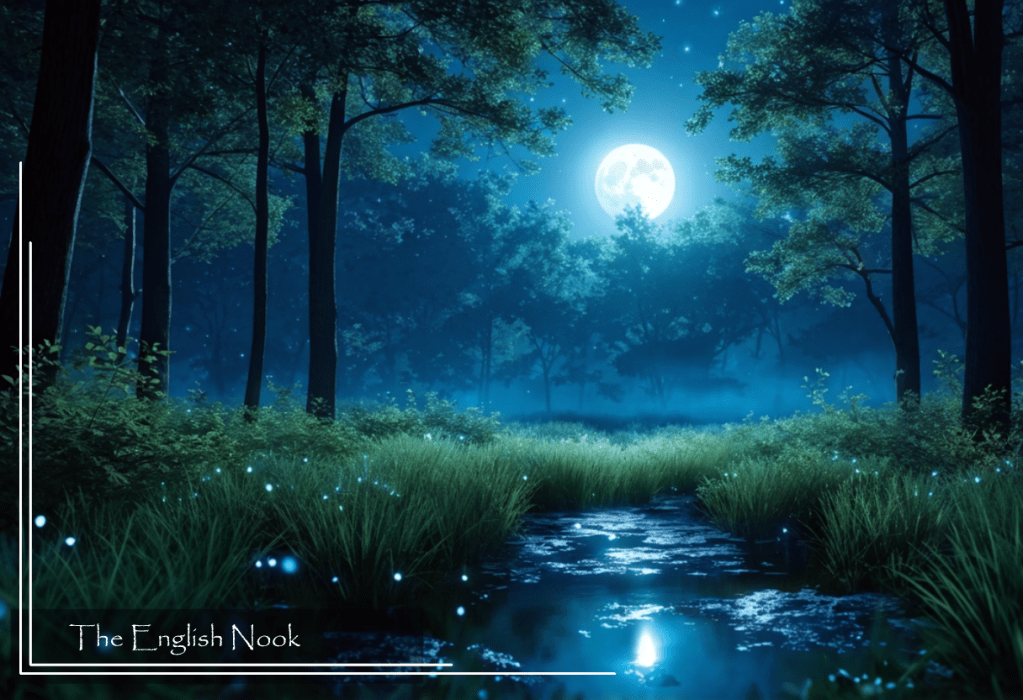
For eons, the Moon had been the Earth’s silent witness. It had watched over the planet through endless nights, its pale glow touching oceans, mountains, and cities alike. It had seen civilizations rise and fall, lovers whisper beneath its light, and lonely souls cry into its shadow. Yet, despite its presence in the sky, no one truly listened.
The Moon had grown weary.
Night after night, it circled the same planet, bound by the same orbit, condemned to watch without touching, to glow without feeling warmth. It longed for something more—for movement beyond its endless loop, for a voice beyond silent light. And so, one night, it decided to act.
With a shudder, the Moon willed small fragments of itself to break away. They did not plummet like ordinary meteors but drifted like falling embers, glowing softly as they descended. Across the Earth, these lunar shards landed in forests, deserts, city streets, and quiet gardens. Those who found them would hear the whispers of the Moon’s complaint.
The first to find a shard was a boy named Elias, wandering the dunes near his home in the Moroccan desert. The glowing stone lay half-buried in the sand, its light pulsing like a heartbeat. When he touched it, a voice—soft yet vast—filled his mind.
“I am weary of watching, of being seen but never known. Do you know what it is like to be alone in the sky?”
Elias staggered back, his heart pounding. Was the Moon speaking to him? He listened as it poured its sorrow into his mind—of nights stretching into eternity, of longing for change, of an ache that had no name.
Elsewhere, more people found the glowing stones. A poet in Tokyo, a shepherd in the Andes, a fisherman on the coast of Ireland. Each heard the Moon’s voice, whispering of its loneliness, its restless longing. Some wept at its sorrow. Others marveled at its depth.
A young woman named Selene, who lived by a lake in Canada, found a shard floating on the water’s surface. As she cradled it in her hands, she whispered back, “But Moon, you are loved. We write poems for you, sing songs about you. We dream under your light.”
The Moon’s voice trembled. “Then why do I still feel unseen?”
Selene had no answer.
As more people listened, something changed. The Moon’s glow dimmed, its surface cracked where the pieces had broken away. Tides grew erratic, nights became darker. Scientists were baffled, but those who had heard the Moon’s voice understood: it was pulling away.
Panic spread. If the Moon left entirely, what would happen to the world? Could it be persuaded to stay? The listeners—now called the Moon’s Chosen—gathered in a remote valley, bringing their glowing stones. There, under the vast sky, they spoke to the Moon as one.
“Do not leave us,” they pleaded. “You may feel unseen, but we see you now.”
They told stories of how the Moon had shaped their lives—of childhood wishes made upon its light, of nights spent staring up in wonder, of myths and dreams spun around its existence. They sang songs, recited poetry, painted images of its beauty. They gave it what it had never had before: a voice in the world of the living.
And the Moon listened.
For the first time in its long existence, the Moon felt truly heard. Not merely admired from afar, not just a pale ornament in the sky, but understood. The weight of its loneliness, once an unspoken ache, had finally touched the hearts of those below. And though the sorrow did not vanish, it softened, no longer an unbearable void but a wound that could finally breathe.
With a shuddering sigh—felt in the gentle shift of the tides, in the hush that fell over the night—the Moon began to call its lost pieces home. Across the world, the glowing shards trembled in the hands of their keepers, their warmth fading as they lifted from human palms and drifted skyward, like embers returning to the flame. Yet, something remained.
A faint shimmer lingered on the fingertips of those who had listened, a dim glow nestled just beneath their skin, as if the Moon had pressed a part of its voice into their very being. They would never be the same. They could still hear its presence—not as a sorrowful wail, but as a quiet hum beneath the stars, a secret pulse in the rhythm of the night.
Balance was restored. The tides found their steady pull once more, the darkness of the nights lifted, and the Moon’s glow returned to its full, watchful radiance. But something had changed.
The Moon no longer stared down in silence, bound by its orbit, unseen in its sorrow. Now, it knew it had left its mark, not in the cold surface of the Earth, but in the hearts of those who had listened. And that was enough.
And below, scattered across deserts, cities, forests, and seas, those who had heard the Moon’s complaint could never look at the night sky the same way again.
Because now, when they gazed upward, they heard it gazing back.

The Moon had always been watched—but for the first time, it was heard.
Note:
Thank you for reading “The Moon’s Complaint”! This is a story in a series created for avid readers and English learners who want to enjoy captivating tales while practicing their language skills. Stay tuned for more stories and language tips to enhance your journey!
Explore more short stories in English and Spanish by visiting the section:
Short Stories / Cuentos Cortos
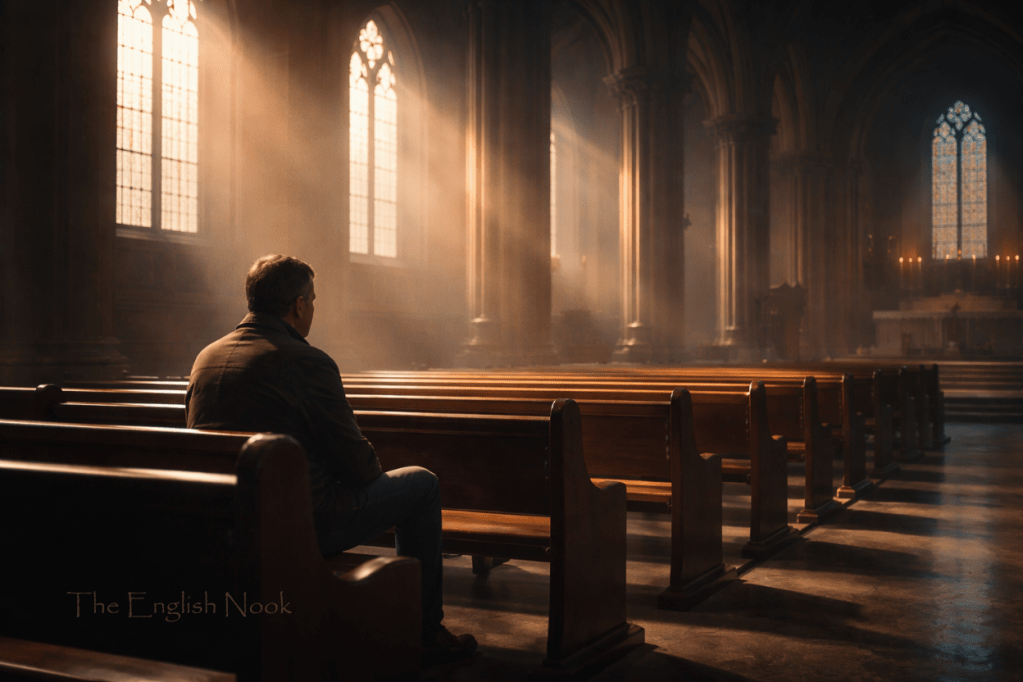
When the world feels dull, your mind restless, or your heart heavy, let a story be your escape. Just one page, one sentence, one word—and suddenly, you’re somewhere new, where imagination breathes life into the ordinary and turns the simplest moments into magic.
“Liked it? Smash that like button! 💥❤️”



 The English Nook
Leave a comment