Part 2
Discovering Old English:
A Continuation of Linguistic and Cultural Exploration
The journey into Old English, or Anglo-Saxon, continues as we delve deeper into the vocabulary that shaped early English culture and its connection to the modern world. This second installment unveils another set of remarkable words, grouped into themes such as The Body, Society and Culture, and War and Strife. As with Part 1, these words reveal not only the linguistic roots of many modern terms but also the beliefs, customs, and values of early English speakers.
Understanding the irregularities, pronunciation quirks, and cultural nuances of these terms provides a rich tapestry of insight into how language evolves and retains its essence across centuries. Let this exploration inspire you to connect with the past and enrich your appreciation for the enduring art of language.
The Body
- Hēafod – Head
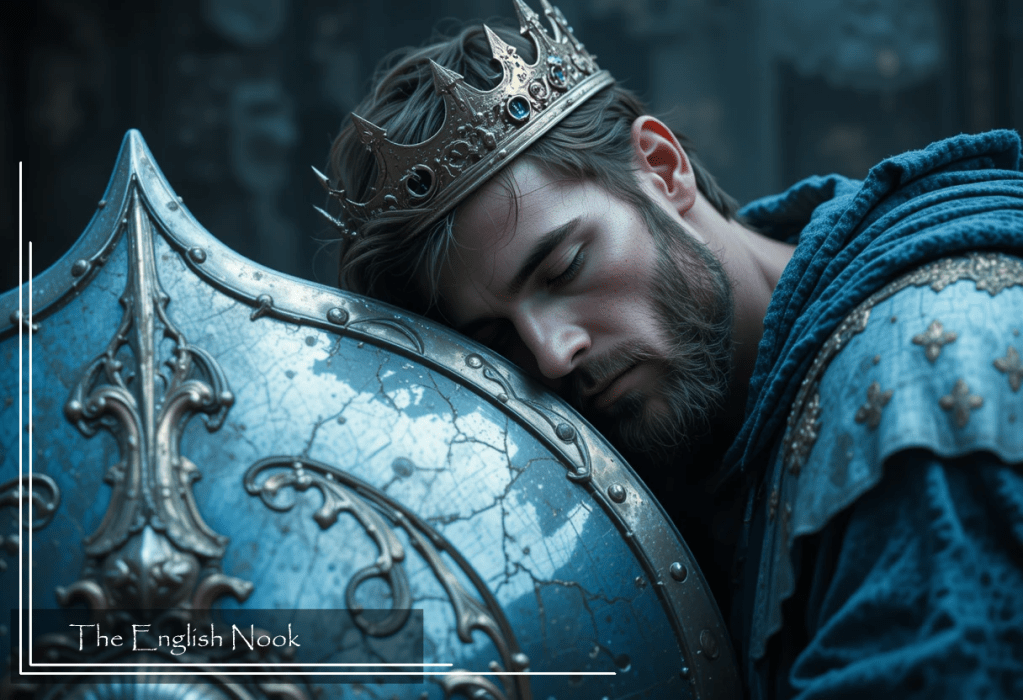
Old English: “Se cyning sette his hēafod on þæs scieldes rand.”
Modern English: “The king rested his head on the edge of the shield.” - Hond – Hand
Old English: “Þū scalt niman þæt wæpen mid strangre honde.”
Modern English: “You shall take the weapon with a strong hand.” - Fōt – Foot
Old English: “Se cempan stōp mid fæstum fōtum tō þǣm gefeohte.”
Modern English: “The warrior stepped with steady feet into the battle.” - Eage – Eye
Old English: “His eagan sāwon þone lēoma ofer þæt wæter.”
Modern English: “His eyes saw the light over the water.” - Nēsan – To survive
Old English: “Se sceaða ne nēsode þæs grymmes gefeohte.”
Modern English: “The foe did not survive the fierce battle.” - Bān – Bone
Old English: “Þæt bān wæs tōbrocen on þǣre færsprǣce.”
Modern English: “The bone was broken in the sudden attack.” - Tūþ – Tooth
Old English: “Þæs wulfas tūþas wǣron hearde swā isen.”
Modern English: “The wolf’s teeth were as hard as iron.” - Hrēþer – Heart, chest
Old English: “His hrēþer wæs ācolen for þǣre miclan þrēa.”
Modern English: “His heart was chilled with great dread.” - Earm – Arm
Old English: “Hē ūþe þæs cempan strangne earm tō gefeohte.”
Modern English: “He trusted the warrior’s strong arm for the fight.” - Hrycg – Ridge, back
Old English: “Þæs hēahhlīþes hrycg wæs beþeaht mid snāwe.”
Modern English: “The ridge of the high hill was covered with snow.”
Notes:
- Hēafod (Head)
Note: The long vowel “ē” was pronounced like the “ay” in “say.” This word evolved directly into Modern English “head,” with the vowel shortening over time. - Hond (Hand)
Note: The Old English “hond” became “hand” in Modern English, with minimal change in form or meaning. - Fōt (Foot)
Note: The long vowel “ō” in “fōt” became the double “oo” in “foot” after the Great Vowel Shift, preserving its original meaning. - Eage (Eye)
Clarification: The “g” in “eage” was pronounced as a soft or palatalized “y” sound, evolving into the simpler “eye” in Modern English.
Society and Culture
- Folc – People
Old English: “Þæt folc wæs gearu tō gān tō þǣm wīghūse.”
Modern English: “The people were ready to go to the hall of battle.” - Hām – Home
Old English: “Se ceorl gecyrde hām æfter langre fyrdwīsan.”
Modern English: “The man returned home after a long campaign.” - Bēor – Beer
Old English: “Hīe druncon bēor on þǣre healle mid gefērum.”
Modern English: “They drank beer in the hall with their companions.” - Cēap – Trade, bargain
Old English: “Þæt cēap wæs swīþe unwihtlic betwēonum þām ceapmannum.”
Modern English: “The trade was very unfair between the merchants.” - Gæst – Guest, spirit
Old English: “Þǣr wæs gæst on þǣre nihtcyminge and eal wæs swīþe þēostre.”
Modern English: “There was a spirit in the coming of night, and all was very dark.” - Hlǃfdige – Lady
Old English: “Se hlǃfdige bæd þæt folc tō þǣre frēolsnes.”
Modern English: “The lady invited the people to the feast.” - Scōp – Poet
Old English: “Se scōp sang be þǣm cyninge and his miclan sigore.”
Modern English: “The poet sang of the king and his great victory.” - Wer – Man
Old English: “Se wer wæs strang and rǣdde þæt folc mid wīsdōme.”
Modern English: “The man was strong and ruled the people with wisdom.” - Hlāf – Bread
Old English: “Se hlāf wæs gebrocen and dæled betwēonum þǣm þearfan.”
Modern English: “The bread was broken and shared among the needy.” - Dōm – Judgment, glory
Old English: “Dōm þæs cyninges wæs rihtwīs and ful strang.”
Modern English: “The judgment of the king was righteous and very strong.”
Notes:
- Folc (People)
Note: “Folc” directly evolved into Modern English “folk.” Its original usage encompassed the collective community, often with a sense of unity or action. - Hām (Home)
Note: “Hām” is the precursor to Modern English “home,” maintaining both its meaning and association with personal or familial space. - Gæst (Guest, spirit)
Clarification: “Gæst” referred to both a guest and a spirit, showing the dual meanings tied to hospitality and supernatural elements. Modern “ghost” derives from this term’s spiritual sense. - Dōm (Judgment, glory)
Clarification: “Dōm” influenced modern terms like “doom” (judgment) and “dominion,” reflecting its connection to authority and decision-making.
War and Strife
- Beadu – Battle
Old English: “Beadu wæs on handum mid þām ǣdelum cempan.”
Modern English: “The battle was at hand with the noble warriors.” - Ege – Fear
Old English: “Hīe wǣron on ege þæs cyninges yrre.”
Modern English: “They were in fear of the king’s wrath.” - Wæpen – Weapon
Old English: “Se cempan bær wæpen mid strangum earmum.”
Modern English: “The warrior carried a weapon with strong arms.” - Wīġ – War
Old English: “Wīġ becōm ofer þæt land mid miclum styrne.”
Modern English: “War came upon the land with great severity.” - Heoru – Sword (poetic or metaphorical)
Old English: “Þæt heoru wæs dēorwyrþe and ful sċarpa.”
Modern English: “The sword was precious and very sharp.” - Scield – Shield
Old English: “Se scield gehylde hine wið þāra fēonda gesceot.”
Modern English: “The shield protected him from the enemies’ arrows.” - Lēoma – Light, beacon
Old English: “Se lēoma glēow ofer þā heahhlīþa.”
Modern English: “The light shone over the high hills.” - Geat – Gate
Old English: “Se geat wæs swīþe strang and clūs.”
Modern English: “The gate was very strong and closed.” - Þrēa – Threat
Old English: “Hīe hērdon þā þrēa and wǣron micel ondrǣde.”
Modern English: “They heard the threat and were greatly afraid.” - Trēow – Pledge
Old English: “Se cempan sealde trēow þæt hē wolde hyne wērian.”
Modern English: “The warrior gave a pledge that he would defend him.”
Notes:
- Beadu (Battle)
Note: “Beadu” is a poetic term for battle, often used in Old English literature. Its meaning is closely tied to the concept of valor and combat. - Wæpen (Weapon)
Note: “Wæpen” evolved directly into Modern English “weapon,” retaining its original meaning as an object of offense or defense. - Scield (Shield)
Clarification: “Scield” is the precursor to “shield,” with the spelling and pronunciation shifting over time. Its importance in protection during battle remains central in both eras. - Þrēa (Threat)
Note: “Þrēa” refers to an external danger or warning, closely linked to its descendant, “threat.” The “þ” (thorn) was later replaced by “th” in Modern English.
Unlocking the Past Through Words
As we journey further into the linguistic and cultural legacy of Old English, the words from “The Body,” “Society and Culture,” and “War and Strife” bring to life a world of vivid imagery and shared values. From the tangible strength in terms tied to the physical body to the unity reflected in kinship and community, we see a language shaped by the daily lives and struggles of the Anglo-Saxons. The rich vocabulary of battle and bravery paints a picture of resilience, while societal terms highlight the bonds of relationships, leadership, and shared purpose.
These words are more than historical artifacts—they are living links to a vibrant past. They reveal not only how early English speakers navigated their world but also how they saw themselves within it, creating a narrative that is both deeply human and uniquely their own.
Yet the story is far from complete. In the final installment, we’ll step into even more fascinating realms of Old English, exploring concepts that are as universal as they are timeless. What made Old English so unique? How did its speakers express abstract ideas, navigate the routines of everyday life, or articulate their spirituality and connection to the unseen?
Join us for the last chapter, where the everyday meets the extraordinary, and the abstract mingles with the spiritual. Discover the treasures of Old English that illuminate not just a language but a way of life.
You can check Part 1 here!
You can check Part 3 here!
Unlock the stories behind Old English words—where language meets history and culture!
If you’ve read everything, please consider leaving a like, sharing, commenting, or all three!
YOU WILL ALSO LIKE:

 The English Nook
Leave a comment