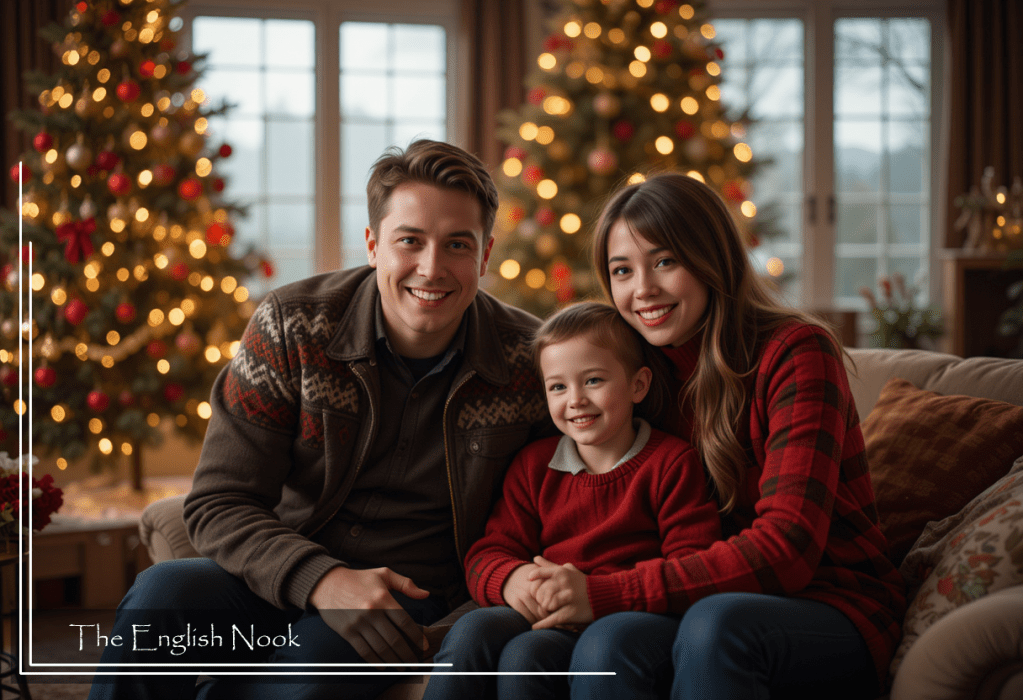

A Season of Cultural Richness
Christmas, celebrated globally, reflects a diverse tapestry of customs shaped by history, religion, and cultural identity. In English-speaking communities, such as those in the United States, Canada, the United Kingdom, and Australia, Christmas traditions often include decorated pine trees, Santa Claus, gift exchanges, and caroling. Spanish-speaking countries, including Spain, Mexico, Argentina, and Colombia, emphasize religious ceremonies, family unity, and unique cultural festivities like Las Posadas or La Nochebuena.
Despite these distinctions, shared values of love, joy, and generosity connect these celebrations, creating a season that transcends languages and borders. This cultural richness becomes even more pronounced in bilingual communities where the two traditions mix, creating an extraordinary blend of languages, customs, and festive practices.
Key Differences in Christmas Celebrations
1. Religious Emphasis
- English-Speaking Communities:
While some families emphasize the religious aspect of Christmas by attending church services or Nativity plays, for many, the holiday balances the sacred and the secular. Symbols like Santa Claus, Christmas trees, and festive lights dominate, reflecting a more commercial and inclusive approach to the season. - Spanish-Speaking Communities:
In contrast, religious traditions are deeply ingrained in Christmas celebrations. Activities such as Las Posadas in Mexico, which reenact Mary and Joseph’s search for shelter, and Misas de Gallo (Midnight Mass) on Christmas Eve highlight the spiritual significance of the season. In Spain, elaborate Nativity scenes, known as belenes, are displayed in homes and public spaces.
2. Gift-Giving
- English-Speaking Communities:
Gifts are traditionally exchanged on Christmas morning (December 25th), with children eagerly unwrapping presents left under the Christmas tree by Santa Claus. The commercialization of Christmas in English-speaking countries also means an emphasis on Black Friday and Cyber Monday shopping in preparation for the holiday. - Spanish-Speaking Communities:
Gift-giving customs vary. In many Spanish-speaking countries, the focus is on Día de los Reyes Magos (Three Kings’ Day) on January 6th, commemorating the Magi’s gifts to Jesus. Children place shoes out for the Reyes Magos to fill with presents. However, in some countries, such as Mexico and Spain, gifts are also exchanged on Nochebuena (Christmas Eve).
3. Food Traditions
- English-Speaking Communities:
Meals typically include roasted meats like turkey or ham, accompanied by vegetables, mashed potatoes, and desserts such as plum pudding, fruitcake, or mince pies. Christmas cookies and eggnog are also popular festive treats. - Spanish-Speaking Communities:
In Spanish-speaking countries, traditional dishes vary by region. Mexicans savor tamales, bacalao (salted cod), and ponche navideño (Christmas punch). Spaniards enjoy turrón (a nougat dessert) and polvorones. In South America, dishes such as asado (barbecue) or hallacas (Venezuelan cornmeal pies) reflect the local flavors.
4. Unique Celebrations
- English-Speaking Communities:
Cultural staples include Christmas crackers, gingerbread houses, and holiday movies. In the United Kingdom, Boxing Day (December 26th) involves sporting events and charity, while Australia often embraces outdoor celebrations with barbecues and beach outings due to the summer season. - Spanish-Speaking Communities:
Las Posadas, celebrated from December 16th to 24th, features processions symbolizing Mary and Joseph’s journey. Other unique traditions include Spain’s Caga Tió (a log that “poops” gifts for children) and lively street parades in many Latin American countries, accompanied by fireworks and dancing.
Blending Cultures in Bilingual Communities
In bilingual communities, such as those in the United States with large Hispanic populations or regions like Catalonia in Spain with international influences, Christmas becomes a vibrant fusion of traditions. This blend reflects the adaptability of customs and languages in multicultural settings.
1. Hybrid Celebrations
- Families may combine traditions by preparing tamales or lechón for Nochebuena while also enjoying turkey and Christmas pudding on December 25th.
- A single home might display a Nativity scene alongside a decorated Christmas tree and stockings by the fireplace.
2. Language Interplay
- Bilingual carol services might alternate between villancicos like “Campana sobre Campana” and English carols such as “Silent Night.”
- Children write bilingual letters to Santa Claus and the Reyes Magos, often mixing English and Spanish in their messages.
3. Cultural Unity
- Community events, such as holiday parades, may feature Mariachi bands alongside brass ensembles, representing the harmony of diverse influences.
- Schools in these communities educate children about both sets of traditions, fostering appreciation and understanding of cultural diversity.
Unity Through Diversity
Christmas celebrations among English and Spanish-speaking communities offer a wealth of traditions that reflect their unique histories and cultural priorities. However, the blending of these traditions in bilingual communities highlights the transformative power of cultural exchange. Language and customs intertwine to create a richer, more inclusive holiday season that respects and celebrates diversity. In these spaces, Christmas is not just a season of joy but a testament to the harmony that arises when cultures meet and learn from each other.
Spanish Words Adopted into English Related to Christmas
Here are 20 Spanish-origin words connected to Christmas celebrations that have enriched English, particularly in bilingual or Hispanic-influenced communities:
1. Piñata
- Origin: Spanish, from piña (pineapple).
- Use in English: A festive decoration, often filled with candy, used in celebrations, including Christmas parties.
2. Posada
- Origin: Spanish for “inn” or “shelter.”
- Use in English: Refers to the Mexican Christmas tradition Las Posadas, reenacting Mary and Joseph’s search for lodging.
3. Tamale
- Origin: Derived from the Spanish tamal, with roots in Nahuatl (tamalli).
- Use in English: A traditional Mesoamerican dish made of corn dough filled with meat, popular during Christmas.
4. Ponche
- Origin: Spanish for “punch.”
- Use in English: Refers to the warm fruit drink served during Christmas, especially in Mexican celebrations.
5. Turrón
- Origin: Spanish for nougat.
- Use in English: Describes the traditional Spanish sweet made from almonds and honey, eaten during Christmas.
6. Feliz Navidad
- Origin: Spanish for “Merry Christmas.”
- Use in English: Commonly used during the holiday season, especially due to the famous song.
7. Nochebuena
- Origin: Spanish for “Good Night” (Christmas Eve).
- Use in English: Refers to the night of December 24th in Hispanic-influenced English-speaking communities.
8. Reyes Magos
- Origin: Spanish for “Wise Men” or “Magi.”
- Use in English: Refers to the Three Kings, central to Día de los Reyes (Three Kings’ Day).
9. Rosca de Reyes
- Origin: Spanish for “Kings’ Wreath.”
- Use in English: The festive bread baked for Three Kings’ Day.
10. Villancico
- Origin: Spanish for “Christmas carol.”
- Use in English: Refers to traditional Spanish Christmas songs in bilingual communities.
11. Misa de Gallo
- Origin: Spanish for “Rooster’s Mass.”
- Use in English: Refers to Midnight Mass celebrated on Christmas Eve in Hispanic traditions.
12. Poinsettia
- Origin: Spanish flor de Nochebuena (“Christmas Eve flower”).
- Use in English: The red-leafed plant associated with Christmas decorations, named after Joel Poinsett.
13. Aguinaldo
- Origin: Spanish for “Christmas bonus” or “carol gift.”
- Use in English: Used in Hispanic communities to describe holiday bonuses or gifts.
14. Caganer
- Origin: Catalan (a Spanish regional language), meaning “the pooper.”
- Use in English: Refers to the humorous Nativity figurine common in Catalonia, now recognized internationally.
15. Belén
- Origin: Spanish for “Bethlehem” or “Nativity scene.”
- Use in English: Used in Hispanic-influenced communities to refer to elaborate Nativity displays.
16. Pastorela
- Origin: Spanish for “shepherd’s play.”
- Use in English: Refers to traditional theatrical performances about the Nativity, common in Mexican culture.
17. La Noche de Rábanos
- Origin: Spanish for “The Night of Radishes.”
- Use in English: The Oaxacan Christmas tradition involving carved radish sculptures.
18. Caga Tió
- Origin: Catalan, meaning “Pooping Log.”
- Use in English: Refers to the whimsical Catalonian Christmas tradition of a log that “poops” gifts.
19. Alborada
- Origin: Spanish for “dawn” or “early morning serenade.”
- Use in English: Used in bilingual communities to describe festive morning processions during Christmas.
20. Día de los Santos Inocentes
- Origin: Spanish for “Day of the Holy Innocents.”
- Use in English: Refers to the Hispanic equivalent of April Fools’ Day, observed on December 28th.
A Language of Celebration
These Spanish words show the cultural and linguistic exchange that enriches holiday traditions in English-speaking communities. They reflect the influence of Hispanic customs, making Christmas celebrations more diverse and vibrant.
Christmas reminds us of the beauty in cultural diversity. From Santa Claus to Las Posadas, these celebrations highlight how traditions adapt and thrive, uniting communities in a season of shared joy and understanding.
If you’ve read everything, please consider leaving a like, sharing, commenting, or all three!
Need some help with your Spanish journey? Go to the contact area and send me a message; I’ll get back to you as soon as possible!
YOU WILL ALSO LIKE:




 The English Nook
Leave a comment