
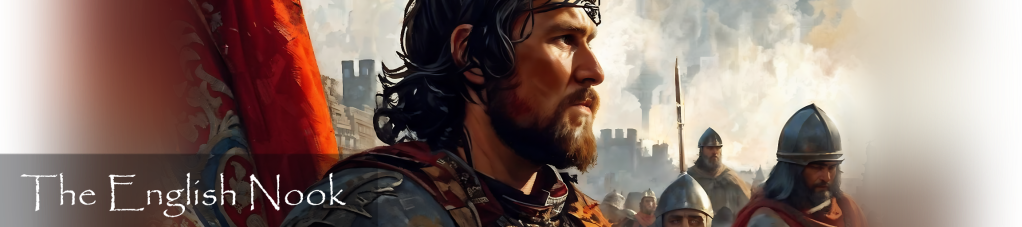
1066
The Norman Conquest of 1066 was more than just a political upheaval; it was a pivotal moment that forever altered the linguistic and cultural landscape of England. Led by William the Conqueror, the Normans, originally Viking descendants who settled in Normandy, France, defeated the Anglo-Saxon forces at the Battle of Hastings. This victory marked the end of an era and the beginning of a profound transformation, especially in the realm of language. The conquest didn’t just change who held power; it reshaped the very words people used every day.
Linguistic Impact: The Fusion of Languages
Before the Normans arrived, Old English, with its Germanic roots, was the dominant language in England. However, the Norman Conquest introduced a new linguistic layer: Norman French. As the language of the new ruling elite, French quickly permeated the upper echelons of society, becoming the language of the court, the legal system, and the church. Meanwhile, Old English remained the language of the common people. Over time, these two languages began to intermingle, giving rise to Middle English—a rich hybrid that combined the vocabulary and simpler grammar of Old English with the elegance and sophistication of French.
Examples of this fusion are everywhere in modern English. Consider the contrast between words like “kingly” (Old English), “royal” (Norman French), and “regal” (Latin). Each word reflects a different historical influence, all coexisting within the same language. This period of linguistic blending was crucial in expanding English’s vocabulary, creating a language that could express both the everyday and the elevated with equal ease.
Social and Cultural Changes: Beyond Language
The Norman Conquest also brought sweeping social changes. The introduction of the feudal system restructured English society, creating a clear division between the Norman nobility and the Anglo-Saxon peasantry. This divide was mirrored in the language: while the peasants used Old English terms for their livestock (e.g., “cow,” “sheep”), the French-speaking nobility used different terms for the meat they consumed (e.g., “beef,” “mutton”). This distinction in vocabulary underscored the social hierarchy, with language itself reflecting the power dynamics of the time.
Beyond vocabulary, the Normans introduced new cultural practices, architectural styles, and legal systems. The Romanesque architecture, seen in the construction of grand cathedrals and castles, symbolized Norman dominance. In law, many terms we use today—such as “court,” “jury,” and “attorney”—originated from this period, highlighting the long-lasting impact of Norman governance.
Pronunciation and Grammar: The Evolution of English
The influence of Norman French extended beyond words; it also affected the way English sounded and was structured. The complex inflections of Old English began to fade, replaced by a simpler grammar that allowed for more fluid sentence construction. The rigid word order of Old English loosened, giving rise to the more flexible syntax characteristic of Middle English. Additionally, French phonology left its mark on English pronunciation, adding new sounds and altering existing ones.
Consider the change in pronunciation of words like “knife” and “knight.” In Old English, the “k” and “g” sounds were pronounced, but under French influence, these sounds became silent, giving us the modern pronunciations we use today.
Example
Here’s an example of a text in Middle English, followed by its Modern English translation:
Middle English (from Geoffrey Chaucer’s The Canterbury Tales):
“Whan that Aprille with his shoures soote
The droghte of March hath perced to the roote,
And bathed every veyne in swich licour
Of which vertu engendred is the flour;”
Modern English Translation:
“When April with its sweet-smelling showers
Has pierced the drought of March to the root,
And bathed every vein in such liquid
By whose power the flower is created;”
Explanation:
This excerpt showcases the poetic and rhythmic quality of Middle English. Words like “soote” (sweet-smelling) and “swich licour” (such liquid) illustrate the blend of Old English and Norman French influences.
A Linguistic Revolution
The Norman Conquest was a linguistic revolution as much as it was a political one. The fusion of Old English and Norman French created Middle English, a language that would continue to evolve and eventually give rise to Modern English. This period of transformation also laid the groundwork for the English language’s adaptability and richness, enabling it to absorb influences from various cultures and eras.
Today, the legacy of the Norman Conquest is still evident in the words we speak, the laws we follow, and the cultural traditions we cherish. By understanding this pivotal moment in history, we gain a deeper appreciation for the complexity and resilience of the English language—a language that has been shaped by conquest, adaptation, and the blending of diverse influences.
1066: When swords clashed and languages blended, giving rise to the English we know today.
Learn More About:
- Middle English: The Norman Conquest to Chaucer (1150-1500 AD)
- The Emergence of Middle English: A Linguistic Revolution Shaped by Conquest and Culture
- The Linguistic Landscape of Middle English: Regional Diversity and Constant Evolution
- The Literary Legacy of Chaucer: Father of English Literature
If you’ve read everything, please consider leaving a like, sharing, commenting, or all three!
YOU WILL ALSO LIKE:






 The English Nook
Leave a comment