Forging a Nation
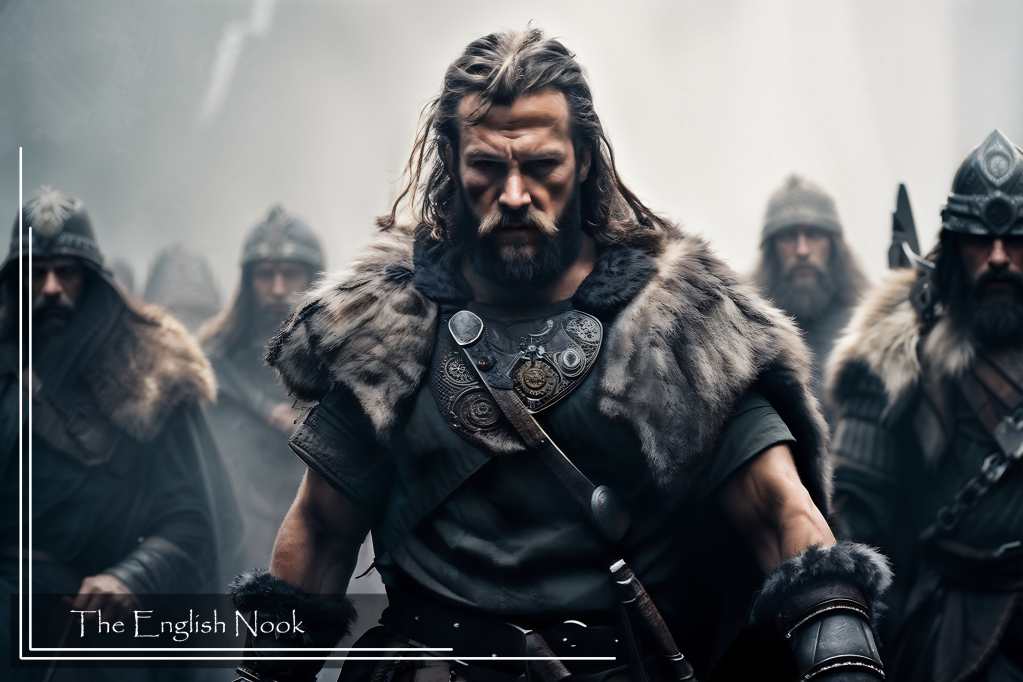
In the 5th century CE, the migration of Germanic tribes, specifically the Angles, Saxons, and Jutes, initiated a transformative period in Britain’s history. These tribes, originating from areas in present-day Denmark and Germany, traversed the North Sea to settle in the British Isles. Their arrival and subsequent settlement were pivotal in shaping the cultural and linguistic landscape of early medieval Britain.
Old English Formation and Practices
The dialects brought by these tribes formed the basis of Old English, a Germanic language characterized by a rich vocabulary and complex grammar. Old English absorbed elements from Celtic languages and Latin, especially after the Christianization of the Anglo-Saxons. This linguistic blend laid the groundwork for the English language we recognize today.
Cultural Practices
The Germanic settlers introduced several cultural practices that defined early medieval Britain:
- Social Structure: A warrior society with kinship and loyalty at its core, emphasizing the importance of family ties and tribal affiliations.
- Legal Systems: The establishment of early legal codes, such as those recorded in the “Laws of Æthelberht,” which laid down rules for compensation and justice.
- Agricultural Techniques: Advances in farming methods, including crop rotation and the use of the heavy plow, which improved agricultural productivity.
- Craftsmanship: The creation of intricate metalwork, pottery, and textiles, evident in archaeological finds like the Sutton Hoo burial site.
- Religious Practices: Initially pagan, worshipping gods like Woden and Thunor, they gradually converted to Christianity, integrating new religious practices and establishing churches and monasteries.
These linguistic and cultural contributions were integral to the development of a distinct Anglo-Saxon identity, leaving a lasting legacy on Britain’s history.
Tribes Involved in the Migration
- Angles: From the Anglia Peninsula (modern Northern Germany and Denmark), they settled primarily in East Anglia, Mercia, and Northumbria.
- Saxons: Originating from Northern Germany, they established Wessex, Sussex, and Essex.
- Jutes: Hailing from the Jutland Peninsula (modern Denmark), they settled in Kent, the Isle of Wight, and parts of Hampshire.
Settlement in Britain
The migration was a protracted process spanning several decades, driven by factors such as tribal pressure, climate changes, and land opportunities.
Impact on the Existing Celtic Population
The relationship between the Germanic settlers and the Celtic population was complex:
- Displacement and Assimilation: In some areas, the Celts were displaced or assimilated by the incoming tribes.
- Cultural Exchange: In other regions, there was significant cultural exchange, influencing place names, agricultural practices, and local governance.
Archaeological and Historical Evidence
Archaeological finds and historical documents provide evidence of these migrations:
- Burial Sites and Artifacts: Numerous burial sites and artifacts, such as weapons and jewelry, have been discovered, offering insights into the lives of these settlers.
- Historical Writings: Contemporary writings, such as Bede’s “Ecclesiastical History of the English People,” provide valuable accounts of these migrations and settlements.
Comparison with Other Migratory Waves
Comparing the Germanic migrations with other significant migratory events in European history:
- The Great Migration Period: Similar to the movements of the Huns, Goths, and Vandals, the Germanic tribes’ migration was part of a larger pattern of tribal movements during the Migration Period.
- Later Viking Invasions: The Viking invasions of the 8th and 9th centuries also reshaped the British Isles, adding another layer to the cultural and linguistic landscape.
Development of Anglo-Saxon Identity
The blending of Germanic and local influences gave rise to a distinct Anglo-Saxon identity characterized by:
- Language: Old English, a Germanic language enriched by Celtic and Latin influences.
- Religion: Initially pagan, the Anglo-Saxons began converting to Christianity from the late 6th century, starting with St. Augustine’s mission.
- Art and Literature: Produced notable works such as “Beowulf” and the “Anglo-Saxon Chronicle,” reflecting their values, myths, and historical consciousness.
- Legal and Social Systems: Developed law codes and social structures that laid the groundwork for medieval English governance.
The Anglo-Saxons’ legacy…
The 5th-century migration of the Angles, Saxons, and Jutes reshaped Britain’s cultural and linguistic landscape. Through their settlements and interactions with indigenous populations and later Viking invaders, these Germanic tribes forged a unique Anglo-Saxon identity, leaving a lasting legacy on British history.
Journey through the dynamic legacy of the Anglo-Saxons, where their language evolution and cultural influence continue to shape the rich history of Britain, inviting you to explore this fascinating language and its roots further!
If you’ve read everything, please consider leaving a like, sharing, commenting, or all three!
YOU WILL ALSO LIKE:



 The English Nook
Leave a comment