Words of the World
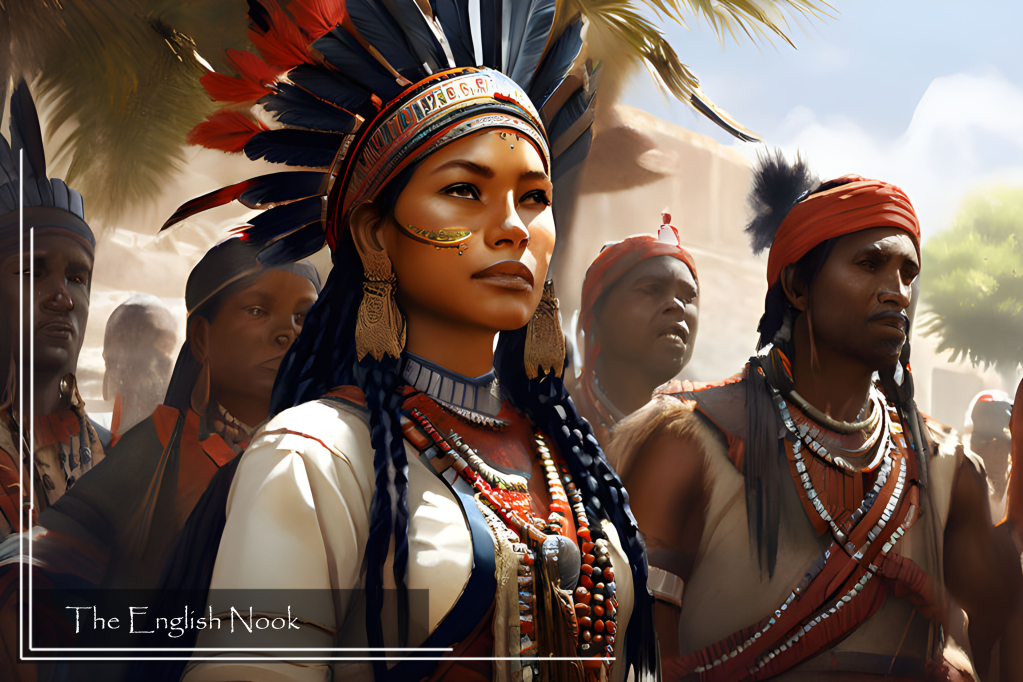
During the era of colonial expansion, particularly led by English-speaking nations, linguistic interactions with indigenous populations across the Americas, Africa, Asia, and Oceania had significant implications. As European powers ventured into these regions during the Age of Exploration and imperialism, they encountered a number of languages spoken by indigenous peoples. These encounters resulted in a complex interplay of linguistic exchange, adaptation, and influence.
One of the most visible outcomes of this linguistic contact was the borrowing of words and phrases from indigenous languages into English. These borrowings often reflected the practical necessities of communication in new environments, as well as the introduction of novel concepts, flora, fauna, and cultural practices to the English-speaking world.
Here are some examples:
- Canoe: Derived from the Arawakan language spoken by indigenous peoples in the Caribbean and parts of South America, the word “canoe” originally referred to small, narrow boats made from carved-out tree trunks or other lightweight materials, commonly used for transportation and fishing.
- Tomato: Originating from Nahuatl, the language of the Aztecs in Mesoamerica, “tomato” entered English through Spanish explorers and traders. The tomato plant, native to the Americas, was introduced to Europe and eventually became a staple in cuisines worldwide.
- Barbecue: The term “barbecue” has its roots in the Arawakan language spoken by indigenous peoples of the Caribbean. Spanish explorers encountered indigenous cooking practices involving grilling meat over an open flame on wooden structures called “barbacoas,” which eventually evolved into the modern concept of barbecue.
- Boomerang: This iconic Australian Aboriginal hunting tool and cultural artifact lent its name to the English language from one of the Indigenous languages of Australia. Boomerangs were traditionally used for hunting and sport by Indigenous Australian peoples.
- Kangaroo: A quintessential symbol of Australia, the word “kangaroo” is believed to have originated from the Guugu Yimithirr language spoken by Indigenous Australians in the northern part of the continent. When European explorers encountered these unique marsupials, they adopted the indigenous term.
- Chocolate: Derived from the Nahuatl word “xocolātl,” chocolate has its origins in Mesoamerican cultures, particularly among the Aztecs and Mayans. The cacao plant, from which chocolate is made, was cultivated and consumed by indigenous peoples in Central and South America for centuries before Spanish explorers introduced it to Europe.
- Jungle: The word “jungle” traces its origins to the Hindi word “jangal,” which referred to dense, tropical vegetation. English explorers encountering such environments in regions like India and Southeast Asia adopted this term to describe similar landscapes in other parts of the world.
- Tobacco: Originally cultivated and used for ceremonial and medicinal purposes by indigenous peoples in the Americas, “tobacco” comes from the Taino (Arawakan) word “tabako” or a similar term in other indigenous languages of the Caribbean. Spanish explorers encountered tobacco use among Indigenous peoples and brought it back to Europe, where it became widely popular.
- Maize: The word “maize” is derived from the Taíno (Arawakan) word “mahiz.” Indigenous peoples in the Americas cultivated maize, also known as corn, as a staple crop for thousands of years before its cultivation spread to other parts of the world following European contact.
- Kayak: Originating from the Inuit and Yupik languages of Arctic regions, the word “kayak” refers to a small, narrow boat traditionally used by indigenous peoples for hunting and transportation in icy waters. European explorers encountered these watercraft during their expeditions to the Arctic and adopted the term into English.
- Teepee (Tipi): The word “teepee” or “tipi” comes from the Lakota language of the Sioux people. It refers to the conical tents traditionally used by many Indigenous peoples of the Great Plains in North America, including the Lakota, Cheyenne, and Blackfoot, among others.
- Potato: The word “potato” has its origins in the Quechua language spoken by indigenous peoples in the Andean region of South America. Spanish conquistadors encountered the potato, a vital staple crop in Inca civilization, and introduced it to Europe, where it became an essential food source.
These examples illustrate how colonial expansion intertwined indigenous words with English, revealing the intricate web of cultural exchange and the enduring impact of indigenous peoples on global linguistic diversity. This underscores the vital importance of recognizing and safeguarding indigenous languages and cultures amidst the ongoing currents of globalization. As we trace the evolution of language, we uncover narratives of resilience and adaptation, illuminating the profound interconnectedness of human societies. Today, preserving indigenous languages and cultures is not only a responsibility but also a tribute to the enduring diversity of human heritage.
YOU MIGHT ALSO LIKE:







 The English Nook
Leave a comment